
Government activities for the week 26 February to 1 March 2024
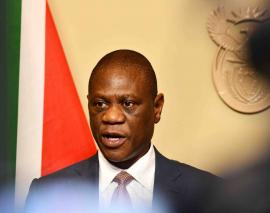
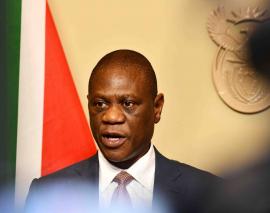
On Monday, 26 February, Deputy President Paul Mashatile will address the 14th Policy Dialogue Forum of the International Task Force on Teachers for Education.
Meanwhile, the Minister in the Presidency responsible for Electricity, Dr Kgosientsho Ramokgops will brief the media on the implementation of the Energy Action Plan.
In addition, the Electoral Commission will brief the media on the state of readiness for the 2024 general elections.
On Tuesday, 27 February, the Department of Justice and Correctional Services hosts a conference the Implementation of Integrated Criminal Justice System programme.
On Wednesday, 28 February, the Department of Justice and Correctional Services’ conference the Implementation of Integrated Criminal Justice System programme continues.
On Friday, 1 March, the Minister of Cooperative Governance and Traditional Affairs (CoGTA), Thembi Nkadimeng, will host the Summit on Ethical Leadership in Local Government, marking the culmination of three years of collaborative efforts within the Local Government Ethical Leadership.

How to: Easy steps to register to vote online

With just a few hours to go before the voter’s roll closes, the Electoral Commission has made it easier than ever to register to vote using their website.
The online voter registration portal, registertovote.elections.org.za, is functional and has proven to be the most effective method, allowing everyone to update their details from the comfort of their own homes, work places and communities ahead of the 2024 National and Provincial Elections.
Voters can use this portal to register to vote, view or update their current voter address, find their voting station, request a special vote, or simply browse for important information such as upcoming election dates in their ward.
You can register to vote by following these easy steps:
- Get your SA ID card/book ready and go to the link registertovote.elections.org.za.
- Enter your personal information: ID number, name and surname, and mobile number. The Chief Electoral Officer must compile and maintain a national common voters’ roll. The personal information required is for purposes of achieving this legal requirement and will not be used for any other purpose as required by the Protection of Personal Information Act, No. 4 of 2013.
- A one-time pin (OTP) will be sent to your cellphone number. Insert the pin and click on “confirm pin”.
- Capture your home address. You can type your address and select from the list or enter your address and click the search button.
- Review and acknowledge your information in the voter registration summary. This page will also tell you your ward and voting district.
- Tick the declaration box and then click on ID verification.
- Take a photo or upload a scan of your SA ID and click on continue.
- Your voter registration application has been submitted successfully. The IEC will verify the application and will notify you once it has been processed. You will receive an sms notification.
To submit an application to register to vote, you must meet the following requirements:
- be a South Africa citizen;
- be at least 16 years (you can only vote from age 18).
What you need to upload when using online voter registration:
- green barcoded ID book
- smart ID card,
- temporary ID certificate (TIC)
You are only registered to vote once you have received a receipt via SMS or email, or have confirmed that you are registered.
Voter registration for the 2024 General Elections will close at midnight, which is the day of proclamation of the General Election 2024.
The President and the Provincial Premiers will proclaim Election Day, 29 May 2024, during the course of today.
Citizens have until midnight to use the platform for voter registration and update their particulars. Citizens out of country can also use the same voter registration platform until midnight.
Citizens may also visit IEC offices in the all municipalities to register to vote. The offices will remain operational until 16:00.
Voters can also reach out to the Chat-bot on the 0600 88 00 00 WhatsApp line or call 0800118000.
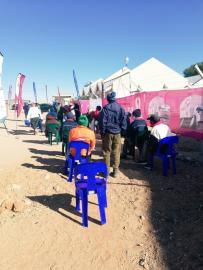
Social grants to increase in 2024
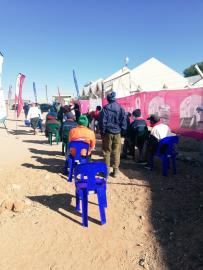
Social grants are expected to increase to keep in line with inflation and increase access for those who are eligible.
This does not include the Social Relief of Distress Grant (SRD Grant) also known as the R350 grant.
This was announced by Finance Minister Enoch Godongwana during the Budget Speech delivered in Cape Town on Wednesday.
“We are sensitive to the increase in the cost of living for the nearly 19 million South Africans who rely on these grants to make ends meet. In this regard, we have done as much as the fiscal envelope allows,” he said.
The increases to be implemented during this year are as follows:
- An increase of R100 to the old age, war veterans, disability and care dependency grants. This amount will be divided into R90 effective from April, and R10 effective October;
- A R50 increase to the foster care grant; and
- A R20 increase to the child support grant.
In the expanded Budget 2024 review, National Treasury explained that social grant expenditure – excluding the SRD grant – will increase from R217.1 billion in 2023/24 to R259.3 billion in 2026/27.
The COVID‐19 Social Relief of Distress Grant is allocated R33.6 billion in 2024/25 with provisional allocations for the 2025/26 and 2026/27.
“Work is currently underway to improve the COVID-19 Social Relief of Distress Grant by April this year. National Treasury will work with the Department of Social Development in ensuring that improvements in this grant are captured in the final regulations.
“These improvements will be within the current fiscal framework. For the extension of the grant beyond March 2025, the social security policy reforms, together with the funding source, will be finalised,” the Minister said.
National Treasury expects that grant beneficiaries, excluding those receiving the COVID‐19 SRD Grant, are projected to increase from 18.8 million in 2023/24 to 19.7 million in 2026/27.
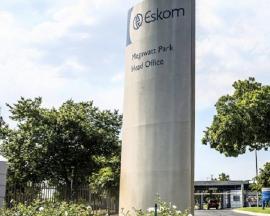
Municipalities sign up for Eskom debt relief programme
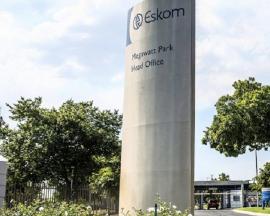
At least 70 municipalities have applied for and been approved for the Eskom debt relief programme introduced by National Treasury last year.
The debt relief programme is aimed at assisting ailing municipalities to pay off their bulk electricity supply debt to the power utility.
This was revealed in the 2024 Budget Review drafted by National Treasury.
“By December 2023, 72 applications had been submitted, totalling R56.7 billion or 96.9 % of total municipal debt owed to Eskom at end‐March 2023. [Some] 70 applications totalling R55.2 billion had been approved as of January 2024, said Treasury.
Once municipalities are admitted into the programme, strict conditions set by Treasury have to be followed in order for the debt to be written off over a three-year period.
“These conditions include enforcing strict credit controls, paying their monthly electricity accounts and enhancing revenue collection,” Treasury said on Wednesday.
Smart meter conditional grant
In the Budget Speech tabled by Finance Minister Enoch Godogwana, Treasury announced that a new conditional grant will be introduced to increase the rollout of prepaid smart meters.
“A new conditional grant will be created to fund the rollout of smart prepaid meters, initially in municipalities that have been approved for Eskom debt relief. The National Treasury will distribute this grant.
“A total of R2 billion has been allocated for the grant, made up of R500 million in 2024/25, R650 million in 2025/26 and R800 million in 2026/27,” the department said.
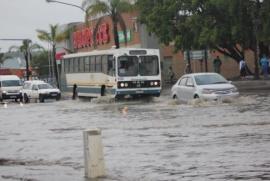
Government raises US$3.3 billion to support climate change initiatives
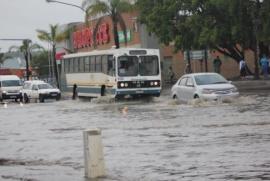
Government has raised US$3.3 billion so far from Multilateral Development Banks and International Finance Institutions to support climate change, energy, and just transition objectives.
Delivering the 2024 National Budget Speech, Finance Minister Enoch Godongwana said National Treasury plays a crucial role in mobilising resources, designing incentives, and influencing policy to mainstream climate change.
“As climate-related disasters intensify, a multi-layered risk-based approach is being developed to manage the associated fiscal risks. This considers various funding instruments from grants to contingency funds, including the Climate Change Response Fund, depending on the incidence and intensity of the disaster event.
“The National Treasury is reviewing disaster response grants to improve efficiency and create incentives for disaster planning, preparedness and risk reduction. It is also developing a climate-budget tagging framework to influence policy, planning, and budget decisions, by tracking climate-related expenditures in public budgets,” the Minister said on Wednesday in Parliament.
He said the support of concessional funding providers, such as Multilateral Development Banks, is going a long way to support the country’s climate adaptation, mitigation, energy transition, and sustainability initiatives.
“Crowding-in the private sector is necessary to managing the climate disaster funds. We are actively participating in climate negotiations, aligning with the government’s advocacy for reforming multilateral finance institutions.
“We are also working with eight municipalities to adapt and mitigate the effects of climate and weather-related events, by providing technical assistance for climate-responsive capital projects,” the Minister said.
According to the 2024 National Treasury Budget Review, the department is finalising a disaster risk financing strategy, centred on innovative financing and risk transfer to effectively mitigate climate impacts.
The strategy will boost state capacity to fund disaster recovery efforts and expand insurance mechanisms to protect against the financial strain of natural disasters.
“Recent years have seen a significant increase in extreme weather events and economic losses amid mounting concern over the effects of climate change. Between 1980 and 2021, 86 notable weather-related disasters have been recorded, affecting more than 22 million people and causing economic losses of about R113 billion.
“The 2017 Knysna wildfires, Cape Town (2015–2018) and Eastern Cape (2015–2020) droughts and KwaZulu-Natal floods in 2022 have heavily affected agriculture and tourism, with negative implications for government spending and revenue.
“These events exacerbate economic inequality, particularly in poor communities that are highly exposed to droughts, floods and wildfires and their consequences,” the document said.
Government incentivises electric vehicles producers
In an effort to encourage the production of electric vehicles in South Africa, government will introduce an investment allowance for new investments, beginning 1 March 2026.
This will allow producers to claim 150% of qualifying investment spending on electric and hydrogen-powered vehicles in the first year.
“The incentive will be implemented in addition to the existing support under the Automotive Production Development Programme. Government has also reprioritised R964 million over the medium term to support the transition to electric vehicles,” the Minister said.
The Electric Vehicles White Paper outlines government’s strategy to transition towards a broader new energy vehicle production and consumption in South Africa, starting with electric vehicles.
It aims to transition the automotive industry from primarily producing internal combustion engine vehicles to a dual platform that includes electric vehicles, by 2035.
Government to introduce global minimum corporate tax
Over the next few years, government plans to implement a global minimum corporate tax to limit the negative effects of tax competition.
“Multinational corporations with annual revenue exceeding €750 million will be subject to an effective tax rate of at least 15%, regardless of where their profits are generated. The proposed reform is expected to yield an additional R8 billion in corporate tax revenue in 2026/27,” Finance Minister Enoch Godongwana said on Wednesday in Parliament.
Delivering the 2024 National Budget Speech, Godongwana encouraged interested parties to provide comments on the draft Global Minimum Tax Bill published today.
The draft Global Minimum Tax Bill aims to limit the race to the bottom of effective corporate tax rates for large multinationals, with countries competing to attract income by offering low tax rates and tax incentives.
“Implementing the minimum tax in South Africa will bolster the corporate tax base. South Africa helped develop tax rules to address base erosion and tax challenges arising from the digitalisation of the economy as a member of the Steering Group of the OECD [Organisation for Economic Co-operation and Development] /G20 Inclusive Framework on Base Erosion and Profit Shifting.
“These rules are designed to limit the channels that multinationals use to shift profits from high- to low-tax countries. The 2023 Budget Review outlined the two pillars of this framework, which were endorsed by more than 135 countries in 2021. The first focuses on the digital economy and the coherent tax treatment of multinationals,” the 2024 Budget Review said.
The framework will be implemented through a multilateral convention to ensure that the biggest and most profitable multinationals reallocate part of their profit to all countries where they sell their products and provide their services.
“The second pillar introduces the global minimum tax. It ensures that any multinational with annual revenue exceeding €750 million will be subject to an effective tax rate of at least 15 %, regardless of where its profits are located. Government proposes to introduce two measures to effect this change – an income inclusion rule and a domestic minimum top up tax – for qualifying multinationals from 1 January 2024.
“The income inclusion rule will enable South Africa to apply a top-up tax on profits reported by qualifying South African multinationals operating in other countries with effective tax rates below 15%.
“The domestic minimum top-up tax will enable SARS [South African Revenue Service] to collect a top-up tax for qualifying multinationals paying an effective tax rate of less than 15 % in South Africa,” National Treasury said.
The Explanatory Memorandum and Draft Global Minimum Tax Bill will contain more details on these proposals as well as a request for public input.
Broadening the tax base
“Our long-term tax policy strategy remains focused on broadening the tax base while improving tax compliance and administrative efficiency. Visible progress has been made in rebuilding and modernising the South African Revenue Service.
“The tax authority has expanded the tax register, improved debt collections and reduced fraudulent refunds and trade valuations. This has led to improvements in revenue collection,” the Minister said.
To address the high levels of illicit tobacco, SARS is deploying CCTV and related technologies at licensed tobacco manufacturers.
“Investigations and prosecutions have resulted in R10 billion in additional assessments from the key players in the illicit gold and tobacco industry, of which over R4 billion from key players in the illicit gold and tobacco industry.
“These and other efforts have assisted with the improvement in revenue. Our bigger challenge, as I have stated earlier, is that our pie is not growing fast enough and this limits our ability to generate sufficient revenues to distribute among our priority areas,” Godongwana said.
Comments sought on draft tax bills and global minimum tax bills
National Treasury and the South African Revenue Service (SARS) have called for comments on the 2024 Draft Rates Bill (2024 Draft Rates Bill), 2024 Draft Revenue Laws Amendment Bill, Draft Global Minimum Tax Bill, and the Draft Global Minimum Tax Administration Bill.
The four draft bills were published in the government gazette on Wednesday for public comment.
“The 2024 Draft Rates Bill contains announcements made in Chapter 4 and Annexure C of the 2024 Budget Review that deal with the increase of excise duties. The 2024 Draft Revenue Laws Amendment Bill is aimed largely at clarifying the existing language and to simplify the directives system for both administrators and SARS to allow for the efficient implementation of the ‘two-pot’ retirement reform,” Treasury said.
The department said the Draft Global Minimum Tax Bill is aimed at implementing the GloBE Model Rules in South Africa to enable the country to impose a multinational top-up tax at a rate of 15% on the profits of in-scope multinational enterprise groups.
“The Draft Global Minimum Tax Administration Bill is aimed at the administration of the Draft Global Minimum Tax Bill,” the department explained.
After receipt of written comments, Treasury and SARS will engage with stakeholders through public workshops to discuss the written comments on the draft bills.
“The Standing Committee on Finance (SCoF) and the Select Committee on Finance (SeCoF) in Parliament are expected to make a similar call later this year for public comment and convene public hearings on the draft bills before their formal introduction in Parliament.
“Thereafter, a response document on the comments received will be presented at the parliamentary committee meetings, after which the draft bills will then be revised, taking into account public comments and recommendations made during committee hearings, before they are tabled formally in Parliament for consideration,” the department said.
The 2024 Draft Rates Bill, 2024 Draft Revenue Laws Amendment Bill, Draft Global Minimum Tax Bill and Draft Global Minimum Tax Administration Bill can be found on the National Enquiries: Communications Unit Email: media@treasury.gov.za, Tel: (012) 315 5046 Treasury (www.treasury.gov.za) and SARS (www.sars.gov.za) websites.
More general information underlying the draft legislation can be found in the 2024 Budget Review, available on the National Treasury website.
“The 2024 Draft Taxation Laws Amendment Bill and 2024 Draft Tax Administration Laws Amendment Bill, which contain the remaining tax proposals announced in the 2024 Budget Review, will be released for public comment later in the year,” the department said.
Written comments should be forwarded to the National Treasury’s tax policy depository at 2024AnnexCProp@treasury.gov.za, and SARS at acollins@sars.gov.za by the close of business on 31 March 2024.

Accessing accurate public information

By Zanele Mngadi
Through social media apps, websites, and other digital tools, the internet gives us a lot of ways to connect with each other. This makes information easy to find.
However, the ease with which we get information online makes it hard to determine how true it is. The COVID-19 pandemic is a great example of this challenge because knowledge spread very quickly through our phones and social media sites.
During this dark time, scary fake news spread very quickly, making it harder for people to get the right information and stay safe, which was bad for their health and made them less likely to trust others.
In order to fight fake news, the South African government set up many ways for people to easily get true and accurate information. This included the SA Coronavirus website, social media accounts, and regular updates for the whole country.
Lessons from the pandemic
Because of the pandemic, government learned that giving people easy access to reliable information gave them the tools they needed to make smart choices about how to protect their health.
Building on the success of spreading information widely during COVID-19, government has adopted a multi-media approach that uses all forms of media to give South Africans more power by giving them accurate information about problems facing the country, the government’s solutions, and programmes meant to bring about change.
Government just recently set up two WhatsApp channels, governmentza and the PresidencyZA, that people can follow to get regular updates on things that affect everyone, like chances for legal education and work.
This adds to government’s social media platform GovernmentZA, which lets people get true information right away and talk to the government directly. People should follow these social media pages on Facebook, Instagram, LinkedIn, TikTok, WhatsApp, X, and YouTube, as well as government websites like https://www.gov.za, https://www.gcis.gov.za/, and https://www.thepresidency.gov.za/, to get accurate news about issues that affect the whole country.
The GCIS also has its own in-house news agency, SAnews (https://www.sanews.gov.za/) which provides regular news updates on matters of public concern, at no cost. In addition the GCIS launched a podcast, Vuk Talks to give people more access to information about government programmes. It’s on YouTube and Spotify.
Our online presence adapts to the changing needs of our citizens, but we also make sure that people who don’t have access to the internet can still get information.
The government tries to get accurate and reliable news to millions of people in rural areas and townships. Over the years Vuk’uzenzele newspaper has touched the lives of many people. It also brought the government to closer to the people through Izimbizo and partnerships with local community radio stations. From April 2024 on, the newspaper will only be available online, but its articles will still be useful to everyone in South Africa. We have also partnered with SABC 2 on the 13-part series Citizens Connect in an attempt to educate more citizens.
The value of accurate information
All of these online platforms let people to easily get reliable information directly from the government about their lives, our country, and the world we live in. Reliable information is essential to make democracy work. The opposite is equally true: inaccurate information, often a result of fake news, can be dangerous to democracy, especially during big national events such as elections.
As the seventh national and provincial elections get closer, people are being warned to be careful of fake news online, especially since new technologies make it hard to tell the difference between fact and fiction.
With the rise of deep fake content, fake content can seem credible. Dishonest people use Artificial Intelligence (AI) to make fake videos, pictures, and audio recordings of other people. Public figures, such as our political leaders, are often the targets of these attacks.
Be vigilant at all times
Government urges every citizen to be wary of falling victim to fake news. Pay close attention to face features and lip movements that don’t match up on videos because that can be a sign of deep fake content. If in doubt, verify the information you receive via trustworthy information sources (such as government platforms). That’s how you can learn the truth and make smart decisions about your future.
If you use social media and websites as sources of information, make sure that they are real. It’s easy to miss fake accounts or profiles because their names sound a lot like real ones. So, double-check the writing of the profiles and websites you follow.
Every South African needs to make sure that the news they spread comes from reliable sources. Let’s all stay alert all times to avoid being duped by fake news. Let’s all play our part to make our democracy strong. Let’s fight disinformation.
*Zanele Mngadi is Chief Director: Products and Platforms at the GCIS

E-tolls ‘will be history’ in Gauteng – Premier Lesufi

The Gauteng e-toll scheme is expected to be delinked from the end of March this year.
This was announced by Gauteng Premier Panyaza Lesufi during the State of the Province Address (SOPA) on Monday evening.
“E-tolls are a system that was introduced in the province by national government on the basis that we wanted to improve our road network. We have now reached a stage where we all accept that the people of Gauteng have rejected e-tolls.
“We had a meeting with all affected parties. We held a meeting with the Minister of Finance [Enoch Godongwana]; we also held a meeting with the Minister of Transport [Sindisiwe Chikunga]. All of us now have reached an agreement that by the 31st of March this year, the formal process to switch off and de-link e-tolls will begin and e-tolls will be history in our province,” he said.
Lesufi added that the Finance Minister will provide more detail.
The scrapping of e-tolls has long been in the pipeline and Minister Godongwana, during the mini budget speech in October 2022, called for moving on from “debates of previous years and find solutions to this challenge”.
During that speech, the Minister explained that the Gauteng provincial government had agreed to “contribute 30 percent to settling SANRAL’s debt and interest obligations” related to the tolls.
“Gauteng will also cover the costs of maintaining the 201 kilometres and associated interchanges of the roads and any additional investment in road will be funded through either the existing electronic toll infrastructure or new toll plazas, or any other revenue source within their area of responsibility.
“Government proposes to make an initial allocation of R23.7 billion from the national fiscus, which will be disbursed on strict conditions,” the Minister said then.
Stats SA records decrease in number of employed persons
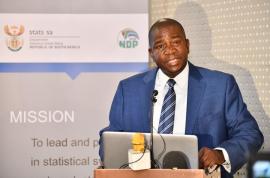
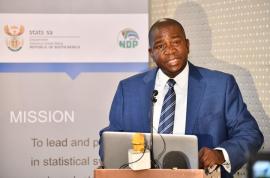
The Quarterly Labour Force Survey (QLFS) results for the fourth quarter of 2023 by Statistics South Africa (Stats SA) indicate that the number of employed persons decreased by 22 000 to 16.7 million in the fourth quarter of 2023 when compared to the third quarter.
Addressing a media briefing on Tuesday in Pretoria, Statistician-General Risenga Maluleke said the number of unemployed persons increased by 46 000 to 7.9 million compared to quarter three.
“Additionally, the number of people who were not economically active for reasons other than discouragement increased by 218 000 to 13.4 million, while discouraged work-seekers decreased by 107 000 in the fourth quarter of 2023 compared to the third quarter of 2023. This resulted in a net increase of 111 000 in the not economically active population.
“The above changes in employment and unemployment resulted in the official unemployment rate increasing by 0.2 of a percentage point from 31.9% in the third quarter of 2023 to 32.1% in the fourth quarter of 2023.
“The unemployment rate according to the expanded definition decreased by 0.1 of a percentage point to 41.1% in Q4: 2023 compared to Q3: 2023,” Maluleke said.
Formal sector employment decreased by 128 000 in Q4: 2023, while informal sector employment increased by 124 000 over the same period.
The industries that contributed to the net employment decline include community and social services (down by 171 000), construction (down by 36 000), agriculture (down by 35 000), trade (down by 28 000) and manufacturing (down by 1 000).
However, finance (up by 128 000), transport (up by 57 000), mining (up by 37 000) and private households (up by 18 000) recorded the largest employment gains.
“Provincially, employment losses were recorded in Eastern Cape (111 000), Limpopo (40 000), North West (30 000) and Northern Cape (2 000). The largest employment increase was recorded in KwaZulu-Natal (62 000), followed by Mpumalanga (48 000) and Western Cape (23 000) during the same period.
“The youth (15–34 years) remain vulnerable in the labour market; the fourth quarter of 2023 results show that the total number of unemployed youth increased by 87 000 to 4.7 million while there was a decrease of 97 000 in the number of employed youth to 5.9 million. This resulted in an increase in the youth unemployment rate by 0.9 of a percentage point from 43.4% in Q3: 2023 to 44.3% in Q4: 2023,” he said.