Over 83 000 land claims settled

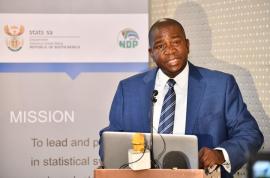
Agriculture, Land Reform and Rural Development Minister, Thoko Didiza, says a total of 83 067 land claims have been settled since the inception of the Land Restitution Programme in 1995 to 2023.
Didiza said the number equates to 94% of the old-order claims that have been successfully settled, with about 2.3 million people having benefitted from the restitution.
Presenting the research findings on the evaluation of South Africa’s Land Restitution Programme on Monday, Didiza said a total of R25 billion was spent on the purchase and transfer of 3.9 million hectares.
“An additional R22.5 billion has been spent on financial compensation for those beneficiaries who elected for financial compensation. Between 2019 and 2023, a total of 1 494 claims were settled, largely fuelled by the department’s interventions in fast-tracking the settlement of claims,” Didiza said.
The study, which started in 2018 and included 2 664 households and 3 378 people, who were sampled and interviewed, found that the economic power of the restitution beneficiaries increased by 16%, measured in per capita per month, relative to the control sample.
The Restitution of Land Rights Act of 1994 is among the first laws passed by the democratically elected government.
This was done with the conscious acknowledgement that land justice is paramount, and restoration of Black people’s dignity and freedom is central to a democratic dividend, said the Minister.
The Restitution of Land Rights Act made provisions for the restitution of rights in land to people or communities dispossessed of such rights after 1913.
The constitutionality of land restitution is preserved in Section 25(7) of the Constitution of South Africa which states that “a person or community dispossessed of property after 19 June 1913 as a result of past racially discriminatory laws or practices is entitled, to the extent provided by an Act of Parliament, either to restitution of that property or to equitable redress”.
Didiza said families of forced removal victims were fragmented for decades, and conflicts that arose at post-settlement claims were a function of a lack of social cohesion and trust created during a lengthy period of disintegration.
The Minister said investments in communication and social cohesion programmes would assist in mitigating the information gap and building trust among beneficiaries.
She said from the study findings, the department can draw some policy insights.
“Firstly, the study findings are enlightening us to understand that land restitution is not only about financial and economic justice but also psychological and social restoration, a lesson we should bear in mind when we evaluate the success or failures of land restitution projects.
“Secondly, over and above the post-settlement support and skill training, which we are already providing to beneficiaries as the government, there is an additional need to formulate community integration programmes,” Didiza said.
Emergency housing team to assist Nongoma storm victims

Human Settlements Minister Mmamoloko Kubayi has dispatched the department’s emergency housing team to establish the extent of damage caused by a storm that hit several houses in Nongoma, KwaZulu-Natal, on Saturday.
According to the department’s preliminary assessments, to date, several households in Ekubuseni, Gomodo and Holinyoka villages were largely affected, leaving four households homeless.
Kubayi said after the completion of the assessments, the Emergency Housing Unit will then intervene based on the four categories of emergency housing interventions provided by the department.
The four categories of emergency housing interventions include restoration, relocation, rebuilding and repairs.
Restoration provides building materials to all households whose structures were destroyed by the storm, while relocation provides Temporary Emergency Accommodation (TEAs) for all homeless families.
Rebuilding involves reconstructing Temporary Residential Units (TRUs) for all destroyed mud houses, while repairs include fixing all damaged formal houses after the National Home Builders Registration Council (NHBRC) has completed the structural assessments.
“I have directed officials to ensure that affected households are assisted as a matter of urgency. We have roped in one of our agencies, the NHBRC, to help the team assess the integrity of all structures that have been affected,” Kubayi said.
Established in 2023, the Emergency Housing Unit is tasked with the responsibility of responding to emergencies, including fires and floods.
This is done through collaboration with other spheres of government.
“Our main objective in emergency housing response is to ensure that we respond swiftly and provide solutions that will enable the affected communities to rebuild their homes,” the Minister said.
800 black firms to gather for the Black Industrialists and Exporters Conference

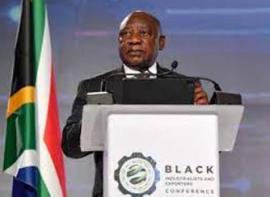
The Department of Trade, Industry and Competition (dtic), in partnership with the Industrial Development Corporation (IDC) and the National Empowerment Fund (NEF), will host the second Black Industrialists and Exporters Conference at the Sandton International Convention Centre on 20 March 2024.
The day-long conference will provide a platform for an exchange of ideas, knowledge and information on the achievements of the Black Industrialists Programme since its inception in 2015, as well as challenges and opportunities presented by the programme.
There will also be an exhibition that will showcase proudly South African products manufactured by Black Industrialists and an awards ceremony that will recognise and reward Black Industrialists that have contributed significantly in the country’s industrialisation, job creation, poverty alleviation, innovation and transformation efforts.
More than 1 300 delegates, including 800 black firms, 73 panellists and speakers, 139 exhibitors, nine buyers from the country’s biggest retailers and seven ministers participated in the inaugural event that took place in Sandton in July 2022.
The objective of the Black Industrialists Programme is to increase the participation of black South Africans in the ownership and control of productive enterprises in key sectors and value chains of the country’s economy.
President Cyril Ramaphosa graced the inaugural event which took place in Sandton in 2022. He officially opened the conference and later handed over certificates to deserving and distinguished Black Industrialists in various categories.
In his keynote address, President Ramaphosa described the conference as “an opportunity to reflect on progress in advancing redress and equity in the South African economy.”
Electricity Minister to engage KZN business stakeholders

Minister in The Presidency responsible for Electricity, Dr Kgosientsho Ramokgopa, is expected to engage with business stakeholders in KwaZulu-Natal on energy challenges and interventions.
The engagement is expected to take place at the Durban Exhibition Centre on Tuesday, 20 February.
“The energy sector in South Africa is facing significant challenges which have implications for businesses, households, and the economy at large. The engagement will provide an opportunity for stakeholders to share their perspectives on the energy challenges businesses face in the region.
“The primary objective of this engagement is to foster dialogue and collaboration between the Ministry of Electricity, supported by the KwaZulu-Natal Provincial Government and business stakeholders in the province,” the Ministry in the Presidency said in a statement.
Ramokgopa is expected to be joined by KZN Premier Nomusa Dube-Ncube and eThekwini Municipality Mayor Mxolisi Kaunda.
Meanwhile on Sunday, power utility Eskom said it is working to restore power “as quickly as possible” following a high volume of electrical faults in Northern KZN.
The faults are due to damage to infrastructure following a storm in the area over the weekend.
“Eskom apologises for any inconvenience caused and reminds those affected by the loss of supply to treat all electrical installations as live and dangerous, as electricity supply may be switched on without notice.
“Customers are also urged to stay away from fallen infrastructure. Eskom will endeavour to restore power as quickly as possible and wishes to thank customers for their patience.
“Customers are encouraged to download the MyEskom Customer App from Google Play and the App Store, or use the Alfred chatbot on https://alfred.eskom.co.za/chatroom/ to report fallen infrastructure, report faults and follow up on progress,” the power utility said.
AU launches 50-year blueprint for Africa’s socio-economic development

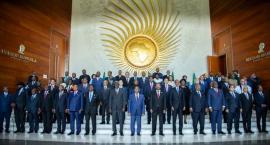
African Union (AU) Heads of State and Government have launched the Second Ten-Year Implementation Plan of the AU’s Agenda 2063: “The Africa we want”.
Agenda 2063 serves as a 50-year blueprint for Africa’s socio-economic development and integration.
It was adopted by the AU Member States at the Assembly of Heads of State and Government of the African Union (AU) this weekend, after extensive consultations across the continent.
President Cyril Ramaphosa concluded his participation at the summit on Sunday.
“A key flagship project of Agenda 2063 in which South Africa is playing a leading role is the operationalisation of the African Continental Free Trade Agreement (the AfCFTA), that serves as a milestone development in the evolution of the AU,” said the Presidency.
The AU Assembly met under the theme: “Educate an Africa fit for the 21st Century: Building resilient education systems for increased access to inclusive, lifelong, quality, and relevant learning in Africa”.
The assembly also discussed the status of peace and security on the continent and the Report of the AU Peace and Security Council (AUPSC).
“The discussion took place against the backdrop of great concern regarding the state of peace and security in Africa. The ongoing and concerning trend of unconstitutional changes of government that have occurred in West Africa as well as the ongoing conflicts in the eastern Democratic Republic of Congo (DRC), Sudan, South Sudan and Mozambique,” said the Presidency.
President Ramaphosa presented a report on the continent’s response to the COVID-19 pandemic and the state of readiness against future health threats, in his capacity as the Champion of the AU’s COVID-19 response.
As the pandemic is waning on the continent, said the Presidency, South Africa intends to work with the AU Commission and the Africa Centre for Disease Control towards expanding the role of the President to include all other health pandemics that are affecting the continent.
President Ramaphosa said: “Although the Africa CDC has classified COVID-19 as no longer a public health emergency of international concern, it remains an ever-evolving endemic virus. Furthermore, the effects of the pandemic continue to reverberate across our continent and beyond.
“The COVID-19 crisis was an opportunity for us as Africa to bolster our manufacturing sector. We were able to draw in an impressive USD 1.1 billion in financial and technical investments, in addition to the USD 1 billion advanced market commitment from GAVI, the Vaccine Alliance.”
The President praised the concerted efforts and collaboration demonstrated by the continent during the COVID-19 pandemic. He further urged the gathered leaders to continue improving the levels of alertness of their countries against future pandemics.
“Despite these successes, we are still at the delicate juncture of recovery. There is the threat of future pandemics. Our rapid and precise interventions have averted further crises, and for this, we must continue to sharpen our vigilance.
“The adoption of a strong Common Africa Position on Pandemic Preparedness and Response (CAP PPPR) is non-negotiable. It will define our roadmap to safeguarding our people, with a keen focus on critical issues,” he said.
Addressing the summit leaders on positive masculinity and the need to support the development of the AU Convention on Violence against Women and Girls, the President expressed his gratitude for the effort of Champions on Positive Masculinity and all Member States that have been part of the continental movement.
The President called on the assembly to forge a strong and enduring commitment to protect and uplift those who have suffered from violence against women and girls.
“We must now launch the AU Convention on Ending Violence Against Women and Girls Campaign, championing continent-wide consultations and ensuring that the journey to developing this critical instrument is shared by citizens across our vast continent.
“Developing the AU Convention on Ending Violence Against Women and Girls is more than a political act. It is a moral imperative to redefine our societies, to confront the legacies of colonialism, patriarchy and racism, and to champion equality, freedom and self-determination for every African.
“As President of South Africa, I hereby commit to support the development and timely adoption of a comprehensive convention that is backed by resources and institutional mechanisms to ensure its efficacy,” said President Ramaphosa.
On the margins of the AU Summit, President Ramaphosa held several bilateral meetings with Heads of State and Government.
Deputy President’s office responds to newspaper allegations

The Office of the Deputy President says it has noted the article published by the Sunday World on Sunday, 18 February 2024.
This is after the Sunday publication claimed that Deputy President Paul Mashatile and his Chief of Staff, Mduduzi Mbada, are protecting the Deputy President’s spokesperson, Vukani Mde, over a sexual harassment complaint against him.
According to the report, a senior female staffer in the office, reporting directly to Mde, complained about unwarranted sexual advances last August that Mashatile’s spokesperson made towards her.
Sunday World reported that Mde allegedly sent the victim “messages that are sexual in nature to her work cellphone number”, passed unwelcomed comments about her “sex life and her looks” and proposed love while communicating work instructions.
The Office of the Deputy President has dismissed the false allegation that they were shielding Mde.
“The Chief of Staff has briefed the Deputy President that a letter of intention to suspend Mr Mde, in light of the allegations against him, was issued and hand-delivered to the spokesperson, Mr Vukani Mde.
“The Deputy President is aware that there is a process underway in the Presidency to investigate the allegations made against Mde by one of the senior employees in the office, and is of the view that all due processes should be adhered to,” the statement read.
The Deputy President has since condemned any form of gender-based violence, especially against women, and said he believes that all employees should be protected from any victimisation.
“The Office of the Deputy President wishes to assure that this matter is given the necessary attention it deserves and will provide an update in due course.”
Sixth administration cracking down on crime – Lamola

Minister of Justice and Correctional Services, Ronald Lamola says the sixth administration is steadily rebuilding law enforcement agencies like the National Prosecuting Authority to fight crime.
Lamola was speaking during the debate of the State of the Nation Address held in Cape Town.
“[It] is the sixth administration that strengthened the work of law enforcement agencies like the NPA [National Prosecuting Authority] by appointing permanent leadership in the upper echelons of the NPA and the SAPS [South African Police Service] and increased the operational budget resulting in visible institutional growth and stability.
“Organized crime verdicts have increased by 21% from 193 to 234 at a conviction rate that is above 80%. Gang leaders are behind bars or in court, whether it is Jerome Booysen, Nafik Modak, Ralph Stanfield, Mark Lifman and Vusi Khekhe, all are behind bars.
“The conviction rate in gender-based violence and femicide matters is at 74.6%. When it comes to successful prosecutions for cable theft matters, the NPA has exceeded some of the targets, the conviction rate is well above 85%, 299 convictions have been obtained from 347 cable theft verdicts,” Lamola said.
The Minister added that R3.2 billion from the criminal assets recovery funds has been allocated to fighting illegal mining and organised crime.
Furthermore, 2 996 arrests have been executed related to illegal mining activities as at December last year.
“SAPS is implementing Operation Shanela, a comprehensive plan to combat crime throughout the country. The plan includes clamping down on illegal mining areas.
“At the end of last year, the Asset Forfeiture Unit, Special Investigation Units and the Hawks have secured preservation orders to freeze assets which are proceeds of unlawful activities of a syndicate dealing in unwrought gold in Gauteng province.
“The frozen assets include 51 properties with a value of more than R16 million. In Mpumalanga, they secured a preservation order of assets worth more than one billion rands. The message is clear, crime does not pay and the tide against crime is turning,” Lamola said.
‘I am Tintswalo’
Harking back to President Cyril Ramaphosa’s SONA last week in which he described the life of Tintswalo, Lamola described how he himself is a product of progressive government policies.
He recalled how he benefitted from the Tertiary Education Fund of South Africa (TEFSA), now known as the National Student Financial Aid Scheme (NSFAS), after his parents who were both farmworkers could not afford his tertiary education.
“I can stand here in this house [and say] with great conviction that had it not been for …government’s expansion of TEFSA and my sister paying for my university registration and monthly stipend, I would not be standing here today.
“I would not have been an Attorney of the High Court of South Africa having appeared in the highest Court in the world, the ICJ, on global affairs. My life was predestined as a farm worker [by] design by the apartheid government and not by choice.
“The village where I come from, Cunningmore B in Mpumalanga, had no electricity nor running water. Today there is electricity, running water and tarred roads, so are many villages across the country.
“[NSFAS]…results are tangible. You can touch them with your bare hands,” he said.
Citizens urged to reflect on 30 years of freedom

As South Africa marks 30 Years of Freedom, citizens have been urged to remember how far government has come in improving the lives of South Africans and undoing the damaging legacy of apartheid.
“As we mark 30 Years of Freedom, we must not exercise our reflections and recollections without remembering exactly where we’ve come from or without acknowledging what has confronted us as a society in our journey to here,” Minister in the Presidency Khumbudzo Ntshavheni said in Cape Town.
Addressing a joint debate on the State of the Nation Address (SONA) on Wednesday, the Minister said despite the global economic meltdown of 2007 and 2008 as well as the COVID-19 pandemic, government has continued to provide economic opportunities for citizens.
“Tintswalo or the Black Diamonds as they are generally referred to or the national breadwinners as they called themselves during the COVID19 vaccination period, continue to lead the installation of digital connectivity in deep-rural KwaZulu-Natal and other provinces. They work as young black and women engineers at our power stations,” the Minister said.
She said government has also provided opportunities for young people to work side by side to create a sovereign launch capability that has allowed the country to take satellite technologies into space and they are the bedrock of the more than 10 000 small, medium, and micro enterprises (SMMEs) that are suppliers to the National School Nutrition Programme.
The Minister said that young people are the engineers and contractors behind the more than 750 000 km road network from 525 000 km in 1995.
“Yes, some of the provincial and municipal roads have potholes but we are intervening. Currently South African National Roads Agency (SANRAL) has taken over 2 600 km of roads transferred from provinces so we can use its road construction and maintenance capacity to deliver better roads and with more under consideration,” she said.
She added that in the past five-years, SANRAL has executed projects to the value of R120 billion, which translated to just under 45 000 job opportunities and the participation of almost 6500 black owned SMMEs.
“Just this January, SANRAL announced another R28 billion injection into the industry with the implementation of over 70 projects. SANRAL’s work to improve the country’s road network is complemented by Operation Valazonke aimed at closing potholes on municipal roads across all municipalities. We are aware that some municipalities are progressing faster than others,” Ntshavheni said.
Passenger Rail Agency of South Africa
The Minister affirmed that work is underway to rebuild the network industries to ensure it services the country more effectively.
“Despite the teething challenges, the Passenger Rail Agency of South Africa (PRASA) has restored operations on 26 out of 40 commuter rail corridors following disruptions caused by the COVID-19 pandemic and the criminality that vandalised our rail infrastructure.
“Of these restored service lines, 19 of them are operated with the new trains. PRASA has received 184 new trains that have been built in Nigel, Ekurhuleni. In addition, 276 Metrorail coaches have been upgraded or refurbished, 97 train stations have been refurbished, and 29 cooperatives are responsible for cleaning and basic maintenance of these stations.
“Through the capital spend, PRASA created more than 46 000 job opportunities. Even Transnet is starting to register a turn-around at its operations with the arrival of critical equipment, irrespective of the weather – those containers can be loaded and offloaded at the harbour.”
Promoting public employment
She noted that eight consecutive Quarterly Labour Force surveys have indicated an improvement in the unemployment situation in the country – with 16.7 million people in employment by the end of the third quarter of 2023 – the first to surpass the pre-COVID-19 employment levels.
“Although six million youth are now in employment, the challenge of youth unemployment like the world over remains. It is for that reason that President [Cyril] Ramaphosa led the establishment of initiatives like the Youth Employment Service (YES) in partnership with private-sector partners.
“YES has created over 130 000 work experiences for young people to date. Over 1.7 million work and livelihood opportunities for unemployed South Africans have been created through the Presidential Employment Stimulus, which prioritised predominantly youth and women.”
Key achievements in the stimulus include:
- Employing 1.1 million education and general assistants in 23 000 schools.
- Providing production input vouchers to 180 000 small-scale farmers.
- Providing 29 000 opportunities in environmental management and rehabilitation.
- Employing 107 000 people across 6 500 worksites through the Social Employment Fund.
“The SA Youth Mobi platform was launched, which provides pathways for young people to employment, learning and youth enterprise. To date, over 4.8 million young people have registered on the platform and more than one million have been placed in earning opportunities.
“The National Youth Service has been revitalised, offering young people opportunities to undertake work that builds the community and provides them with skills, self-confidence and work experience. Over 47 000 participants were placed in the first phase of the National Youth Service,” the Minister said.
She said all these achievements have been made possible by South Africans who consider it their duty to be part of transforming the country and undoing the damaging legacy of apartheid.
“The work done during the sixth administration and 30 years under the democratic dispensation is to ensure we leave no-one behind, despite the hand this President’s tenure was dealt,” the Minister said.
Mpilisweni School of Specialisation officially launched in Gauteng

Gauteng Department of Education (GDE) MEC, Matome Chiloane, officially launched the Mpilisweni Maths, Science & ICT School of Specialisation, with a focus on Manufacturing and Logistics in Katlehong, Ekurhuleni, on Tuesday.
This public secondary school specialises in Manufacturing and Logistics because of the Economic Development Corridor in which it is located.
The GDE said it intentionally streamlines its schools to match the focuses of each of the schools’ Economic Development Corridors, thus responding to the skills gap of each corridor.
Katlehong is a large township in the Gauteng province of South Africa. It is located 28km south-east of Johannesburg, between two other townships, Thokoza and Vosloorus, which are all next to the N3 highway.
According to the department, learners from the school demonstrated a wide array of advanced skills during the official launch.
“These include a smart truck that they built, which is meant to use solar power instead of petrol. Learners proceeded to show extensive knowledge in DNA profiling, using biotechnology and gel electrophoresis to analyse DNA.
“The school also features a driving simulator, which is able to simulate other real-world environments. Other inventions included a solar tracking panel which detects light sources similar to a sunflower, as well as a LiFi connected sound system,” the GDE said. LiFi is a high speed, bidirectional and fully networked wireless communication of data using light.
The GDE said the crown jewel of the learners’ creation is a smart factory that uses smart automation to operate and produce bread from scratch.
Girl learners first exhibited a model of the factory, which includes automation and mechatronics that they envision using in the future.
The MEC had the opportunity of viewing the actual factory and getting a taste of the bread. The school sells the loaves of bread to schools in surrounding areas at only R9.90 a loaf.
The factory is a result of the partnership between the Gauteng Department of Education and Sifiso Edtech, which is invested in providing real-world applications of innovative technology in education.
Albany is also a partner, with their baking expertise, fusing learner knowledge with practical resources that do not only result in mere loaves of bread, but essentially nurtures the minds and bodies of learners, and ultimately the community.
Mpilisweni is a no-fee school that relies entirely on Section 21 allocation for financial upkeep.
The school has maintained a 90%+ matric pass rate for the past three years. A survey done by the department indicates that most parents prefer to enrol their children at Mpilisweni due to the quality of teaching and the improved performance.
“It is through this backdrop of consistent performance and in this developing community that we launch an innovative School of Specialisation to produce the province’s model citizens. Learners at Mpilisweni will benefit from a wide array of skills within the manufacturing and logistics industry that reach beyond the standard curriculum,” Chiloane said.
Internet connectivity improves

Minister of Communications and Digital Technologies, Mondli Gungubele, says that internet connectivity and penetration has improved greatly.
According to the Minister, internet connectivity and penetration has improved from a mere 21.1% in 2011 to a staggering 79% in 2022, elevating citizens in a rapidly changing world that is driven by digital technologies.
The improvement is due to work being done through the SA Connect broadband connectivity project, which is dedicated to bridging the digital divide by providing Wi-Fi access to communities and ensuring universal access to the internet.
Phase 2 of the SA Connect project was launched by government last year with the aim to provide core and access network infrastructure to enable broadband connectivity to community Wi-Fi hotspots that will connect households.
Addressing a joint debate on the State of the Nation Address (SONA) on Tuesday, the Minister said government will continue to connect rural and township areas with a target of 5.5 million households enabled by WIFI hotspots in the next three to four years.
In addition, government will connect 1.5 million households enabled by WIFI hotspots by December 2024 and 747 000 households enabled by 4 250 WIFI hotspots by the end of this financial year.
“We can report that to date, a coverage of 361 000 households which has been enabled by 2 502 WIFI hotspots has been achieved. The work has been done and will continue being done. It will involve 76 internet service providers, which are small medium and micro enterprises (SMMEs). This will result in 4 500 direct jobs and many more indirect jobs and opportunities downstream,” Gungubele said.
Spectrum
With government having freed spectrum of above 700MHz for use by mobile operators, that spectrum will connect public institutions and deploy 4G and 5G technology throughout the country.
The availability of spectrum paves the way for affordable, high-speed internet access for all.
“Working with the private sector thus far, all eight metros have been connected to fibre, and we are expanding to more towns. We have as part of our implementation of the recommendations of the Presidential Commission on Fourth Industrial Revolution (4IR), embarked on several digital infrastructure projects to ensure transformation through access in a changing world,” the Minister said.
He said Cabinet approved the Next Generation Spectrum Policy for economic development on 25 November 2023.
The policy intends to support the spectrum allocation and licensing for fixed mobile; broadcasting; aeronautical and marine; research and development; community access, and other relevant industries.
The policy also seeks to promote equity and fair allocation to contribute towards the transformation of the sector and accessibility of digital connectivity even in outlying parts of the country.
The purpose of the policy is to address gaps and limitations that were identified in the 2016 National Information and Communications Technology White Paper and prepares for the amendment of relevant sections of the Electronic Communications Act, 2005 (Act 36 of 2005), which include:
- unclear roles and responsibilities between Minister and the authority (ICASA) which contributed to inefficiencies
- gaps in the spectrum management regime
- an exclusive spectrum regime that benefit a few and bigger players; and
- inefficiencies towards extending broadband access to rural, remote, and underserved areas.
“Working with our mobile operators, we will connect over 21 878 public basic education institutions, health centres and clinics, public libraries, and offices/ residences of traditional leaders to the internet, over the next three years.
“4G connection is expanding to township and rural areas under the democracy ka[meaning of] Tata Rolihlahla Mandela. Information and communications technology (ICT) is a great equaliser. Everyone in South Africa must and will access modern digital technologies.
“A digitally disconnected South Africa automatically removes itself from participating in the global community of the future. The social and economic impact of which will be catastrophic,” the Minister said.