Service delivery ‘war room’ working to resolve water and electricity disruptions

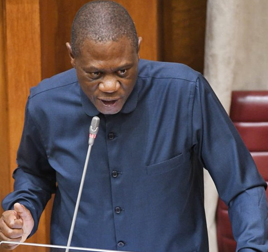
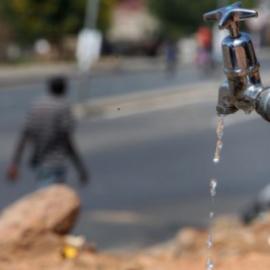
Deputy President Paul Mashatile says government is implementing rapid response interventions to resolve water and electricity disruptions in various municipalities across the country.
The Deputy President was speaking during his question and answer session in the National Council of Provinces on Tuesday.
Through the Service Delivery War Room, the Deputy President said the Department of Cooperative Governance and Traditional Affairs (CoGTA) has developed some improvement plans to implement rapid response interventions.
These, he said, include the establishment of the Results Management Office and the introduction of reforms in the Municipal Infrastructure Grant to fund repairs, refurbishment and renewal of infrastructure.
The war room is looking into the continued deployment of technical professionals through the Municipal Infrastructure Support Agent (MISA).
The Deputy President told Members of Parliament that part of the Results Management Office’s responsibility is to assist municipalities in advancing demand-side management measures and providing alternate energy supplies.
“These initiatives are aimed at reducing the impact of load shedding and its effect on substations and transformers,” he said.
Last week, the Deputy President, together with the Deputy Ministers of CoGTA and Water and Sanitation, visited Knysna Municipality in the Western Cape to find solutions to some of the challenges the municipality is facing.
“We are happy to report that with the support of MISA, the pump station that had been vandalised in the Hornlee area has been repaired, and water supply has been restored to the community.
“As this government, we are committed to working within the inter-governmental relations framework to ensure that we assist municipalities in delivering services to our people,” he said.
MISA continues to engage the private sector to fund bulk water infrastructure projects. Mashatile cited Sishen Mine in the Northern Cape and the Anglo Platinum Mine in Limpopo as some examples of private sector projects.
“These private sector entities have stepped up to fund wastewater treatment works upgrades in the Northern Cape and Limpopo,” he said.
In addition, Eskom has initiated the Active Partnering Programme, which provides technical support to municipalities through targeted interventions based on their needs. This is also aimed at strengthening the capacity to address the high failure rate of mini substations and transformers.
The Deputy President said Parliament is currently processing the South African National Water Resources Infrastructure Agency SOC Limited Bill to establish the South African National Water Resources Infrastructure Agency as a State-owned company, and a major public entity.
“The agency will enable South Africa to expand our bulk water infrastructure and improve the management of existing water assets to ensure water security over the next decade,” he explained.
Mashatile said government will continue to work tirelessly to assist municipalities to meet their constitutional obligation to provide reliable water and sanitation services to all South African citizens.
Govt continues to support women-owned businesses

Government continues to provide targeted support for female-owned businesses to promote women’s sustainable participation in the economy, said Minister in the Presidency for Planning, Monitoring and Evaluation, Maropene Ramokgopa.
“The ultimate goal is for women to develop sustainable enterprises that contribute to the country’s gross domestic product, employment, equity and economic transformation to enable women to have equal access to and control over economic resources,” she said.
The Minister was delivering a keynote address at the 2024 Forbes Woman Africa Awards in Johannesburg on Friday.
She also touched on President Cyril Ramaphosa’s preferential procurement target announced in 2020 to accelerate the empowerment of women, youth and people with disabilities in business.
“This a strategy mapped out by government to allocate 40% of all procurement spend in the public sector towards businesses owned by women,” Ramokgopa explained.
“South Africa has set the precedence, now we need the rest of the continent to follow and lead in the capacitating of women-owned SMEs (small and medium enterprises).”
GBV
The Minister also used the platform to call on African leaders to take up the fight against gender-based violence and femicide (GBVF) and protect women, children, and other vulnerable groups.
“Beyond the change-makers in this room, our call for gender equality is more pressing for working class and poor women,” she said.
Ramokgopa believes that freedom and security remain significant aspects of gender equality.
Gender equality
The Minister said she was honoured to be joined by women across the world in celebrating International Women’s Day under the ‘Invest in women: Accelerate progress’ theme.
This year marks 47 years since the United Nations (UN) officially recognised 8 March to celebrate the significant strides achieved by women and the broader women’s movement.
“This year is no exception as we amplify our global call for gender equality. We must be bold in our articulation that the empowerment of women requires the necessary financial, political, social, and institutional commitments from all sectors of society,” she stated.
This, she said, includes development financing, and creating an enabling legislative environment that supports gender equality.
She told delegates that the continent carries a rich history of women’s contributions to liberation and development such as Charlotte Maxeke, Ellen Johnson Sirleaf, Wangari Maathai, Graça Machel and Ngozi Okonjo-Iweala.
“In 2024, the women of Africa enjoy hard-earned gains. However, more still needs to be done to accelerate the progress in advancing and protecting fundamental human rights. We dare not lower our voices.”
Women’s rights
Ramokgopa said South Africa has signed and ratified several treaties and instruments aimed at advancing women’s rights in several multilateral fora including the Maputo Protocol on the Rights of Women in Africa of 2003, and the African Continental Free Trade Area (AfCFTA) agreement.
“Although the agenda for gender equality and women’s empowerment in South Africa is advanced in comparison with many other countries, we remain committed to ensuring that the rest of Africa increases efforts to achieve gender equality.”
Ramokgopa also paid tribute to the women who have been brave in their pursuit of equality by occupying strategic positions across the continent and diaspora.
She mentioned the likes of 2019 Miss Universe Zozibini Tunzi and those who are flying the African flag high including the Grammy-award winner singer and performer Tyla Seethal, Kenyan comedian Elsa Majimbo, local media personality Bonang Matheba and Nigerian award-winning writer Chimamanda Ngozi Adichie.
“As the African continent joins in celebrating South Africa’s 30 years of democracy and freedom, may we never trivialise the hard-earned gains of women under this dispensation.”
SA, Zimbabwe to sign agreement for treated water transfer to Musina

Water and Sanitation Minister, Senzo Mchunu, and his Zimbabwean counterpart, Lands, Agriculture, Fisheries and Rural Development Minister, Dr Anxious Jongwe Masuka, will on Thursday sign a Memorandum of Understanding (MOU) for the transfer of treated water to Musina.
The bilateral agreement between the two countries will allow for supply of about 15 million cubic metres per annum (m3/a) which is equal to 41 Ml/d of treated water from Beitbridge Water Treatment Works in the Republic of Zimbabwe to Musina in South Africa.
The Musina Local Municipality has a total population of 132 009 people residing in 192 villages and one town, which is Musina. The area is dry with limited sources of water and largely relies on groundwater for supply.
“South Africa and Zimbabwe signed a bilateral agreement on Co-operation on Water Resources Management and the Establishment and Functioning of the Joint Water Commission (JWC) in 2015,” the department said in a statement.
Limpopo Watercourse Commission agreement amendment
On the day of the signing of the agreement, Mchunu with his counterparts from Zimbabwe, Botswana, and Mozambique – who are all members of the Limpopo Watercourse Commission (LIMCOM) – will also sign the amended LIMCOM Agreement in the transboundary agreement.
LIMCOM is a transboundary organisation established by four member countries to use management of the shared water resources in an equitable manner.
The department said the agreement will enable the Ministers to adopt policies, decisions and provide guidance on the promotion and coordination of the management, development, and equitable utilisation of the shared water resources.
“During the Commission Sitting, the four countries will sign a commitment to implement the Integrated Transboundary River Basin Management for the Sustainable Development of the Limpopo River Basin.
“The agreement will strengthen South Africa’s relations with the three riparian states which share the basin and use water from the river to support various socio-economic activities, including agriculture, tourism, energy generation, as well as for domestic use,” the department said.
National Water Month
Meanwhile, Mchunu and his Deputies, David Mahlobo and Judith Tshabalala, together with Vhembe District Municipality Mayor, Freda Nkondo, will on Friday engage with the community of Musina at Musina Showgrounds, to provide feedback and progress made to address water supply challenges in the area.
The two-day activities form part of the annual National Water Month host by the Department of Water and Sanitation in March.
The National Water Month is South Africa’s expansion of World Water Day, which is observed on 22 March and focuses attention on the importance of freshwater and advocating for the sustainable management of freshwater resources.
This year’s World Water Day will be observed under the theme ‘Water for Peace’, which focuses on the critical role water plays in the stability and prosperity of the world.
Public sector pension funds amendments published

The National Treasury has published the proposed amendments to various pieces of legislation governing public sector pension funds.
“The amendments provide the necessary legislative amendments required to effectively implement the two-pot retirement system changes in public sector funds,” National Treasury said on Monday.
The proposed amendments relate to the Government Employees Pension Law, 1996 (Proclamation 21 of 1996), Post and Telecommunications-related Matters Act, 1958 (Act 44 of 1958) and Transnet Pension Fund Act, 1990 (Act 62 of 1990).
“The proposed amendments insert certain definitions to provide for the introduction of the savings withdrawal benefit; to provide for the appropriate account of a member’s interest in the savings, retirement, and vested components and to provide for deductions that may be made by the funds.
“These amendments seek to align pension laws across all sectors to ensure that pension funds can amend the fund rules and implement the two-pot retirement system on the effective date of 1 September 2024,” National Treasury said.
The amendments to the public sector pension laws will be proposed for inclusion in the Pension Funds Amendment Bill [B3—2024], which is currently under consideration of the Standing Committee on Finance.
Parliamentary hearings on the Pension Funds Amendment Bill will be held on 12 March 2024, including these public sector pension laws amendments.
The proposed amendments to the public sector laws may be found on the National Treasury website www.treasury.gov.za.
Almost all universities pay NSFAS February allowances

The National Student Financial Aid Scheme (NSFAS) has commended the cooperation from all universities and Student Representative Councils (SRCs) who ensured that the February allowances payment was implemented seamlessly.
This follows a media briefing held on 4 March 2024 where NSFAS reported that universities would be facilitating the payment of allowances for the months of February and March 2024.
In a statement issued over the weekend, NSFAS reported that 25 out of 26 universities have paid the February allowances, as per their commitment dates.
The allowances paid include the book, accommodation, transport, food, and personal care allowances.
“The University of South Africa (UNISA) is finalising the process of determining allowances based on the number of modules registered by students. All the universities will also be handling the payment of March allowance,” NSFAS said.
The scheme reminded institutions to allow direct payment service providers to conduct the process of onboarding students, while they continue with payments.
Universities are also reminded that direct payments of allowances for the 2024 academic year will commence in April 2024.
“The process of the payment of allowances to Technical Vocational Education and Training (TVET) colleges commenced on 6 March 2024 and NSFAS will provide further details on these processes within by the forth coming week,” NSFAS said.
Private student accommodation
On the pilot private student accommodation project, NSFAS has called on all institutions, both universities and TVET colleges, and students who have not been onboarded on the NSFAS portal to do so immediately, as this is a requirement to ensure that accommodation allowances are paid without any delays.
“Failure to onboard students will result in delays in the payment of accommodation allowances. Accommodation providers are therefore requested to ensure that leases that are generated through the portal are signed by all students in their residences,” NSFAS said.
The scheme also reiterated that it does not have any arrangements with unaccredited accommodation providers.
“NSFAS is against any form of corruption and bribery that is alleged to be taking place in some institutions, between accrediting agents, accommodation providers, officials responsible for accommodation in institutions, and student leaders.
“This will not be tolerated….the scheme will work with law enforcement agencies to investigate all these reported cases of corruption. NSFAS will conduct sting operation in institutions to ensure that students are not further exploited,” NSFAS warned.
The scheme encouraged students and members of the public to report any suspected fraud to NSFAS through the whistleblowing hotline Vuvuzela. The toll free number is 0860 247 653 or they can SMS Call-back to 30916.
NSFAS warned it will not take lightly any security compromise from the accommodation provider and will always hold property owners accountable for the safety of students in their properties.
On students’ transport, NSFAS reminded accommodation providers who are within a 5km radius and above of their responsibility to provide transport to students to their respective campuses and back.
Intimidation at University of Zululand
Meanwhile, NSFAS has strongly condemned the acts of intimidation and holding of its officials hostage at the University of Zululand (UniZulu).
The incident, which took place on Friday, follows a meeting held by NSFAS Board Sub-committee on student accommodation, including UniZulu and Accommodation Providers (APs) on 5 March 2024, to discuss the onboarding and payments of student accommodation.
“The meeting resolved that NSFAS will send officials to assist both students and accommodation providers in the onboarding process for all NSFAS-qualifying students who are currently residing in various private accommodations.
“This intervention was aimed to ensure that private accommodation providers are paid for all NSFAS-qualifying students who have been approved for accommodation allowances,” the scheme said.
Following Friday’ incident, NSFAS said it was considering measures to take against the accommodation providers who participated.
Men called to stand up against GBV

The Department of Women, Youth and Persons with Disabilities (DWYPD) has reiterated its call for all South African men to stand and fight the scourge of rape and gender-based violence (GBV) by taking part in the 365 Days of no Violence against Women and Children campaign.
“It is critical that as a country and society, we encourage men to take action in denouncing the continuation of the trend of rape and violence against women and children, while equally addressing the underlying causes of violent masculinity and physical abuse against women and children,” DWYPD Minister, Nkosazana Dlamini-Zuma, said.
Violence against women and children in the form of physical, sexual, psychological and economic abuse is rampant in every country, and South Africa is not exempt, the Minister said.
At least one in three women experience violence at some stage in their lives, with intimate partner violence reported as the most common.
The Minister said South Africa, like many other countries, has adopted legislative provisions aimed at addressing violence against women and children.
She warned that failure to enforce laws, including laws against domestic violence, rape and human trafficking, which were adopted over the past decade, will limit their impact.
Through the implementation of the resolutions of the National Strategic Plan (NSP) on GBV, Dlamini-Zuma said the department continues to work with stakeholders to combat the rampant level of violence against women and children.
READ | Significant strides made in social assistance programme and combating GBV
She said the department has partnered with the taxi industry in implementing the NSP, as well as training its members on GBV, including raising awareness.
“Social norms, religious and traditional values, patriarchy and gender relationships contribute to dominant notions of masculinity, which eventually undermine women and children’s inalienable right to existence. A clarion call by the NSP on GBV amplifies the need to increase programmes aimed at engaging men and boys in fighting the scourge of violence against women and children.
“Using our criminal justice system, we are calling for more protective laws for women and children, with tougher and stiffer punishment for perpetrators of GBV needed to curb the scourge of femicide plaguing South Africa,” Dlamini-Zuma said.
Government, private sector partnership yields positive results

Over the last nine months, the partnership between government and business has made significant strides in addressing the electricity supply crisis, the severe challenges in freight rail and port operations, and crime and corruption.
“Since the partnership began, the private sector has contributed more than R170 million of direct support and has mobilised over 350 technical experts. More than 130 CEOs of the country’s leading companies have pledged their support,” President Cyril Ramaphosa said on Monday in his weekly newsletter.
The partnership was established in June last year to tackle challenges that were an obstacle to faster growth and job creation.
“Since November 2023, load shedding is 61% lower than the same period a year ago. Among other things, this has been made possible by the return of units at Kusile power station and the impact of new generation capacity from rooftop solar and private sector investment.
“Under the leadership of its new Group CEO, Eskom is finalising an agreement with business to deploy additional independent skilled experts to support Eskom.
“Business is supporting a number of the workstreams of the National Logistics Crisis Committee (NLCC), providing technical, security and operational expertise to Transnet’s efforts to improve the performance of ports and freight rail,” the President said.
With all stakeholders working together, Transnet has achieved a 45% reduction in vessels anchored outside the Port of Durban and a 36% reduction in the waiting time to anchor for container vessels.
“A major success has been the provision of security by business on the rail network, which has resulted in a 65% reduction in criminal incidents on the Northern Corridor, reducing the number of trains cancelled. Work is currently underway to ramp up the deployment of South African Police Service (SAPS) resources to secure network infrastructure in the longer term.
“Steady progress has been made in the crime and corruption focal area. Through the Joint Initiative on Crime and Corruption (JICC), the private sector is providing business information and resources to assist with the fight against infrastructure crime,” the President said.
Support has also been provided to modernise the 10111 helpline, with a pilot project initiated at the main call centre in Midrand, and the establishment with the Hawks of a forensics analysis centre.
“Building on this progress, government and business are now focused on actions that will make a considerable and lasting difference over the course of the next few months.
“Among other things, we are working to increase electricity generation capacity from different sources by up to 10 600 MW, which will enable a significant reduction in the severity of load shedding by the end of this year.
“This includes improved Eskom plant performance, additional private investment in rooftop solar and large-scale power projects, and connecting projects from previous renewable energy bid windows to the grid,” the President said.
Following the recent appointment of permanent executive leadership, Transnet is focused on rebuilding internal capacity and drawing on private sector technical resources to restore the operational performance of strategic rail corridors.
“An important part of the work to tackle crime and corruption will be the passage of the National Prosecuting Authority (NPA), Amendment Bill, which will strengthen the independence and investigating capacity of the NPA.
“It will also enable the establishment of additional infrastructure to support the Investigating Directorate as a permanent entity, including a dedicated forensics laboratory. A key focus of the partnership is to secure South Africa’s removal from the Financial Action Task Force grey list by at least June 2025,” Ramaphosa said.
While this partnership between government and business has been focused on specific immediate actions, the President said the broader work to grow the economy and create jobs draws on the contributions and capabilities of all social partners and stakeholders.
“As we work to rebuild our economy, we will strive to deepen these partnerships and to reach out to all South Africans to be involved in these efforts. By broadening the involvement of all social partners in this work, we will continue to build durable social compacts that make a real difference in people’s lives.
“We have long believed that it is only by working together that we can make progress. The partnership between government and business has shown what is possible when we are focused and committed towards the achievement of a common goal,” the President said.
MSC’s R350m investment poised to boost KZN economy

The Mediterranean Shipping Company SA’s (MSC) R350 million investment in KwaZulu-Natal will go a long way in boosting the provincial economy and creating jobs for the local community.
KwaZulu-Natal Premier, Nomusa Dube-Ncube, said this at the unveiling of MSC’s new cold storage facility at Cator Manor in Chesterville, Durban.
Officially opened on Thursday night, the facility has the capacity to accommodate 10 000 pallets and is poised to meet the growing demands of the cold logistics market and ensure the preservation of temperature-sensitive goods, guaranteeing their quality during transit.
Delivering the keynote address, Dube-Ncube expressed her appreciation to MSC for choosing KZN as their investment destination of choice, noting the state-of-the-art facility represents an investment in the development and construction of a cutting-edge cold storage facility.
“The investment by MSC is not only a vote of confidence in our economy but it shows that if we work together as government and the private sector, there is so much we can achieve.
“The fact that MSC has invested R350 million in the construction and development of this cold storage facility, is a clear demonstration that you share our positive outlook for the future growth of KwaZulu-Natal,” Dube-Ncube said.
MSC South Africa Chairperson, Captain Salvatore Sarno, said the establishment of the cold storage facility underscores MSC’s commitment to enhancing supply chain reliability for perishable goods, and playing a pivotal role in facilitating the international trade of temperature-sensitive products worldwide.
Sarno said South African exporters are set to benefit from a comprehensive logistics solution enabling their perishable products to reach global markets seamlessly via sea transport.
“We are proud to unveil this state-of-the-art cold storage facility, which not only reinforces our dedication to supporting the South African economy but also underscores our commitment to job creation and economic growth.
“This investment exemplifies our ongoing efforts to provide value-added services to our customers while contributing to the development of the local economy,” Sarno said.
13 officers earn their Special Task Force wings

The South African Police Service (SAPS) has welcomed 13 Special Task Force (STF) operators to join the organisation’s elite tactical unit.
The cohort stood on parade at the SAPS Academy in Tshwane on Thursday where they were received and acknowledged by the Deputy National Commissioner for Policing, Lieutenant General Tebello Mosikili.
The 13 have undergone and successfully completed the 37th Special Task Force (STF) Selection Training Programme.
The STF unit deals with high risk operations that fall beyond the scope of general policing which requires specialised skills.
“We cannot wait to serve our communities and give our country our best. We want to be seen as super humans and be able to tackle serious and violent crime in our country,” were some of the sentiments expressed by the officers.
More than 525 members applied to join the 37th STF Selection Training Programme.
“[A total] 150 made it to the five week pre-selection phase while 110 made into the training programme. Only 13 successfully completed and were welcomed into the STF ranks.
The thirteen members are adding to existing capacity of STF members that attend to high risk and hostage situations, kidnappings, cash-in-transit robberies and illicit mining operations across the country,” said the SAPS in a statement.
An STF Parachute Wing is worn on the left chest and signifies that the police member has been trained at a high level of weapon proficiency, hostage release tactics and the ability to deploy operationally by parachute into all territories.
In her address, Lieutenant General Mosikili said South Africa needs a Police Service with members that are loyal, disciplined, upright in character, patriotic and willing to serve the country with pride and dignity.
“Best wishes for what lies ahead, and more importantly, on the journey you are about to embark on. I have no doubt that you are equal to the tasks that you will be required to perform. All of us have every confidence in you that you will have meaningful and successful careers as STF members, always remember that this is a calling, it’s about passion and commitment to the badge,” she said.
To join this elite unit, SAPS members must be 32 years and younger and must have served in an operational environment for at least two years.
Members must also have undergone and been successful in the pre-selection phase which consists of various rigorous exercises to determine if the member can endure the STF Selection Training Programme.
President affirms removal of Judges Hlophe and Motata

President Cyril Ramaphosa has officially removed Judges John Mandlakayise Hlophe and Nkola Motata from judicial office following the National Assembly resolutions to remove them.
In a statement, the Presidency said the Constitution states that a judge may be removed from office only if the Judicial Service Commission finds that the judge suffers from an incapacity, is grossly incompetent, or is guilty of gross misconduct and the National Assembly calls for that judge to be removed, by a resolution adopted with a supporting vote of at least two thirds of its members.
Secondly, the Constitution states that the President must remove a judge from office upon adoption of a resolution calling for that judge to be removed.
“The President accordingly removed Judge President Mandlakayise Hlophe of the Western Cape Division of the High Court from judicial office following the National Assembly resolution to remove Judge Hlophe, as stipulated in section 177 (1) (b) of the Constitution,” the Presidency said on Thursday.
A total of 305 Members of Parliament voted for the removal of Judge Hlophe from judicial office, with 27 members voting against his removal.
The Judicial Service Commission referred the matter to Parliament after the Judicial Conduct Tribunal (JCT) concluded that Hlophe’s conduct breached the provisions of section 165 of the Constitution by improperly attempting to influence the two Justices of the Constitutional Court to violate their oaths of office.
The JCT established that Hlophe’s behavior seriously threatened and interfered with the independence, impartiality, dignity and effectiveness of the Constitutional Court and further undermined public confidence in the judicial system.
President Ramaphosa has also removed Retired Judge of the Gauteng High Court Division, Justice Nkola John Motata following the National Assembly resolution to remove him, as provided for in section 177(1) (b) of the Constitution.
A total 296 Members of Parliament voted for Judge Motata’s removal from office, with one voting against, and thirteen members being recorded as having abstained.
Retired Judge Motata was found guilty of gross misconduct following a drunk driving conviction in 2009.