SA requests ICJ to act to prevent famine in Gaza

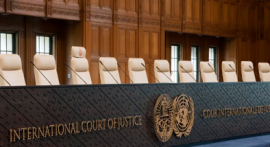
South Africa has urgently asked the International Court of Justice (ICJ) to enforce additional emergency measures against Israel to prevent a famine in the Gaza strip.
A statement released by the Presidency on Wednesday detailed that South Africa approached the ICJ with an urgent application for the provisional measures the court ordered on 26 January 2024 to be strengthened.
According to the Presidency, the urgent application has been necessitated by widespread starvation in Gaza, which has claimed the lives of at least 15 children in the past week alone, with the actual numbers believed to be much higher.
It added that the United Nations (UN) experts have warned that the number of deaths will increase exponentially unless military activities are halted and the blockade is lifted.
“The situation is urgent. South Africa has no choice but to approach the Court for the strengthening of the Provisional Measures in place to try prevent full-scale famine, starvation and disease in the Gaza Strip, which experts predict may result in more than 85 000 deaths in the next six months, if nothing is done,” the statement read.
South Africa’s move comes on the back of warnings by the UN General Assembly, and an unprecedented number of UN bodies and human rights experts that have recognised that the only way to avert such a catastrophe is by an immediate cessation of hostilities to enable full and effective delivery of humanitarian aid.
“Time is running out for the Palestinians. It is already too late for the 30 000 people who have lost their lives in Gaza since the start of the conflict. The world has an obligation to do whatever can be done immediately to stop further suffering and loss of life. The threat of all-out famine has now materialised.
“The Court needs to act now to stop the imminent tragedy by immediately and effectively ensuring that the rights it has found are threatened under the Genocide Convention are protected. The people of Gaza cannot wait,” the statement read.
Details of the request
In its application, South Africa has officially called for the indication or modification of several provisional measures related to the ongoing conflict.
The requested actions include an immediate cessation of all fighting and hostilities, the prompt release of hostages and detainees, and the compliance of all parties to the Convention on the Prevention and Punishment of the Crime of Genocide with their obligations.
Additionally, South Africa urged the parties to refrain from any actions that may undermine the rights of Palestinians in Gaza to be protected from genocide and related prohibited acts.
The State of Israel is specifically called upon to take swift and effective measures, including suspending military operations in Gaza, lifting the blockade, and revoking any hindrances to Palestinians’ access to humanitarian assistance.
Furthermore, Israel is required to provide urgently needed basic services and humanitarian aid, addressing issues like famine and adverse living conditions in Gaza. This entails ensuring access to food, water, fuel, shelter, clothing, hygiene, sanitation, and medical assistance.
Lastly, the state of Israel must submit an open report to the Court within one month detailing the actions taken to implement all ordered provisional measures up to the present date.
ICJ order
On 29 December 2023, South Africa approached the ICJ, as a State Party to the Convention on the Prevention and Punishment of the Crime of Genocide (‘Genocide Convention’), seeking an order to prevent Israel from committing genocide against the Palestinian people who, along with all other distinct national, racial and ethnical groups, are protected by that Convention.
On 26 January 2024, the Court ruled that South Africa’s claim met the standard of plausibility and, on the request of South Africa, ordered Israel inter alia, to take action to prevent and punish genocide, incitement to genocide, and to enable the immediate and effective provision of basic services and humanitarian assistance to besieged Gaza.
READ | President welcomes ICJ ruling
These ‘Provisional Measures’ were issued by the Court to prevent irreparable and irreversible harm to the rights of Palestinians pending the Court’s final decision on the case.
“Regrettably, Israel has not complied with the Court’s binding order, but has instead escalated its genocidal acts against the Palestinian people. On 15 February 2024, following a letter to the Court from South Africa in response to Israel’s threatened assault on Rafah, the Court reminded Israel that ‘the perilous situation [in Rafah] demands immediate and effective implementation of the provisional measures indicated’ by it on 26 January 2024, which included Israel’s obligation to ensure ‘the safety and security of the Palestinians in the Gaza Strip’,” the statement said.
South Africa added that Israel’s ongoing failure to “immediately and effectively implement the Court’s Order and comply with its obligations under the Genocide Convention, as well as its contempt for the Court, is manifest”.
“As a result, the dire situation of Palestinians in Gaza that gave rise to that Order has worsened in all respects. The world has watched in horror as over two million people in Gaza face famine.”
South Africa further highlighted that under the Genocide Convention, deliberately inflicting conditions of life calculated to bring about the destruction of Palestinians including through mass starvation and destruction of food systems amounts to genocide.
Road safety initiative for children launched in Gauteng

The Road Traffic Management Corporation (RTMC) has partnered with Santam on an initiative to reduce the high proportion of children who lose their lives in road-related incidents.
Santam Head of Market Development, Neptal Khoza, said they have identified a need to roll out scholar patrol projects in townships where many children walk or commute to school without adult supervision and often need to cross dangerous, multi-lane roads.
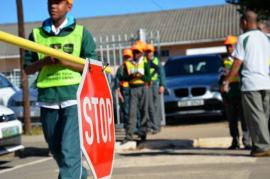
The scholar patrol initiative will be set up in at 10 schools in the Sedibeng District Municipality in Gauteng.
Safety patrollers on duty will be trained effectively, given the appropriate uniform and equipment, including umbrellas and rain ponchos during the rainy season.
Patrollers will also receive certificates of recognition for their participation. The initiative will provide much-needed temporary employment opportunities for the surrounding communities.
Post-matric, unemployed youth will be recruited as patrollers in a bid to contribute towards the government’s objective to provide an avenue for labour absorption and income transfers to poor households in the short- to medium-term.
“The project has the potential to prepare youth for future careers in road safety, traffic police and general law enforcement. This project is one of many initiatives that we will plug into the existing community enhancement structures in achieving our broader goal of building communities that are more resilient. We foresee that learners, as well as their families and communities, will benefit immensely form this service.
“We call on other corporate and private sector entities to join us in partnering with the public sector in ways that can benefit greater society and ultimately provide existing initiatives with the boost they need to reach their full potential,” Khoza said on Wednesday.
The World Health Organisation (WHO) Global Status Report on Road Safety of 2023 cites that road traffic injuries remains the leading cause of death for children.
“Pedestrian safety remains the most significant road safety challenge in South Africa. Our records as the RTMC indicate that on average 10.2% of pedestrian fatalities are of the 0 to 14 age brackets. For the past three years, 47% of fatal crashes involved pedestrians, with Gauteng as one of the main contributors to the high pedestrian fatality rate.
“Funding for road safety remains a challenge for the RTMC. There has been continuous effort to engage the private sector for collaboration on the implementation of road safety initiatives. The school intervention by Santam in the road safety programme will go a long way in creating safer communities and save more lives,” said RTMC spokesperson Simon Zwane.
ChildSafe spokesperson and Executive Director, Zaitoon Rabaney, said they will continue to advocate for the 30 km/h speed restriction around schools, as well as environmental modifications that influence driver behaviour to adhere to slower speeds in school areas.
“Equipping our children and their families with the necessary knowledge and skills to navigate roads safely is paramount. Through educational programmes, campaigns and targeted outreach efforts, such as the scholar patrol initiative, we can foster a lasting positive impact on the safety culture on our roads, especially around schools.
“These alarming statistics, however, highlight the urgent need for comprehensive road safety measures, particularly those focused on protecting our most vulnerable road users – children,” Rabaney said.
Government welcomes slight GDP growth

Government has welcomed the release of the latest Gross Domestic Product (GDP) figures by Statistics South Africa, which show a slight growth of 0.1% in the fourth quarter of 2023.
“This growth is particularly encouraging as it surpasses pre-pandemic levels. This indicates a resilient economy showing signs of recovery, and bettering previous strength,” Minister in the Presidency, Khumbudzo Ntshavheni, said on Wednesday.
In the fourth quarter, real GDP reached R1 158 billion, marking continuous improvement from the pre-COVID-19 level of R1 150 billion, although still below the peak recorded in the third quarter of 2022.
READ | GDP increases by 0.1% in the fourth quarter of 2023
“The increase, though slight, signifies continued progress in the country’s economic recovery. It signifies the resilience of our economy and the positive impact of government interventions. We are particularly pleased to see the transport, storage and communication industries leading the growth.
“This modest uptick in GDP is testament to the concerted efforts of various sectors and stakeholders in navigating the complexities that were posed by the COVID-19 pandemic and other domestic and global challenges,” Ntshavheni said.
The Government Communication and Information System (GCIS) said the modest growth signifies a positive turning point.
“Government remains committed to implementing policies that foster a conducive environment for further economic expansion, and to continue to invest in infrastructure development, support small businesses, and create an environment that attracts investment. Working together, we can build a stronger and more inclusive South African economy for all,” GCIS said.
SANDF deployment not done without planning

By Siphiwe Dlamini
The deployment of a contingent of the SA National Defence Force (SANDF) as part of the SADC Mission to the Democratic Republic of Congo (SAMIDRC) and the subsequent tragic deaths of Captain Simon Mkhulu Bobe and Lance Corporal Irven Thabang Semono have provided plenty of grist to the opinion mill.
It should. We are a democracy and this is a people’s defence force – and its role and its use should be debated.
There are major and justifiable concerns about budget implications. The lack of sufficient air cover for the mission and that this deployment might be fatally overstretching the SANDF’s capacity has been raised by some as a concern.
None of these are new concerns; successive chiefs of the SANDF have raised these precise issues in the past, along with their chiefs of service.
But these concerns ignore the reality that this deployment was not done in haste, nor without the requisite planning. There have been numerous discussions at the highest echelons of government about the need to support the SANDF in all its needs, including funding. There is a real commitment to do this.
We should also not forget three critical points in the current discourse, well intentioned or otherwise, about the SANDF.
The first is that the mission in the DRC is not solely a South African tasking but a request from the greater Southern African Development Community to ensure the stability of the region as the United Nations began its well-publicised drawdown of Monusco, its 20 year-long mission to stabilise the DRC, in December last year.
Secondly, there are other countries that will be also contributing to this mission, some of whom will be able to directly address the issue of air cover through the capabilities of their own air forces.
Thirdly, the SANDF has been part of Monusco since its inception, commanding the mission and regularly providing commanders for the smaller three-battalion strong multinational Force Intervention Brigade, the only UN force mandated to use force offensively.
The biggest issue of all though is peacekeeping. SA is a continental leader and has never shied away from the often onerous responsibility to lead these processes, participating from the front, if necessary, putting its money and its troops where its mouth is.
This is not an easy decision and it is not without risks, all of which weigh very heavily upon our commander-in-chief, President Cyril Ramaphosa; the political head; Defence and Military Veterans Minister Thandi Modise; and chief of the SANDF, General Rudzani Maphwanya, before deploying these national assets.
These soldiers are not conscripts, they are volunteers, but all of us know the risks that they will face in the field – and the sacrifices they may well be asked to make – to keep this peace.
It is easy for the keyboard warriors to argue that our horizons should be limited to our land, sea and air borders, but the reality is that the beating of a butterfly’s wings in Kivu or Goma could very well create an unstoppable tsunami in Johannesburg or Cape Town.
It’s too late to deal with an insurgency not just on your doorstep but within your borders. This is part of the rationale for the SANDF’s participation in the SADC Mission in Mozambique (Samim) to keep the insurgency in Cabo Delgado at bay.
That is the apex threat – of war and terror in our cities and countryside, but there are other threats, too, of even more refugees seeking a better life in SA, potential economic and criminal risks which put further strain on our law enforcement agencies, the home affairs department, the department of social security and, indeed, our fiscus.
It is said that a stitch in time saves nine. It doesn’t help to just create nonporous borders, where the SANDF is already performing a yeoman and unheralded service as part of the ongoing Operation Corona.
We have to try to resolve issues and create the conditions that are crucial to allowing a sustainable and enduring state of peace on the continent that could otherwise threaten the way of life we aspire to, even though they are not our direct neighbours.
It is this philosophy that has guided the SANDF ever since the days of our first commander-in-chief Nelson Mandela, when he worked tirelessly to bring peace to the Great Lakes Region.
*Siphiwe Dlamini is Head of Communications at the Department of Defence.
**This article first appeared in The Citizen on 1 March 2024.
President Ramaphosa calls for ceasefire in Sudan

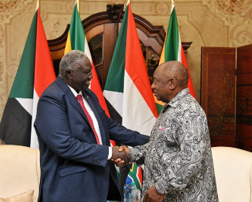
President Cyril Ramaphosa has welcomed a briefing by the Vice President of the Transitional Sovereign Council of the Republic of Sudan, Malik Agar Eyre Nganyoufa, on the situation in Sudan, while reiterating the call for an immediate ceasefire.
President Ramaphosa held a meeting with Nganyoufa on the situation in Sudan on Sunday.
According to the Presidency, the purpose of the meeting was to brief the President on the developments towards peace in Sudan.
“President Ramaphosa welcomed the briefing and expressed South Africa’s support for dialogue between the warring factions. The President further reiterated the call for an immediate ceasefire that will alleviate the suffering and humanitarian catastrophe facing the Sudanese people, especially women and children.
“President Ramaphosa looks forward to meeting with General Abdel Fattah al-Burhan, Chairman of the Transitional Sovereign Council,” the Presidency said.
SANRAL invests R740m to improve Eastern Cape roads

The South African National Roads Agency SOC Limited (SANRAL) is set to inject R740 million for six road maintenance projects in the Kou-Kamma Local Municipality in the Eastern Cape over the next few months.
These projects include a periodic maintenance contract for the N2 National Road from Bloukrans River bridge to Storms River village intersection, valued at R80 million, and another contract from Storms River village to Wittelsbos, worth R50 million.
The scope of work will entail the construction of surface seal, localised surface repairs, crack sealing and edge break repairs.
“The special maintenance project on the R62 national road between the border of the Eastern Cape and Western Cape provinces is expected to start in June this year and over 30 Small, Medium and Micro Enterprises (SMMEs) are expected to benefit, and over 200 job opportunities will be created.
“About 250 job opportunities are expected to be created, and over 35 SMMEs will benefit on the special maintenance project on the R62 national road between Joubertina and Kareedouw.
“The construction tender for the special maintenance of the R62 between Louterwater and Joubertina is in design stage, while the periodic maintenance between Bloukrans River bridge and Storms River village is at tender evaluation stage. The contract for the periodic maintenance between Storms River Village and Wittelsbos is in construction tender stage, closing in March 2024,” SANRAL project manager Siphesihle Bulose said.
SANRAL Southern Region’s Transformation unit, Zenande Mpondo, said that the roads entity will train and develop SMME contractors to enhance their business acumen and tendering skills.
“All SMMEs will be required to undertake assessment and class activities during the training, and they will have to demonstrate competence to be awarded the unit standard. The unit standards are from the National Certificate: Construction Contracting National Qualifications Framework (NQF) 2. These unit standards are a skills programme that will have a credit value towards the National Certificate,” Mpondo said.
Call to resolve challenges at Office of Military Ombud

The Joint Standing Committee on Defence has urged the Department of Defence and Military Veterans and the Office of the Military Ombud, to find workable solutions to the Ombud’s current challenges in spending its goods and services budget.
The committee received a mid-term report for the 2023/24 financial year (1 April to 30 September 2023).
“While the committee welcomed the progress in implementing the Ombud’s mandate, it highlighted that the current process where the Ombud can only procure goods and services through the department, limits its ability to properly function and spend its budget.
“The committee acknowledged that the Minister of the Defence and Military Veterans has given assurances that the matter is under consideration. Furthermore, the committee hopes the National Treasury’s review of the Ombud office’s capacity to ensure it is adequately resourced will bear positive fruit,” said the Committee in a statement on Friday.
The Office was created in 2012 with the mandate of investigating complaints by South African National Defence Force (SANDF) members and former members regarding their conditions of service.
Part of the mandate is also investigating the complaints from the members of the public regarding the official conduct of the SANDF when they are on duty.
Meanwhile, the committee welcomed progress made in investigating complaints lodged with the Ombud Office, especially carryover cases from the previous financial year.
The committee was informed that the office had 100 active cases by September 2023, which included 53 cases lodged in this financial year and 47 lodged in the previous year.
The committee has encouraged the Office to continue ensuring the effective and efficient resolution of complaints within the set timeframes through continued improvement of investigation turnaround times.
This, according to the committee, will further entrench the legitimacy of the office in the hearts and minds of South Africans.
The committee also welcomed the work the Office has done in strengthening its outreach programme across the country to make the public aware of its mandate.
The Office reported that it has undertaken 52 outreach programmes across the country and that it is now collaborating with sister government departments and municipalities to ensure its work reaches a wider audience.
“The heightened outreach programmes will lead to greater awareness of the mandate of the office and will ensure adherence to set standards. Also, training of members of the South African National Defence Force by the office will ensure that members are aware of expected official conduct,” co-Chairperson of the committee, Cyril Xaba said.
New Eskom chief executive assumes duties

Dan Marokane officially assumes his role as Eskom Group Chief Executive today.
In a statement on Friday, the Eskom Board expressed confidence in Marokane’s abilities, as well as in the leadership and staff of Eskom, emphasising their collective commitment to turning the organisation around.
“We expect Morokane and his leadership team to accomplish at least two critical tasks. Firstly, they must address the current business challenges. Load shedding must become a thing of the past. Secondly, they need to reposition and restructure Eskom to enable growth and sustainability,” said Eskom Board chairman Mteto Nyati.
As Marokane takes the helm, the Eskom Board has asked him to prioritise several key areas in the first 100 days and these are:
- Assessing the Generation Operational Recovery Plan.
- Reviewing Eskom’s unbundling plans.
- Engaging with internal and external stakeholders.
These first 100 days are crucial for helping him gain the necessary insights about Eskom and the industry.
Eskom said the new Group Chief Executive should be in a position to engage with the media at the end of this critical period.
“Morokane has the full support of the Eskom Board. Eskom employees are excited to welcome him back into the organisation. We invite all South Africans to rally behind him as he steers Eskom toward stability, reliability, and sustainability,” said Nyati.
Public Enterprises Minister Pravin Gordhan announced the appointment of Marokane in December 2023.
READ | Marokane re-joins Eskom as new chief executive
According to the Department of Public Enterprises, Marokane is a qualified Chemical Engineer, who has a MBA and is a seasoned executive with more than 20 years of senior leadership experience.
At the time of the announcement of his appointment, Marokane was expected to join the power utility no later than 31 March 2024.
Marokane was a senior manager at Eskom from 2010 to 2015, holding various senior positions, including Head of Group Capital.
Gauteng officially launches school of arts

Gauteng Education MEC Matome Chiloane has officially launched Khutlo-Tharo Performing and Creative Arts School of Specialisation in Sebokeng on Thursday, with a focus on Research and Innovation.
The Schools of Specialisation Programme continues to be a pioneering initiative by the Gauteng Department of Education, with Khutlo-Thato marking the 35th School of Specialisation to be launched in Gauteng.
“As we reflect on the journey thus far, it is clear that the Schools of Specialisation Programme has become an integral part of Gauteng’s educational legacy. Through collaboration, innovation, and a steadfast commitment to excellence, Gauteng continues to strive for greatness.
“We take pride in Khutlo-Tharo continuing to be a beacon of hope in this community and beyond, providing underprivileged learners with opportunities to explore and develop their creative talents that might otherwise have remained dormant within the confines of traditional education,” the Gauteng Education Department said.
In recognising the integral role of the arts in 21st-century education, the department said that the widely acknowledged STEAM (Science, Technology, Engineering, Arts, and Mathematics) education yields numerous benefits, including enhanced creativity, academic performance, motor skills, decision-making abilities, visual learning, and overall learning experiences.
By infusing arts into STEAM framework, learners are offered a fresh perspective on traditional subjects, fostering engagement and allowing them to explore diverse fields in a conducive and nurturing environment.
According to the department, this approach not only opens pathways to artistic careers but also prepares learners for success in more conventional professions, including those in Maths, Science and Engineering, further expanding learners’ options and opportunities for their future and emphasising the Schools of Specialisation Programme aim of addressing unemployment.
The school has excelled in the arts, earning multiple accolades in music over the years, while also demonstrating resilience in achieving excellence in matric results. Since 2018, a steady increased has been witnessed, culminating in a commendable 90.8% pass rate in 2023.
During the launch, learners demonstrated how there is Science in Art. The launch was also filled with amazing theatrical, entertaining and musical acts, which showed an extensive level of dedication from learners. The school also promotes entrepreneurship, with learners selling jewellery, artworks and ornaments – all crafted and made by them.
“Indeed, we envision a transformative educational journey that nurtures and challenges learners’ technical, creative, and academic talents. We are committed to dispelling stereotypes associated with arts education and demonstrating the boundless possibilities that lie ahead.
“Our goal is to cultivate well-rounded citizens who will contribute meaningfully to our society and beyond, and it is the learners of Khutlo-Tharo who will be the trailblazers who turn these possibilities into reality. We look forward to embarking on this journey of growth, innovation and empowerment alongside our learners, staff and community,” Chiloane said.
President suspends Deputy Minister Peters

President Cyril Ramaphosa has informed Deputy Minister of Small Business Development, Dipuo Peters, of his decision to suspend her.
In a statement on Friday, the Presidency said the Deputy Minister has been informed of her suspension in writing.
The decision follows a sanction adopted by Parliament’s Joint Committee on Ethics and Members Interests against the Deputy Minister.
The Committee found that Peters had breached the Code of Ethical Conduct in her former portfolio as Minister of Transport.
Consequently, Peters was sanctioned and suspended for one term.
“The suspension, which will be without pay, became effective on 28 February 2024 and will end on 28 March 2024,” said the Presidency.
In a statement at the end of January 2024, Parliament noted the Western Cape High Court’s dismissal of Peters’s urgent application to stop Parliament from implementing her suspension from her seat in all parliamentary debates, sittings and committee meeting-related functions for one term of the parliamentary programme.
In October 2023, after considering a complaint lodged against her, Parliament’s Joint Committee on Ethics and Members’ Interests found that the Deputy Minister had breached the Code of Ethical Conduct in her former portfolio as Minister of Transport.
As a result, she was sanctioned and suspended for one term.
In its statement Parliament said #UniteBehind leader and activist, Zackie Achmat, lodged the complaint with several allegations, including that Peters “was neglectful in her previous portfolio as Minister of Transport by failing to appoint a Group CEO of the Passenger Rail Agency of South Africa (PRASA)”.
It was also alleged that she used PRASA buses for ANC events during 2014 and 2015 without ensuring payment from the ANC, among others.
“Following deliberations, the ethics committee found that the Member’s failure to appoint a Group CEO breached items 4.1.3 and 4.1.4 of the code, in that the Member failed to act on all occasions in accordance with the public trust placed in her; and discharge her obligations, in terms of the Constitution, to Parliament and the public at large, by placing the public interest above her own interests when she failed to appoint a Group CEO after the PRASA Board had commissioned a recruitment process, which resulted in a financial loss of R1 767 000,” said Parliament in its statement in January.
The committee advised the National Assembly that for each of the three violations identified, Peters should be barred from participating in all parliamentary debates and sessions, as well as from committee meetings and their related activities and operations, for one session of the parliamentary programme.
Additionally, the committee suggested that the suspensions for all three violations occur simultaneously during a single session of the parliamentary programme, as decided by the National Assembly.
In the response to the court matter, Parliament said it appreciated the court’s sentiments regarding the importance of allowing Parliament, as an arm of State, to regulate its business without interference from other arms of the state.
“Granting relief to delay the enforcement of this sanction would essentially invalidate a decision taken by a different arm of the State, exercising its constitutional oversight responsibilities, especially given its time-sensitive nature, where there is no legal foundation to do so.
“Ms Peters will be placed on suspension commencing tomorrow, 30 January, with the suspension expected to last until 28 March,” said Parliament at the time.