
SA calls for eSwatini security forces to exercise ‘total’ restraint
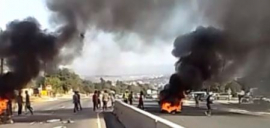
The South African government says it notes with great concern the ongoing political and security situation in the eSwatini, as anti-monarchy protests continue.
“We are particularly concerned by reports of loss of life and destruction of properties,” said the Department of International Relations and Cooperation (DIRCO).
According to news outlets, the tensions continue to flare as pro-democracy protests engulf the country.
According to reports, protesters are demanding democratic reforms in Africa’s last absolute monarchy.
Reports suggest that eight activists were allegedly shot dead by the police, while 28 have been injured and many detained.
“The right to peaceful protest is universally recognised,” the department said.
The South African government has since called on the security forces to exercise total restraint and protect the lives and property of the people, in keeping with the country’s constitutional provisions and laws.
“In addition, South Africa urges all political actors and civil society to engage in meaningful dialogue to resolve the current political challenges facing the country.”
Public warned about learnership scam

The Department of Employment and Labour’s Public Employment Service (PES) Branch has warned members of the public about the so-called National Youth Service learner-ship scam doing rounds on social media.
The scam promises job-seekers a stipend of R5 000 per month and job-seekers are asked to forward their CVs to the department.
The Department’s PES Chief Director of Employment Services, Esther Tloane, said that the Branch knows nothing about the learnership.
Tloane indicated that prospective job seekers should be wary of being asked to make any payments for services rendered as the department does not operate that way.
“The PES Branch exists to assist companies and workers to adjust to changing labour market conditions,” Tloane said.
Tloane said that the department uses its online job-matching platform called the Employment Services of South Africa (ESSA) which job seekers register their CVs on, while employers place job opportunities for matching purposes.
Members of the public are advised to report illegal activities on the department’s Fraud line on: 0860 022 194/fraud@labour.gov.za
R15 million Ga-Mopedi water project completed
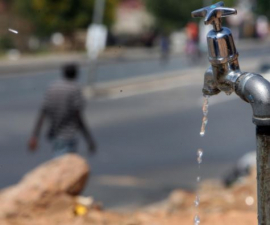
The R15 million Ga-Mopedi bulk water project has been completed in the Ga-Segonyana Local Municipality in the Northern Cape.
The project is expected to benefit 1200 households or the population of just over 7 000 people.
“Due to the socio-economic development and population growth in the area, the existing infrastructure was unable to meet the water demands of the community. In order to address the inevitable water challenge, in May 2020, work commenced to refurbish the two existing boreholes in Ga-Mopedi,” the Department of Water and Sanitation said on Wednesday.
An additional borehole was drilled to augment water provision and a steel tank with the capacity to hold 150 kilolitres of water was constructed and set up.
“A water reticulation pipeline of 3.5 kilometres has been installed making it possible to put up 15 communal water standpipes. All the infrastructure has been fenced off with a 2.4 metres high fence for security purposes,” the department said.
The department has called upon the community of Ga-Mopedi to take ownership of the water infrastructure and not vandalise it.
“The community is also urged to use water sparingly because Ga-Mopedi is a semi-arid area, so is the entire Northern Cape province and there is need to do more to ensure that every drop of the groundwater resources available is used wisely,” the department said.
Vaccine manufacturing hub will enhance SA’s local manufacturing capabilities

Higher Education, Science and Innovation Minister Blade Nzimande says the establishment of Africa’s first messenger RNA (mRNA) technology transfer hub for COVID-19 vaccines will ensure that South Africa’s local manufacturing capabilities of vaccines will be enhanced.
“This means that South Africa will move beyond just fill/finishing of vaccines, into the manufacturing of the active component or drug substance of vaccine. South Africa’s local manufacturing will be ready to move into commercial scale manufacturing of the drug substance, with relevant equipment, facility preparation, staff training, and doing validation runs,” Nzimande said.
He made the remarks during a media briefing on Wednesday, where he was giving an update on ongoing work within the science and innovation sector, as coordinated through the Department of Science and Innovation.
Nzimande reiterated his gratitude to the announcement by World Health Organisation (WHO) Director-General Tedros Adhanom Ghebreyesus, that South Africa will become the first COVID-19 mRNA vaccine technology transfer hub.
WHO is seeking to expand the capacity of low and middle-income countries (LMICs) to produce COVID-19 vaccines and scale up manufacturing to increase global access to the critical tools to bring the pandemic under control.
During his visit to South Africa last month, French President Emmanuel Macron announced that France will support South Africa and Africa with regards to the local manufacturing of COVID-19 vaccines, through the establishment of the mRNA Technology Transfer Hub.
Network for Genomic Surveillance
In response to the increasing spread of COVID-19 around the world, the Network for Genomic Surveillance in South Africa (NGS-SA) has been monitoring and sequencing confirmed COVID-19 cases in the country.
The COVID-19 genome surveillance work is funded by the Department of Science and Innovation and is based at the University of KwaZulu-Natal. It is an entity known as KwaZulu-Natal Research and Innovation Sequencing Platform (KRISP).
Nzimande said on 25 June 2021, NGS-SA confirmed from the latest representative community sampling up to 17 June 2021 that the Delta variant increased significantly in the province of KwaZulu-Natal, and is now the most common variant detected in the province.
“These Delta genomes were sampled from multiple locations across six districts of KwaZulu-Natal, Harry Gwala (n=16), Zululand (n=15), iLembe (n=14), eThekwini (n=12), King Cetshwayo (n=1) and Ugu (n=1).
“This demonstrates a striking increase across the province and suggests that the Delta variant is rapidly displacing the Beta variant (501Y.V2/B.1.351), that had been dominant since the onset of the second wave,” Nzimande warned.
The first detection of the Delta variant in South Africa was from a sample collected on 24 April 2021, and had, as per reporting at the time, been detected in Gauteng, Free State, KwaZulu-Natal and the Western Cape.
Although initial sequences were from cases with recent travel history, there is now clear evidence of community transmission of the Delta variant in South Africa.
“In Gauteng, the Delta variant was detected in 1/129 (1%) of samples in April and 13/184 (7%) in May 2021. The data for sequences up to 21 June 2021 indicated that almost 75% of the cases in Gauteng were exposed to the Delta variant, with an increase of the Delta variant in the Western Cape and with signs of dominance starting to show in Limpopo and starting to replace the dominance of the Beta variant in all the provinces,” the Minister said.
He acknowledged (KRISP), the National Health Laboratory Service (NHLS), and the University of Cape Town (UCT) who sequenced the recently confirmed cases of the Delta variant in South Africa.
He also expressed his gratitude to the NGS-SA – a consortium of scientists funded by the Department of Science and Innovation and the South Africa Medical Research Council (SAMRC).
The Minister further reiterated his call for the observance of all the health and safety protocols.
Universities called to verify student information to access laptops
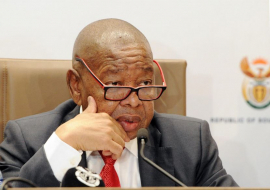
Higher Education and Training Minister, Blade Nzimande, has called on universities to contact the National Student Financial Aid Scheme (NSFAS) to ensure they verify their student information so that NSFAS-funded students can receive laptops.
Addressing the media on the department’s plans for post school education and training (PSET) institutions on Wednesday – following the country’s move to Adjusted Alert Level 4 lockdown – Nzimande announced that NSFAS has to date ordered 170 000 laptops from an appointed service provider, with 90 060 having arrived in the country and ready for distribution.
He said the balance of the laptops will be arriving in the country in mid-July and mid-September 2021.
However, to date the verifying of university student information as per the NSFAS portal has been slow.
“A total of 1 846 students’ information has been shared with the provider of which 1 123 has been delivered to four universities namely, the University of Pretoria, University of Free State (UFS), Durban University of Technology (DUT), and the University of Mpumalanga (UM).
“I call upon our universities to contact NSFAS through the NSFAS portal to ensure that they verify their students’ information. It is important that universities prioritise this task urgently,” Nzimande said.
Technical Vocational Education and Training (TVET) college students do not order via the NSFAS portal, however, NSFAS will prioritise the TVET students for delivery.
“A total TVET listing of 46 846 has recently been shared with the provider for delivery. The provider will contact these students to arrange for delivery as campuses are currently closed. Of the 46 846, a total of 183 has been delivered to South Cape TVET College and 86 for Central Johannesburg TVET,” Nzimande said.
Exclusive online learning for all students
On measures applicable to the PSET sector during the current national lockdown restrictions, Nzimande said that in terms of the Adjusted Alert Level 4 lockdown that has now been put in place, the universities do not officially close, but all face-to-face teaching and examinations must halt for the next two-week period.
“Learning will shift exclusively to online learning for all students. Residences will remain open, as it is also not safe for students to travel back home at this time, and it is necessary for students to retain access to campus and residence-based Wi-Fi.
“However, universities need to continue to manage residences according to the necessary health and safety protocols, as outlined in the directions and in line with protocols developed by HIGHER HEALTH,” Nzimande said.
He warned that under no circumstances should any mass social or other activities be permitted in residences or on campuses during this period and institutions are requested to strictly enforce measures.
“It has also been agreed that international and inter-provincial travel will be discouraged, and limited to essential services and needs. There will be controlled access to campuses for essential services and other activities that cannot be suspended at this time.
“As many staff as possible who can do so, should work from home. The sector will continue to be guided by the 29 March 2021 directions and the 27 June COGTA (Cooperative Governance and Traditional Affairs) regulations,” Nzimande said.
The principle outlined in the higher education sector directions is that all universities will manage their own academic activities, in line with the national directions and health protocols, with the support of HIGHER HEALTH.
The institutions are also expected to ensure their COVID-19 task teams are functional and active during this period to manage institutional responses to the pandemic, and maintain effective communication and consultation with staff and students.
The new directions provide guidance on matters, including institutional plans; campus health and safety; student accommodation and residences; psychosocial assistance for staff and students; academic classes and examinations; graduations ceremonies and events; international students; and international travel and vaccination.
SA’s COVID-19 death toll topped 60 000 on Monday
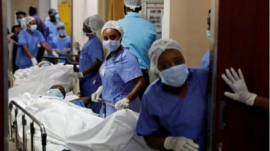
South Africa’s COVID-19 death toll has now crossed the 60 000 mark, according to the latest update by the National Institute for Communicable Diseases (NICD).
According to the NICD, the death toll now stands at 60 038 after 138 more people succumbed to COVID-19 on Monday.
Meanwhile, cases continue to soar, with 12 222 new detected infections.
This brings the total number of laboratory-confirmed cases to 1 941 119, representing a 28.3% positivity rate.
Gauteng remains the hardest-hit province, accounting for 8 408 new cases (69%), followed by 902 infections recorded in the Western Cape (7%).
“An increase of 512 hospital admissions have been reported in the past 24 hours,” the institute said.
The public health institute said there are 157 199 people who are currently infected of which 11 801 are receiving treatment in various hospitals in the country.
On Monday, the country vaccinated 97 202 people, pushing the tally to 2 787 996.
According to the World Health Organisation, as of 28 June, there are 180 817 269 confirmed cases of COVID-19, 3 923 238 deaths and 2 660 756 547 administered vaccine doses.
SANParks announces Adjusted Alert Level 4 changes
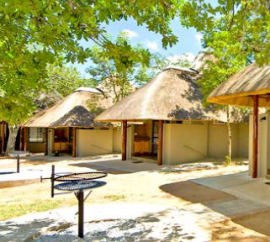
Following the announcement by President Cyril Ramaphosa on Sunday of placing the country on Adjusted Alert Level 4 with effect from Monday, the South African National Parks (SANParks) has announced changes to its hospitality and tourism services in all its various national parks.
SANParks Acting Chief Executive Officer, Dr Luthando Dziba, said a Risk Adjusted Strategy has been at the core of every sector or industry planning in an effort to save lives.
“SANParks in complying with government regulations has made the requisite amendments particularly for travellers to our national parks originating from the Gauteng province,” Dr Dziba said.
The rules for clients from Gauteng with exiting reservations are as follows:
- There will not be a blanket cancellation of bookings for guests residing in Gauteng. Instead, those holding current reservations valid for the period 28 June to 11 July 2021 will be contacted directly via telephone and email to establish whether their bookings should be postponed or cancelled.
- Guests are also encouraged to contact reservations on 012 428 9111 or 082 233 9111 or email reservations@sanparks.org if they are unsure about their current reservation.
- Where cancellation is the only option, cancellation fees will not be charged and clients will be provided with the option to claim a full refund or for their deposit to be kept on credit-on-hold for use on future reservations.
- Gauteng residents currently in occupation of SANParks accommodation facilities will be permitted to remain in the parks for the duration of their reserved stay as the regulations permit for persons who were outside the province when the regulations came into force, a once-off trip to return to their places of residence.
All gatherings at beaches and picnic sites within the national parks are prohibited. The dining facilities and restaurants within the national parks will operate on the basis of off-site consumption and therefore no sit-down dining will be allowed.
More information will be shared on the compliance with the regulations regarding occupancy levels once SANParks has finalised the necessary logistics.
Dziba said that while SANParks understands the inconvenience and the frustration this may create, reservations and park teams on the ground to assist with adherence to the law.
Dziba said the spread of COVID-19 has affected all South Africans and in order to minimise the spread everyone has to make sacrifices.
He urged guests to the national parks to appreciate that the regulations and SANParks own protocols, as inconvenient as they may seem, are towards a greater and common good.
West Rand officials arrested for VBS Mutual Bank
Three former senior West Rand District Municipality officials are this morning expected to appear before the Pretoria Specialised Commercial Crimes Court for allegedly illegally making deposits to the now defunct VBS Mutual Bank.
The suspects are a 60 year-old West Rand district municipal manager, the council’s 37 year-old former chief financial officer and Merafong municipality’s 34 year-old acting municipal manager, who was income and expenditure manager in the West Rand when the transactions occurred.
The suspects were on Monday arrested by the Hawks’ Serious Corruption Investigation at several locations in Gauteng.
In a statement, the Hawks said the arrests were based on the ongoing investigation of maladministration and corruption in the looting of the VBS Mutual Bank.
“The allegations … relate to investments into VBS Mutual Bank made by municipalities. The investments made by the municipalities into VBS are reported to have been done in contravention of the provisions of the Municipal Finance Management Act by investing municipal funds with a mutual bank,” said Colonel Katlego Mogale, Hawks spokesperson.
During the arrests, a search and seizure operation was also conducted in order to confiscate IT equipment which could contain pertinent documentation and/or articles relating to the investigation.
National Hawks Head Lt Gen Godfrey Lebeya has previously indicated that following the arrests and securing of court attendance of the main players in the VBS investigation, arrests within municipalities will follow.
A total number of 20 municipalities deposited an amount of R3.7 billion – the amount repaid totals R2.2 billion while the amount lost/unpaid amounts to R1.5 billion.
Some of the lost funds amounting to R67 million were allegedly paid as brokerage commissions to entities and/or individuals to attract more deposits mainly from municipalities.
A nationwide investigation has revealed that VBS employees, municipal executives and other officials allegedly received gratifications for the investments made.
Home Affairs extends validity period for visas
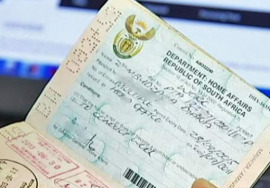
Minister of Home Affairs, Aaron Motsoaledi, has extended the validity period of legally issued short-term visas, which expired during the lockdown period – to 30 September 2021.
These are short-term visas issued for a period not longer than 90 days, such as a tourist visa.
In a statement released on Monday, the Department of Home Affairs said the validity period of longer-term temporary visas issued for three months to three years, which expired during the lockdown has also been extended until 30 September 2021.
“Directions communicating these amendments, in line with the National State of Disaster Regulations, will be gazetted by 30 June 2021. This means that visas or permits of holders who have not departed South Africa since the announcement of the National State of Disaster in March 2020, and arrived with a valid visitor’s visa between December 2019 and 14 March 2021, are deemed to be valid until the end of September 2021,” the department said.
Holders of such visas are permitted to remain in the country under the conditions of their visas until the expiry of their applicable extension.
“Those wishing to be repatriated to their countries within this period can depart without being declared undesirable persons.
“The extension does not apply to people who entered the country from 15 March 2021. The normal validity period of visas of people admitted into the country from 15 March 2021 applies,” the department said.
Holders of longer-term temporary visas, issued for 90 days up to three years, which expired during the State of National Disaster are invited to renew their visas at www.vfsglobal.com/dha/southafrica before 30 September 2021.
These visas included study visa, treaty visa, business visa, medical treatment visa, relatives’ visas, general work visa, critical skills work visa, retired person’s visa and exchange visa.
Refugee Reception Centres remain closed. The validity of asylum and refugee permits has been extended until 30 September 2021.
“Asylum seekers and refugees are encouraged to continue renewing their permits via the online platform. As of 25 June 2021, the department had approved the extension of 9 788 Section 24 (refugee status) and 28 249 Section 22 (asylum seeker permits) since the online extension system was activated in April 2021,” the department said.
Holders of a visa or permit must adhere to the terms and conditions of their visa and any activity not endorsed onto such visa or permits is prohibited.
IEC to approach Electoral Court to postpone Wednesday’s by-elections
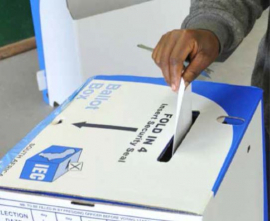
The Electoral Commission says it will urgently approach the Electoral Court to postpone eight by-elections scheduled for Wednesday, 30 June 2021.
This follows the implementation of Adjusted Alert Level 4 lockdown restrictions, which ban all gatherings, including political ones.
The Electoral Commission said it took the decision to seek the court’s approval to postpone the by-elections at an emergency meeting held on Monday, after President Cyril Ramaphosa announced additional measures to help curb the third wave currently gripping the country.
“Wednesday’s by-elections were the final by-elections scheduled to be conducted prior to the cessation of by-elections ahead of the Local Government Elections scheduled for October this year,” the Commission said in a statement.
The by-elections were scheduled to take place in the Eastern Cape, KwaZulu–Natal, Northern Cape and Western Cape, across 48 voting stations and involving 71 305 registered voters.
They were to have been contested by 40 candidates from 14 political parties, and three independent candidates.
Between March 2020 and March 2021, the Electoral Commission approached the Electoral Court to postpone over 100 by-elections during the first and second waves of the pandemic.
These by-elections were safely conducted during lulls in the pandemic when restrictions were at level 1 during November and December 2020 and again during March, April and May 2021.