
KwaZulu-Natal Treasury prioritises accountability

KwaZulu-Natal Finance MEC, Nomusa Dube-Ncube, has again committed her department to doing all it can to ensure that accountability is prioritised.
The MEC made this commitment during the department’s appearance before the Standing Committee on Public Accounts (SCOPA) on Wednesday.
Accompanied by the Acting Head of Department, Neli Shezi, the MEC addressed the protracted issue of the e-procurement tool, which the department has been seized with for a number of years, following a finding that its procurement and use breached National Treasury regulations.
An investigation was launched, and the findings recommended that consequence management be applied via disciplinary action against people involved in its procurement.
The investigation commissioned and paid for by the department and the Office of the Premier oversaw the forensic investigation.
The provincial department appeared before SCOPA as part of transparency and accountability in a bid to explain in detail the matter that involves the development of the e-procurement tool.
Dube-Ncube told the committee that the e-procurement tool was developed and exists, but it is not being used because it was not approved by National Treasury.
“KZN Treasury, however, is consulting legally to establish the existence and extent of the fruitlessness and irregularity of the expenditure, after which proper and necessary processes will ensue,” Dube-Ncube said.
The MEC said the provincial Treasury has raised the matter with National Treasury but at this point, there is no indication on whether they will receive a different response from National Treasury.
Shezi told the committee that the provincial treasury is serious about consequence management, adding that despite previous delays, “this matter will be finalised by the end of the year and steps taken in respect of the officials implicated.”
“The investigation on the matter was done in 2018 but the report on that investigation was taken on review by the previous head of department. That is part of what caused the delay in finalising this matter,” Shezi said.
Regarding the existence of the e-procurement, SCOPA has mandated the department to hold discussions with National Treasury in order to find ways of ensuring that the tool is used because it was paid for, and it exists.
Consequence management
Meanwhile, a status report tabled by the department, has highlighted irregular expenditure by different provincial government departments.
The department said it is concerned that there are cases of irregular expenditure, which shows that certain prescribed supply chain processes were not followed – not necessarily, that money was stolen.
The department said the engagement processes with the affected departments are underway and it stands ready to assist the departments, public entities and municipalities to bring the situation to normalcy.
The department also encouraged the departments, including public entities and municipalities with irregular expenditure to ensure corrective measures are taken, and that consequence management is applied against officials involved in the irregular expenditure.
“Upon finalisation of this exercise, a report can then be made public. This exercise takes the form of an enquiry with the purpose of assisting departments, public entities and municipalities to manage their finances in accordance with financial regulations that government public sector finances. We cannot report on it until it is completed,” the department said.
Ekurhuleni opens bid for agricultural farms
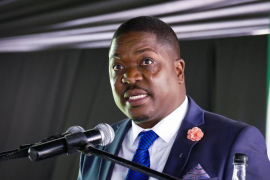
The City of Ekurhuleni has invited proposals from interested organisations to conduct agricultural activities on parcels of Council-owned land in different towns.
The programme will see successful bidders being awarded municipal farms by way of lease for a period of nine years and 11 months.
Member of the Mayoral Committee for Finance and Economic Development, Nkosindiphile Xhakaza, said the city has opened the bidding process in an attempt to establish a permanent urban and near urban agricultural base to ensure a local food source for the local economy.
“We intend to provide opportunities for community economic development by creating jobs and meaningful work for the local community. We also want to reduce the volume of agricultural imports by providing locally grown, produced and sold foodstuffs, thus reducing greenhouse gas emissions related to food transportation, and helping to reduce the impact of climate change,” Xhakaza said.
Xhakaza said the city is going to partner with organisations to pilot and implement sustainable agricultural practices and programmes on municipal farms.
“We are going to partner with individuals and organisations to develop innovative, educational programming that focuses on themes on sustainable urban agriculture, including sustainable farming and food security practices.
“We have different categories of farms varying in size from social farms 1, which are less than 5 hectares; social farms 2, which are more than 5 hectares but less than 10 hectares; small scale farms, which are 10 – 30 hectares; developmental commercial farms, which are 30 – 100 hectares and established commercial farms, which are more than 100 hectares,” Xhakaza said.
He urged the farming community to take advantage of this opportunity by visiting the municipal tender office at 68 Woburn Avenue in Benoni, or visit the website www.ekurhuleni.gov.za for more information.
The City of Ekurhuleni will from Wednesday host stakeholder engagement sessions to educate interested bidders on the City’s Agriculture Development Strategy, and provide more information and guidelines on the Supply Chain Management process flow to be used when submitting proposals/bids during Phase 2 of the programme.
The sessions will be held on 18 August 2021 at Thembisa Council Chamber, 23 August 2021 at Phola Park Hall, Thokoza, and 25 August 2021 at Benoni Council Chamber. All sessions will start at 10am.
Due to COVID-19 protocols, only 50 people will be allowed in the venues. The sessions will also be livestreamed on all Ekurhuleni platforms
The closing date for the bid is 31 August 2021 at 10am.
De Lille to assess N3 road upgrade progress
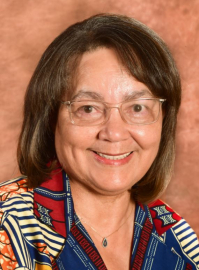
Public Works and Infrastructure (DPWI) Minister Patricia de Lille will on Thursday conduct an oversight visit to the N3 interchange road upgrade infrastructure project in KwaZulu-Natal.
The project was gazetted as a Strategic Integrated Project (SIP) in terms of the Infrastructure Development Act in July 2020.
She will visit the site in line with her duties as DPWI Minister and Chairperson of the Presidential Infrastructure Coordinating Commission (PICC) Secretariat.
The oversight visit forms part of Minister de Lille’s duties to monitor progress of the 62 projects which were gazetted as SIPs as part of the Infrastructure Investment Plan approved by Cabinet on 27 May 2020.
Many of the gazetted projects are currently in construction and are being expedited to assist in reviving the struggling construction sector and provide much-needed jobs to people.
The N3 road upgrade project is being implemented by the South African National Roads Agency and the Department of Transport.
The project falls within the uMgungundlovu District Municipality, Mkhambathini Local Municipality and eThekwini Metropolitan Municipality.
The venture will see much needed road expansion and upgrades to the N3 between Cato Ridge and Dardanelles and the N3 between Dardanelles and Lynnfield.
Over R3 billion allocated toward the upgrades
The department said the upgrades to the two sections of road amounts to over R3.2billion.
“Since the start of the construction phase earlier this year, around 485 jobs have been created with hundreds more to be created over the entire construction phase. The project has also brought significant benefit to local SMMEs (Small, Medium and Micro Enterprises) helping to assist in creating economic opportunities for companies and creating much needed jobs,” the department said on Wednesday.
The N3 is integral to the economic growth of South Africa. A growing South African population has placed this strategic corridor under severe pressure, requiring substantial upgrading to portions of the corridor.
The corridor, also referred to as the Durban-Free State-Gauteng Corridor, is a key infrastructure development project.
The project entails upgrading the existing four-lane dual carriageway to an eight-lane dual carriageway by widening it to the median and outer shoulders over a distance of 6.4km.
A road-over-rail bridge will also be extended to accommodate the widening of the N3. The upgrade will increase safety and significantly improve the level of service for years to come.
The direct economic benefits of the upgrades are a reduction in travel times, a reduction in vehicle operating costs and a reduction in accidents costs, all of which have great benefit to the economy at large. There are also indirect economic benefits that will accrue to the local areas.
The upgrade to the N3 is expected to alleviate congestion on roads around the port and on the crucial N3 corridor linking the port of Durban to Gauteng. The upgrades will also shorten turnaround times for freight-carrying vehicles.
“This project has brought to life the objectives of the Economic Reconstruction and Recovery Plan (ERRP) announced by President Cyril Ramaphosa in October 2020, which aims to assist industries to recover from the tough economic climate and see all sectors working together to help build South Africa back better.
De Lille and her delegation, which includes Head of Infrastructure Investment in the Presidency, Dr Kgosientsho Ramokgopa, will engage the project managers, workers and SMMEs on site to view and listen to the progress on the project, which will have a significant and positive impact for the province, its people and businesses.
FSCA gets new Deputy Commissioners

Finance Minister Enoch Godongwana has appointed Farzana Badat and Katherine Gibson as Deputy Commissioners of the Financial Sector Conduct Authority (FSCA).
The appointments, which were done in terms of section 61(2), read with section 63(1) of the Financial Sector Regulation Act No. 9 of 2017 (FSR Act), are for a period of five years and are effective from the dates of assumption of duty.
“The Minister has considered and accepted the recommendations of the Shortlisting Panel that was established to select and recommend candidates for appointment as Commissioner and Deputy Commissioners of the FSCA to the Minister,” the Ministry of Finance said on Tuesday.
The appointment of Badat and Gibson follows on the appointment of Unathi Kamlana as the Commissioner, and Astrid Ludin as one of the Deputy Commissioners of the FSCA by the former Minister of Finance, Tito Mboweni, as announced on 22 April 20211.
Both Kamlana and Ludin assumed duty on 1 June 2021.
“Badat is currently based in Switzerland, where she is working as a Senior Policy Advisor at the International Association for Insurance Supervisors (IAIS), responsible for conduct risk, financial technology and digital transformation.
“She has previously worked as Divisional Executive for Conduct of Business Supervision at the FSCA and its predecessor, the Financial Services Board. Badat holds a Bachelor of Laws degree (summa cum laude) from the then University of Natal-Durban (now part of the University of KwaZulu-Natal), and a Master of Laws degree in International Law from the University of Michigan Law School (USA),” the Ministry said.
Gibson has been a member of the Transitional Management Committee (TMC) of the FSCA since the establishment of the FSCA on 1 April 2018.
She has previously worked at National Treasury, as part of the team that spearheaded the Twin Peaks reform process, including the FSR Act.
Gibson holds a Master of Commerce Economics degree (cum laude), a Bachelor of Commerce (Honours), Economics degree (cum laude) and a Bachelor of Commerce degree, all obtained from the then University of Durban (now part of the University of KwaZulu-Natal).
“In terms of the tegulations, the Minister is empowered to disestablish the Transitional Management Committee (TMC), which has been performing the role of the FSCA Executive Committee during the transitional period, which disestablishment is required to be done when the Commissioner and at least two Deputy Commissioners have been appointed.
“Given that the Commissioner and three Deputy Commissioners have been appointed, the Minister will gazette a notice for the disestablishment of the TMC, to be effective from 30 September 2021,” the Ministry said.
The Minister has thanked Badat and Gibson for accepting the appointment.
“The Minister wishes the new FSCA Executive Committee, under the leadership of Commissioner Kamlana with Deputy Commissioners Ludin, Badat and Gibson, all the best in ensuring that the FSCA will successfully execute its mandate of protecting financial sector customers through their fair treatment by financial institutions,” the Minister said.
The report of the Shortlisting Panel to the Minister can be found on: http://www.treasury.gov.za/comm_media/press/2021/Annexure%20B%20-%20Report%20of%20the%20FSCA%20Shortlisting%20Panel%20to%20the%20Minister%20of%20Finance_Final[1][1].pdf
Deadline looms for submission of municipal elections candidate lists
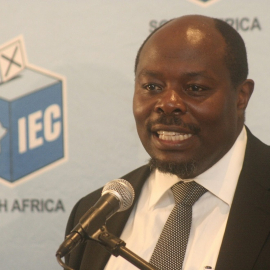
Political parties and independent candidates intending to contest the Local Government Elections have less than a week to submit their candidate lists, nominations and ward candidate details.
The elections are scheduled for 27 October 2021.
Deputy Chief Electoral Officer, Mawethu Mosery, said in terms of the election timetable, the cut-off date for submission of nomination lists, nomination details and payment of deposits by parties and independent candidates is 5pm on Monday, 23 August 2021.
“Only registered political parties may submit candidate lists,” Mosery said.
The amounts to be deposited by parties and independent candidates to contest elections are as follows:
- R3 500 in respect of an election in a metropolitan municipality;
- R2 000 in respect of an election in a local municipality with wards;
- R1 000 in respect of an election in a district municipality; and
- R1 000 in respect of an election in a single ward for independent candidates and political parties not contesting for PR election in that municipality.
“The Commission will refund to a party any deposit paid by it, if the party is allocated at least a seat in the municipality it is contesting. Similarly, an independent candidate who receives at least 10% of the total number of votes cast in the ward election will have their deposit refunded,” Mosery explained.
To date, Mosery said 25 political parties and 50 independent candidates have either captured their details or have submitted candidate lists and details.
Parties and independent candidates may submit their documents online at www.elections.org.za or visit a designated local IEC office. The list of the designated offices will be available on the website.
Mosery said according to the timetable, once the 23 August deadline has passed, the Electoral Commission will have until Friday, 27 August 2021 to notify political parties and independent candidates of non-compliance in respect of documents.
“However, a party that does not submit a list of candidates and pay a deposit by 5pm on 23 August 2021 will not have an opportunity to correct non-compliance. Likewise, an independent candidate who fails to pay the deposit and submit candidate documents by the cut-off time of 23 August 2021 will be disqualified.
“Thereafter, the Electoral Commission will have until 31 August to notify parties of any candidates appearing on multiple party lists. The affected parties will have until 5pm on 2 September 2021 to submit revised lists,” Mosery said.
The final list of candidates will be published on 7 September 2021.
At least R170 million paid in Marikana reparations

Since August 2018, government has paid out at least R170 million in damages to families of those who lost loved ones and those who were injured during the 2012 Marikana tragedy.
This is according to Solicitor General Fhedzisani Pandelani who provided an update on the Marikana reparations that government is undertaking.
Pandelani says government has been negotiating with and compensating families through five legal representatives for claims for loss of support, emotional shock and suffering, unlawful arrests and detentions and personal injuries.
At least R72 million was paid over to families through the Wits Law Clinic and the Socio Economic Rights Institute of South Africa (SERI) for loss of support.
“The matter that we settled with Wits was the R3 995 121 and as I have already indicated, we don’t have any outstanding matters that are being handled by the Wits Law Clinic. In relation to matters that SERI dealt with…the quantum of the amount that has been paid to date is R69 083 005,” Pandelani said on Wednesday.
The Solicitor General added that as well as these payments, government offered to pay further general and constitutional damages to the families amounting to at least R18 million overall, which SERI rejected.
“General and constitutional damages is not something that is easy to quantify but we needed to be reasonable under the circumstances and to the extent necessary, we believe as the state that we needed to approach this matter with some degree of humanity.
“Without prejudice, we then said we are prepared as government to pay all the claimants that were represented by the claimants by the Socio Economic Rights Institute, an additional R500 000 (each),” he said.
The claims for general and constitutional damages is now expected to go before court.
Pandelani revealed that government’s biggest settlement amounts to more than R97 million for 253 claimants represented by Nkome Attorneys for unlawful arrests and detentions and personal injuries as well as malicious prosecution.
He added however, that 22 other claims by Nkome Attorneys are still outstanding.
“We are in fact in negotiations in relation to the 11 claimants that remain to constitute the number 275 and in relation to the other 11, there are other outstanding issues that have not been resolved between us but we are willing to engage with them,” he said.
Settlements
Some of those who suffered injuries during the tragedy, represented by Maluleke Msimang Attorneys, have been offered a settlement.
“We are negotiating with the colleagues because we believe that if we were to wait for the outcome of court processes that may be another lengthy period. So we are invoking a combination of both alternative dispute resolution so that we can bring these matters to settle as soon as possible,” he said.
At least 27 others – represented by Tlhatlha Attorneys – who were injured or assaulted during the tragedy have also submitted claims and government is currently negotiating with them for a settlement.
“We wait ready to engage all the representatives of the claimants that have lodged claims against us. Those that passed away, all of them, we have in fact settled those matters.
“Those that are still alive we are requesting that we need to be ramping us issues of settlement. All these matters are centralised in one office. A directive has been issued to the head office of the State Attorney in Pretoria to make sure that these matters are finalised as soon as possible,” he said.
Pandelani has urged those families that may require further information regarding their claims to approach the office of the State Attorney in Pretoria.
“[If] any of the claimants, even those that we might have paid, is now alluding to the fact that they are not being taken care of or they have not received anything it might actually be proper for them to approach the office of the state attorney in Pretoria to verify the facts,” he said.
Application window for eligible, unfunded 2021 registered students
Higher Education and Training Minister, Blade Nzimande, has commended the National Student Financial Aid Scheme (NSFAS) Board’s decision to request the dabatase for unfunded 2021 registered students eligible for NSFAS funding in all universities.
This follows the plight of currently registered university students that were not able to apply for funding during the funding application window due to various reasons.
Nzimande announced that the NSFAS board has resolved to grant a once-off application window period for the students to apply.
“All universities are required to send their exhaustive list by no later than 17 August 2021 to be considered for this once-off opportunity. The application period will open for a two-week period, from 18 August 2021 – 3 September 2021.
“NSFAS encourages all universities to notify students to ensure that they apply and have all the relevant supporting documents as applications submitted after the closing date will not be considered,” Nzimande said.
The Minister restated this initiative is not intended to create any future precedence and has also factored in, among other things, the NSFAS available funds.
“The initiative is aimed at alleviating the financial burden of eligible and deserving students, but also minimising the burden of student debt.
“This concession is applied only to qualifying students who are registered in the 2021 academic cycle and are without any other form of bursary and requisite financial support,” Nzimande said.
Alleged tax fraudsters appear in court

Two suspects have appeared in the Nelspruit Magistrate’s Court on charges of fraud, money laundering and theft, alternatively contravening the provisions of the Tax Administration Act.
“This followed their arrest by the members of the Hawks’ Serious Commercial Crime Investigation team shortly before their court appearance,” said Hawks spokesperson Captain Dineo Lucy Sekgotodi on Tuesday.
The pair appeared in court on Monday.
The accused registered the company called Fundzani Trading CC in March 2018. It is alleged that 41 year-old Rejoice Sindisile Magagula who was the owner of the company subsequently submitted false and unlawful tax returns to the South African Revenue Service (SARS), claiming and prejudicing the revenue service an actual loss of more than R203 681.
After receiving the money, she transferred some of the money to Matilda Velelent Shongwe.
The accused were released on R2000 bail each and the case was postponed to 15 September 2021.
SA vaccinates 9 557 542 people
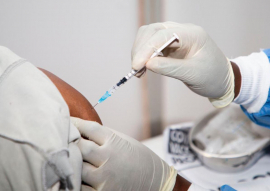
South Africa has to date administered 9 557 542 jabs with 158 103 of those being administered on Monday.
The total number of Pfizer administered in the last 24 hours was 122 056 and a total of 36 047 Johnson and Johnson were administered.
Meanwhile, South Africa recorded 7 983 new COVID-19 cases bringing the total number of laboratory-confirmed cases to 2 613 569.
This increase represents a 21.1% positivity rate.
“As per the National Department of Health, a further 299 COVID-19 related deaths have been reported, bringing total fatalities to 77 440 to date,” the National Institute for Communicable Diseases (NICD) said.
The majority of new cases are from the Western Cape (27%), followed by KwaZulu-Natal (24%).
Eastern Cape accounted for 18%; Gauteng and Northern Cape accounted for 9% each; Mpumalanga accounted for 7%; the Free State accounted for 6%; North West accounted for 3%; and Limpopo accounted for 1% of new cases.
“The total number of cases today (7 983) is lower than yesterday (10 139) and lower than the average number of new cases per day over the seven preceding days (10 490). The seven-day moving average daily number of cases has increased,” NICD said.
There has been an increase of 331 hospital admissions in the past 24 hours.
A total of 15 633 622 tests have been conducted in both public and private sectors.
UP launches diabetes research centre

The University of Pretoria (UP) has launched South Africa’s first exclusive Diabetes Research Centre at a public academic institution.
Approved by the university senate in November last year, the centre is a collaborative initiative that brings together all the research happening in silos in different departments.
The centre’s Senior Project Manager, Dr Patrick Ngassa Piotie, said that although housed in the Faculty of Health Sciences, the centre adopts a transdisciplinary approach and works across faculties to develop research that aims to improve the lives of people living with diabetes.
“It is a holistic approach to address the challenges around diabetes, from prevention to care, and will lead to a new vision in diabetes research,” Piotie said.
Diabetes, which is caused by too high blood glucose levels, is the second most common natural cause of death in South Africa, where 4.6 million people live with the condition.
According to the Department of Health, only 19% of people with diabetes treated in the public health system manage to control their glucose levels. The uncontrolled diabetes can lead to strokes, blindness, heart attacks, kidney failure or amputation.
Dr Piotie explained that the centre’s research strategy is organised around six clusters, including the prevention of diabetes; diabetes management in primary healthcare; its management in hospitals; gestational diabetes (developed during pregnancy); diabetes in children and adolescents; and diabetes technology.
“The centre’s main project to date is the Tshwane Insulin Project (TIP). Punted as “translational research in its prime”, it is impacting the lives of South Africans living with type 2 diabetes as they transition from oral drugs to insulin through the implementation of a nurse-driven, app-enabled and community-oriented intervention.
“One of the centre’s mandates is academic development. Being a university, we want to keep producing scientific knowledge that is relevant and impactful. In the long term, we want to develop researchers, a new generation of African investigators in translational and health systems research, and implementation science,” Dr Piotie said.
He noted that the centre has already received a number of proposals, including one from UP’s Department of Psychology, to look at the challenges people with diabetes experience in adopting healthy eating habits and taking up exercises.
“Existing research includes a study by Dr Maria Karsas of the Department of Paediatrics and Child Health on COVID-19 and diabetes, a PhD in dietetics on the dietary implementation of glycaemic load on blood glucose control of patients with diabetes, and tech-based solutions to disease management, such as the use of sensors to monitor glucose continuously in patients admitted to hospital in a diabetic coma,” Dr Piotie said.
Another use of technology that the centre will pioneer includes telehealth, where healthcare is provided remotely by means of telecommunication tools, including phones or smartphones.
The Senior Project Manager said these services can include patient education or consultations with a specialist, a crucial aid in the South African public healthcare environment where there is often a shortage of health professionals.
“The centre recently obtained approvals from the Faculty of Health Sciences’ Research Ethics Committee as well as the Tshwane Research Committee to pilot a screening programme for diabetes retinopathy using telehealth and artificial intelligence. Primary care patients will have access to a state-of-the-art camera that detects eye damage due to diabetes,” he said.
In addition to its research activities, Dr Piotie said the centre will offer healthcare providers training, including a three-day workshop on diabetes and insulin management for nurses in primary care to be administered by Enterprises UP.