
RTMC probes fatal Kei Cuttings bus crash
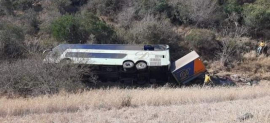
A team from the Road Traffic Management Corporation (RTMC) is investigating a bus crash which claimed the lives of at least 28 people at Kei Cuttings in the Eastern Cape on Monday.
According to the RTMC, the crash happened when a luxury coach went off the N2 between Butterworth and East London.
RTMC has reported that six other people were seriously injured and transported to Frere Hospital and 18 others sustained no injuries.
A report will be released on the incident once the RTMC completes its investigation.
Meanwhile, Minister of Transport, Fikile Mbalula, sent his condolences to families who lost loved ones in the crash.
“The loss of life is tragic and brings untold suffering to families who have lost breadwinners and loved ones. I convey my heartfelt condolences to the bereaved families and their loved ones. We must all continue to work together in making our roads safe and ensuring responsible driving,” Mbalula said.
Seminar places spotlight on labour law compliance
The National Minimum Wage (NMW) Act will come under the spotlight when the Department of Employment and Labour’s Inspection and Enforcement Services (IES), host a virtual seminar for the hospitality sector operating in the Western Cape.
The department introduced the Act two years ago.
The seminar, which will be held next Thursday, will be held under the theme: “Paying the National Minimum Wage is the Right Thing to Do”.
The seminar is part of IES quest to educate stakeholders on labour laws.
The hospitality sector has long been identified as a high risk when it comes to compliance with labour laws.
The department has conducted a number of inspections to employers operating in the hospitality sector.
The inspections were to determine the employers’ compliance with the Basic Conditions of Employment Act, enforcement of the relatively new National Minimum Wage Act, and if the employers are still found wanting when it comes to compliance.
“The outcome of inspections indicated a need for an advocacy session. Some of the areas of non-compliance identified in the sector include illegal deductions, underpayment of the national minimum wage, non-compliant written particulars of employment (contracts), long hours of work and non-registration to the Unemployment Insurance Fund and Compensation for Occupation Injuries and Diseases Act,” said the department on Monday.
Some of the stakeholders targeted by the seminar include employers, restaurants, hotels, trade unions, organised business, employer organisations, employees, organised labour and bargaining councils.
Labour dept to conduct virtual EE workshops

The Department of Employment and Labour is set to conduct virtual Employment Equity workshops from 1 September.
The department’s Employment Equity (EE) Directorate and the Inspection and Enforcement Services (IES) branch will jointly conduct this year’s workshops.
The national workshops are being held virtually for the second year in succession due to the impact of COVID-19 in the country and the world. The department will host the workshops through Microsoft Teams in all the nine provinces under the theme ‘Real transformation makes business sense’.
The virtual EE workshops will start on 1 September until 28 September 2021.
The first workshop will target stakeholders in Limpopo and the workshops will conclude with stakeholders in Mpumalanga.
The workshops will be held from 10:00 – 13:00.
The workshops will target employers and their employers’ organisations, human resources executives and practitioners, EE forum members, assigned senior managers/transformation managers, academics, employees and trade unions, labour relations practitioners and civil society organisations, among others.
The department will send an invitation to each province in order for the stakeholders to access the Teams link ahead of the actual workshop.
Participants will be limited to not more than 250 per session and it will be on a first come, first served basis due to the limited capacity of the Microsoft Teams platform.
The schedule of the planned virtual workshops is as follows:
• Limpopo – Wednesday, 01 September 2021
• Free State – Thursday, 02 September 2021
• KwaZulu-Natal – Tuesday, 07 September 2021
• Eastern Cape – Wednesday, 08 September 2021
• Western Cape – Tuesday, 14 September 2021
• Gauteng – Wednesday, 15 September 2021
• Northern Cape – Tuesday, 21 September 2021
• North West – Wednesday, 22 September 2021
• Mpumalanga – Tuesday, 28 September 2021
SA reports 10 139 new COVID-19 cases, 272 deaths

South Africa has recorded 10 139 new COVID-19 cases and 272 COVID-19 related deaths.
According to the National Institute of Communicable Diseases (NICD), this represents a positivity rate of 21%.
This brings the total number of reported COVID-19 cases to 2 605 586 with 77 141 total Covid-19 related fatalities reported.
In the past 24 hours, 219 new COVID-19 related hospitalisations have been reported.
The majority of new cases were reported in KwaZulu-Natal with 2 878 new cases and the Western Cape with 2 607 new cases.
Eastern Cape accounts for 1 352 new cases, Gauteng has 1 241 new cases, Free State reports 517 new cases, North West has 450 new cases, Mpumalanga accounts for 429 new cases, the Northern Cape has 406 new cases and Limpopo has the least new cases with 259 reported.
In the last 24 hours 10 039 vaccines were administered, while 9 387 129 have been administered in total.
R34.2million water works project benefits Prieska community
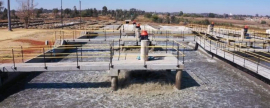
More than 14 246 community members of Prieska in the Siyathemba Municipality, Northern Cape, are now proud beneficiaries of the R34.2million Waste Water Treatment Works (WWTW) that has been completed in the area.
As a result of population growth in Prieska, including socio-economic developments and the construction of human settlements, the Prieska Waste Water Treatment Works (WWTW) could no longer cope with the load of sewerage and was compromised.
To remedy this, the Department of Water and Sanitation in the Northern Cape, in partnership with Siyathemba Local Municipality, increased the capacity of the WWTW from 2.175 ML/day to 3.6 ML/day (Megalitres per day).
“The project commenced in March 2020 and was practically completed at the end of June 2021. Some minor and additional works are now being completed,” said the department in a statement on Monday.
The Prieska Waste Water Treatment Works is now in compliance with the South African National Standards with all spillages eliminated.
Further upgrades include:
- Installation of a sludge pump
- Drying beds
- Bulk sewer outfall line of 247metres and
- Construction of four primary ponds.
Progress made in replacing pit toilets in schools
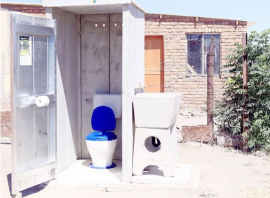
The Department of Basic Education (DBE), together with provincial education departments, says great strides have been made in replacing pit latrines with appropriate sanitation facilities for schools in the country.
Through the Sanitation Appropriate for Education (SAFE) Initiative, which was launched in August 2018 to accelerate the provision of sanitation facilities in the identified schools, the current scope of work is 2 753 schools.
“The original number of schools which was reported by the provincial departments of education as schools dependent on basic pit toilets was 3 898. There were several changes to the list since the start of the programme, mostly due to rationalisation of schools and site assessments that confirmed appropriate sanitation,” the department said.
The current scope of work implemented includes:
- A total of 989 schools are addressed under other programmes:
– 130 of the schools are covered through donations and partnerships, of which 69 projects have already progressed to practical completion
– 66 of the schools are covered under the Accelerated Schools Infrastructure Delivery Initiative (ASIDI) programme, all of which have already progressed to practical completion
– 793 of the schools are covered under the Provincial Education, Infrastructure Grant (EIG) programme of which 384 projects have already progressed to practical completion
- A total of 1 026 schools have been allocated to implementing agents:
– 392 of the schools were allocated to the Development Bank of Southern Africa (DBSA), of which 189 projects have already progressed to practical completion
– 659 schools were allocated to the National Education Collaboration Trust (NECT), of which 12 projects have already progressed to practical completion
– 632 schools were allocated to The Mvula Trust (TMT), of which 183 projects have already progressed to practical completion
– 81 of the schools were recently allocated to the Coega Development Corporation
The provincial distribution of these projects are as follows:
- Eastern Cape: A total of 1 098 schools, of which 178 projects have already progressed to practical completion;
- Free State: A total of 122 schools, of which 75 projects have already progressed to practical completion;
- KwaZulu Natal: A total of 974 schools, of which 379 projects have already progressed to practical completion;
- Limpopo: A total of 387 schools, of which 118 projects have already progressed to practical completion;
- Mpumalanga: A total of 117 schools, of which 116 projects have already progressed to practical completion; and
- North West: A total of 55 schools, of which 37 projects have already progressed to practical completion.
Basic Education Director-General, Mathanzima Mweli, said the department has since stepped up the monitoring of the projects to ensure they are completed on time, to specifications and on budget.
Mweli has visited more than 500 construction sites since March 2021 to accelerate the delivery of the much-needed infrastructure.
The monitoring function has assisted the department in unblocking challenges and resolving issues that delayed the building process.
“The SAFE Initiative is a flagship programme and I have resolved that I will carry out the monitoring function until the last school has a proper toilet. The monitoring has pushed our performance up and we are sure to hit our target even before the end of the current financial year,” Mweli said.
The Director-General also holds weekly update meetings with the chief executive officers of the implementing agents.
Mweli said the department reports regularly to the Presidency on the work done to replace pit toilets with proper facilities, and will continue to do so until the pit latrines have been eradicated in all the schools.
“We have improved the standard of reporting and the progress is satisfactory. Underperforming implementing agents have been warned that there will be consequences for poor delivery,” the Director-General said.
Committee welcomes suspension of Gender Commissioner
Portfolio Committee on Women, Youth and Persons with Disabilities Chairperson Nonhlanhla Ncube-Ndaba, has commended the Commission for Gender Equality’s (CGE) decision to place Commissioner Mbuyiselo Botha on precautionary suspension after his verbal attack on fellow commissioners.
In a recording, which was doing the rounds in the media, Botha is heard objectifying and demeaning the CGE Chairperson Tamara Mathebula, her Deputy Nthabiseng Moleko and two other Commissioners, Nomasonto Mazibuko and Advocate Nthabiseng Sepanya Mogale.
In a sound clip Botha is heard calling Mazibuko an albino and accuses Mathebula of lacking a backbone.
Ncube-Ndaba said referring to someone as an albino is an unacceptable derogatory characterisation of South Africans who experience disabilities.
“Furthermore, it is a shocking gross discrimination that belongs to the dark era of apartheid,” Ncube-Ndaba said.
Last week, the commission appeared before the committee on among other things, the CGE’s response to Commissioner Botha’s matter and the key operational matters of concern.
The CGE reported that Botha will appear before a disciplinary hearing that the CGE has instituted.
Ncube-Ndaba said the suspension of Commissioner Botha and his appearance before a disciplinary committee for a hearing is befitting and justifiable for the gross and shocking discrimination heard in the recording.
“We are looking forward, as the committee to the outcome of the internal disciplinary hearing and wish it to proceed well,” Ncube-Ndaba said.
Government provides shelter for GBV victims
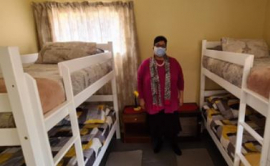
In an effort to respond to Gender Based Violence (GBV), the Department of Public Works and Infrastructure (DPWI) has so far made 12 properties available for shelters for GBV victims.
In a statement on Sunday, Minister of Public Works and Infrastructure Patricia de Lille said six of these shelters are in Gauteng and six are in the Western Cape.
“The department is currently working with officials in the Department of Social Development to identify and allocate more properties for shelters in all provinces. As we commemorate Women’s Month, we must be mindful of the great amount of work still ahead of us to truly realise freedom and equality for women,” the Minister said.
In February this year, President Cyril Ramaphosa launched the Gender Based Violence and Femicide (GBVF) Response Fund1, which is being led by the private sector with R128 million pledged by companies and organised business to fight this scourge.
The GBVF Response Fund1 is part of a national response to gender-based violence and femicide in South Africa.
The GBVF Response Fund was established to allocate financial support to various programmes under the National Strategic Plan to address GBVF such as prevention and rebuilding social cohesion, justice, and protection and safety measures.
During the joint sitting in the National Assembly on the 18 September 2019, the Minister made a commitment that the DPWI would use state-owned properties to install anti-GBVF messaging as a campaign to show government’s solidarity with communities and families who have been affected by this scourge and to demonstrate government efforts in the fight against GBVF.
The anti-GBVF messaging campaign has already started with the first billboard which was placed along Kgosi Mampuru Road in Tshwane and a mural at Manenberg Police Station in Cape Town.
DPWI is working to expand this GBVF advocacy communication campaign to all provinces.
The billboards also publicises the number of the GBV command centre where communities and victims of GBV can get help to ensure that we save more lives and put an end to this scourge.
“My appeal to families and community members is to also work with us and help victims by supporting them and helping them to report abuse as this can save a victim’s life.
“Too often people are afraid to speak out for fear of tarnishing the family’s name but the lives of our women and children is worth more and we must do all we can to protect them and bring those who hurt women to book. We must break the silence and stop protecting perpetrators.
“There must be a firm hand in how we deal with these cases so that we stamp out GBVF and show women that as a whole society, we stand with them and we are all here to protect them,” the Minister said.
CEO of the GBVF Response Fund1, Lindi Dlamini, said the constitutional ideals of a democratic and free South Africa cannot be said to have been achieved if women and children are not living free of fear.
“We cannot be the generation that won freedom, standing on the shoulders of our forebears, and did not use that as a springboard to create an even better future for the next generation.
“Propelled by that goal, the GBVF Response Fund1 will work tirelessly to support the implementation of initiatives and programmes aimed at the effective elimination of GBVF which is such a stain on our young democracy,” Dlamini said.
The GBVF Response Fund 1 has committed to work towards a civilised and liberated South Africa, guided by the National Strategic Plan (NSP) for GBVF.
“The purpose of the NSP is to provide a multi-sectoral, coherent strategic policy and programming framework to strengthen a coordinated national response to the crisis of GBVF by the government of South Africa and the country as a whole.
“It is that purpose that guides the Fund to reach across sectors for their financial and non-financial contribution to fight against the GBVF scourge. We thank Minister Patricia de Lille for honouring her commitment. We commit to work with her, other sectors of government, business and civil society, to find solutions that will help in the eradication of GBVF and restoration of human dignity for all,” Dlamini said.
Relief for looted businesses
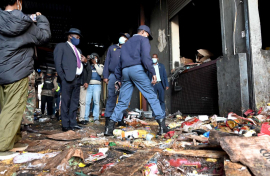
The Department of Employment and Labour has approved the Unemployment Insurance Fund’s temporary relief scheme to assist workers of looted businesses in KwaZulu-Natal and Gauteng.
In a statement on Friday, the department said the UIF’s Destroyed, Affected or Looted Workplaces: Temporary Financial Relief Scheme has finally been approved through the Government Gazette published on Tuesday, 10 August 2021.
“This financial relief scheme has been established to assist workers whose workplaces have been closed due to recent unrest in KwaZulu-Natal and Gauteng, resulting in either reduced pay or no pay at all,” the department said.
According to the department’s estimates, more than 75 000 workers have been impacted by the unrest in both provinces.
The scheme seeks to assist workers in affected businesses. However, every employer who is not yet registered with UIF will have to register first with the UIF to access the benefit.
Qualifying employers will be required to apply on behalf of their employees through a process that the UIF will specify.
The process will enable employers to make bulk applications and they will be required to meet the following conditions:
- The employer must be registered with the UIF;
- The employer’s closure must be directly linked to the destruction, damage or looting of its workplace;
- The employer must provide details of the destruction, closure, or damage to, or looting of, its workplace and submit documentary proof of a report to the South African Police Services, with proof that a case has been opened by providing a case number, and, if insured, proof of submission and acknowledgement of receipt of the insurance claim;
- The employer must confirm in writing or electronically that – he/she accepts the terms of the Scheme herein and any procedure document issued by UIF, and
- Submit any other information that the Minister or delegated authority may require to assess eligibility of claim.
The department said payment of the temporary financial relief may only be done directly into the worker’s bank account, unless the UIF Commissioner specifies the conditions under which payments can be made into the employer’s account.
“The relief will be paid based on the income replacement rate calculated on the sliding scale of 38% -60% based on the employee’s remuneration. The maximum payment will not exceed R6 700 and the minimum will be not less than R3 500.00 per month or a flat rate, as the Minister or Accounting Authority may decide depending on financial considerations of the UIF,” the department explained.
The temporary financial relief is de-linked from the UIF’s normal benefits, therefore the “normal rule that for every four days worked, the employee accumulates a one-day credit, and the maximum credit days’ payable is 365 for every four years, does not apply”.
“This will enable workers who have no credits to receive financial support whilst their workplaces are in the process of rebuilding or reopening. The UIF is earnestly reconfiguring its systems for processing of temporary financial relief claims, and an announcement on the claims process and platforms and the date from which claims can be submitted will be made as soon as possible,” the department said.
Over 34 000 hectares of land allocated to women
A total of 56 869 hectares of land were allocated to different categories, with 34 156 hectares allocated to 34 women at an average of about 1000 hectares per female.
Highlighting progress in implementing the Beneficiary Selection and Land Allocation Policy (BSLAP), Gloria Mosito from Agriculture, Land Reform and Rural Development said for the past financial year 2020/2021, the department in aligning itself to the Gender Response Planning Guidelines and the BSLAP, targeted to allocate 11 987 hectares to females across the country under the Land Redistribution Programme.
For Land Tenure Reform purposes, Mosito said the department managed to acquire 7 127 hectares in 2020/2021, which benefited a total of 450 individuals of which 238 were women.
“In the current financial year, there are 1 636 hectares already transferred to six labour tenant families with a total of 97 beneficiaries under the Land Tenure Reform Programme [and] from the 97 beneficiaries, there are 42 females,” Mosito said.
Beneficiary selection and land allocation objectives
Developed and adopted by government, the policy aims to provide fair, credible and transparent process and criteria for selection of beneficiaries for land allocation and leasing of State properties; and to rekindle the class of Black commercial producers who were destroyed by the 1913 Land Act.
The objectives of the policy are to support municipalities and other local authorities establish and extend human settlements and commonages; promote accountability and transparency within the department in allocating state assets; and ensure qualified, suitable and deserving candidates gain access to land on equitable basis.
“It aims to ensure special and targeted groups of land reform beneficiaries [including] youth, women, people with disabilities and military veterans, gain access to land for production purposes; and to ensure that the selected beneficiaries have the skills and capacity to maintain immovable state assets.
“It also aims to establish independent Land Allocation Panels to preside over the selection of suitable candidates for land allocation; to provide for standardised national land application system to ensure fair and transparent process of beneficiary selection and the rationing of resources; and to provide for the creation of a provincial and national land application register for potential beneficiaries of land allocation,” Mosito highlighted.
50% land allocation must go to women
The policy proposes 50% allocation of agricultural farming land under the Redistribution Programme to smallholder farmers broken down as 50% to women, 40% to youth and 10% to people with disabilities.
The land allocation includes women who either have basic farming skills or demonstrate willingness to acquire such skills; women headed households with no or very limited access to land, even for subsistence production shall be given access to land for the advancement of women.
From the youth, participants in the department’s enterprise development/ incubation/ apprenticeship programme and agricultural para-professionals, are targeted. People with disabilities with no or very limited access to land, even for subsistence production, and individuals with a disability who work in an agricultural setting still face challenges of access to land will be prioritised.
“Military veterans, as defined in the Military Veterans Act, 2011 (Act No 18 of 2011) shall also be prioritised. This shall, however, exclude those who served in the Union Defence Force prior to 1961, and the South African Defence Forces prior to 27 April 1994, who want to venture into farming will be assessed and prioritised for access to land for production.
“Communal and stateland residents or individuals currently living on state-owned properties and whose livelihoods depend on subsistence farming, but have no form of tenure, should be prioritised for land allocation by the state,” Mosito explained.
Challenges in implementation
Mosito also highlighted a number of challenges the department has experienced in implementation of BSLAP, these include limited number of applications from prioritised categories, invasion of farms when advertised for allocation, and poor quality business proposals from applicants for commercial farms.
“Some applicants are “uncomfortable” providing bank statements with their personal information to the department which are required as proof for capacity to utilise the farms effectively, and branding certificates mostly belong to men where women are married, therefore they are seen as fronts for husbands,” Mosito said.
In order to realise the policy objectives, Mosito said specific farms will continue to be reserved for women applicants and farms that are located in safer areas are to be targeted.
“Women will be assisted through Provincial Departments of Agriculture to compile credible business plan, in order to qualify for commercial farms; beneficiary selection process will run concurrently with the land acquisition process so that farms are immediately occupied upon acquisition to avoid invasions.
“The department is to develop a protocol that will empower women to have branding certificates issued in their names-furthermore, a section that deals with issuing of branding certificates is to be engaged in order to make provision for joint certificates where women are co-owners of livestock,” Mosito said.
She added that the department will ensure that the branches deal with enterprise development and cooperatives assist women to formalise their farming operations so that financial records can be in the names of the farming enterprises and not individual names.
“This will minimise the reluctance to disclose personal bank statements as proof of ability or capacity to operate farms when applications are submitted,” Mosito said.
Application process for leasing agricultural land
Land is advertised through print media and regional radio stations in order to reach as many people as possible and ensure transparency and equitable public process to eradicate any form of fraud and nepotism.
As part of modernisation process, Mosito said an online land offer and application system is being finalised, which will enable landowners willing to make land available or donate land for land reform purposes to do so.
“Relevant forms will be available online or in provincial and district offices of the department. The system will enable the department to create a National Land Register, which will be subjected to checks for suitability in line with various government prioritisation tools such as the Agriculture and Agro-processing Master Plan (AAMP). Provincial and district officials shall be designated to assist those who do not have access to technology to apply.”
Mosito added that the department is currently in the process of calling for nominations of people who are to serve on Provincial and National Land Allocation Panels, and women will be included to serve on the panels.