
SA boosts capacity for electricity generation
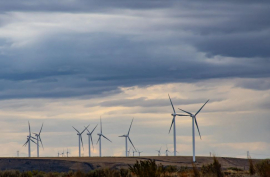
The Department of Mineral Resources and Energy has gazetted the Amended Schedule 2 of the Electricity Regulation Act (ERA) 4 of 2006, which will do away with licensing needs for embedded electricity generation of up to 100 megawatts.
Gazetted on Thursday, the amended act paves the way for private companies and generating projects to produce up to 100 megawatts of electricity for their own use without having to apply for a licence from the National Energy Regulator of South Africa (NERSA).
The amendment follows President Cyril Ramaphosa’s announcement on 10 June 2021 that the Schedule 2 Amendment of the ERA would be published within 60 days.
Previously, the maximum allowed embedded power generation threshold was at one megawatt.
According to the department, the increase in the threshold is a positive move and an intervention, which will reform the energy sector.
“It is envisaged that this step will unlock significant investment in new generation capacity in the short-to-medium term, and make significant inroads towards achieving national energy security, as well as reduce the impact of load shedding across the country,” the department said in a statement.
It is expected that the amended act will also allow power generators to send their surplus energy onto the national grid, subject to grid connection agreements with Eskom and local municipalities, in order to ensure compliance of regulations.
Applause for witnesses at State Capture Inquiry

President Cyril Ramaphosa has applauded the commitment and courage of the many witnesses who appeared before the Commission of Inquiry into State Capture and Corruption.
“While there have certainly been systemic failures, governance lapses and errors, the fundamental reality is that state capture happened because certain individuals each made a deliberate decision to engage in acts of corruption and criminality,” President Ramaphosa said on Thursday.
In his closing remarks at the Commission of Inquiry into State Capture and Corruption, President Ramaphosa said despite the evidence presented before the Commission, and despite the excellent work by many investigators, academics and the truly outstanding journalists, the country may never know the true cost of state capture.
“We may be able to establish how much of public funds has been stolen, by how much costs for public goods and services may have been inflated, and what it has cost to investigate these cases and prosecute those responsible,” President Ramaphosa said at his second and last day of him giving testimony at Commission.
President Ramaphosa said it might be possible to quantify the infrastructure and services that could have been provided to the people of South Africa with the funds that were stolen and wasted as a result of state capture.
“We could quantify this in terms of hospital beds, commuter trains, houses, social grants, water reticulation, maintenance of roads and any number of other public goods and services that state capture robbed our people of.
“But what is more difficult to measure is the broader cost to our economy and our society. It is difficult to measure the effect of state capture on business and consumer confidence on the loss of investment. We similarly cannot quantify the impact of state capture on our standing and image internationally,” said the President.
State capture said the President, led to the departure from the public service of highly qualified and experienced people, either because they refused to be part of it or because they presented a threat to those who were part of such activities.
“It is likely that state capture also discouraged many talented young people from joining government, which has significant implications for the public service of tomorrow. By weakening our security forces and law enforcement agencies, the actions associated with state capture placed the security and integrity of our country at risk.
“Perhaps the most devastating and lasting cost of state capture and corruption is its effect on the confidence of the people of South Africa in the leaders and officials in whom they placed great trust and confidence and responsibility,” President Ramaphosa said.
Erosion of confidence in the rule of law
The President said state capture has damaged people’s confidence in the rule of law, in public institutions, in law enforcement agencies and, even to some extent, in the democratic process.
“The people of South Africa look to this Commission to uncover the truth, to identify those responsible and to recommend measures that should be taken against those who are responsible and to prevent it from happening again,” President Ramaphosa said.
The work of the Commission he said will help to make a clear and decisive break with the corrupt practices that have cost the country so much.
“It is important to acknowledge that we would not have reached this point and this Commission would not be sitting now had it not been for the determined actions of South Africans, many of whom marched in the streets of our country protesting against corruption and demanding a clean government.
“It was the people of this country who, in their various formations, stood up to what they saw as acts of gross wrongdoing and abuse of power,” the President said.
He applauded the commitment and courage of the many witnesses who appeared before the Commission to give an account of what went wrong.
“Having born witness to the crimes of state capture, the worst thing we can do is to allow it to ever happen again. We have a shared responsibility to leave the era of state capture firmly behind us, and to act together to prevent corruption in all its forms,” said President Ramaphosa.
Suspect nabbed for R50 000 bribe relating to PPE deal
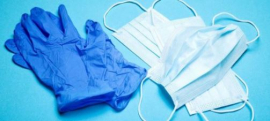
A 31-year-old suspect appeared in the Nelspruit Magistrates’ court this morning, following his arrest in a joint operation by the Hawks’ national Serious Corruption Investigation and the Special Investigative Unit in Mpumalanga on Monday.
The suspect was arrested after offering and handing over R50 000 to the complainant in order to have a case relating to the Personal Protective Equipment (PPEs) against his sister disappeared.
The case in question is against an official from the Department of Public Works in Mpumalanga.
“The complainant had reported that the individual contacted her and requested to meet.
“They met and the suspect requested the SIU official to make the case disappear. Upon finalizing the amount, the suspect went to collect the money.
“The suspect later returned and upon handing over the gratification, he was arrested,” the South African Police Service (SAPS) said.
Police also found money on the suspect to the value of R63 600 which was seized.
The National Head of the Directorate for Priority Crime Investigation, Lieutenant General Godfrey Lebeya, commended the team members from the SIU and the Hawks for working together to ensure that the Constitution and the Laws of the Republic are protected and upheld.
“Those who try to corrupt our members, will learn the hard way that we have adopted a Zero tolerance approach to corruption,” Lieutenant Gen Lebeya said.
SA records 6 590 new COVID-19 cases
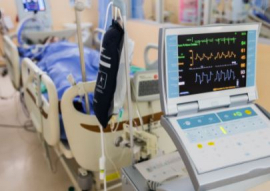
South Africa has recorded 6 590 new COVID-19 cases and 189 COVID-19 related deaths.
The new cases brings the total number of laboratory-confirmed cases to 2 546 762. This increase represents an 18.8% positivity rate.
The 189 COVID-19 related deaths bring the total fatalities to 75 201 to date.
The National Institute for Communicable Diseases (NICD), a division of the National Health Laboratory Service, says it continues monitoring and surveillance of COVID-19 in order to inform the public health response.
There has been an increase of 450 hospital admissions in the past 24 hours.
According to the department, the majority of new cases are from the Western Cape (30%), followed by KwaZulu-Natal (23%).
Gauteng Province accounted for 19%, Eastern Cape accounted for 11%, Mpumalanga, Free State and North West each accounted for 4% respectively, Northern Cape and Limpopo Province each accounted for 2% respectively of today’s new cases.
Lesufi dismayed at alleged rape of Grade 1 learner
Gauteng Education MEC Panyaza Lesufi has expressed his anger at the alleged sexual assault of a Grade 1 learner at Khensani Primary School in Soshanguve, Tshwane.
According to initial reports, the incident allegedly occurred on Monday, 02 August 2021, during school hours when a girl learner requested to use the bathroom.
The learner informed her mother the following day that she was allegedly raped by a General Assistant at the school.
“We are disturbed and angered by the allegations of a sexual assault of a Grade 1 at Khensani Primary in Soshanguve. We always strive to make our schools safe havens for our learners and are angry that a young girl has allegedly been raped at one of our schools. We call on everyone with any information that can help in this matter to contact law enforcement agencies,” Lesufi said on Monday.
Lesufi said the department’s psychosocial unit has already visited the school and offered support to the family of the learner.
“We can further confirm that the learner received medical attention and is not back at school yet. A case has been opened with the police.
“We condemn any actions which places our learners in danger and will continue to call on the police to act swiftly on such matters so that we can continue to ensure that our schools are safe for all learners,” the MEC said.
DPE welcomes ruling to place Mango under business rescue

The Department of Public Enterprises has welcomed the High Court judgment to place airline Mango under business rescue, effective from 28 July 2021.
The High Court in Johannesburg made the judgment to place the airline under business rescue on Tuesday.
This follows a resolution by the Boards of South African Airways (SAA) and Mango to place the low-cost airline under business rescue due to financial and operational challenges.
The department said the decision is good news for all stakeholders in the aviation industry, as it brings certainty to the process that will unfold to restructure Mango and ensure a sustainable aviation asset that will service the low cost market in the country.
“The restructuring of the SAA subsidiaries, Airchefs (Section 189 ) South African Airways Technical (section 189) and Mango will ensure that once restructured, the SAA Group will have ‘fit for purpose’ subsidiaries that will support and become the conduit for growth of the aviation industry in the country,” the department said in a statement.
12 national parks go cash-free from September

The South African National Parks (SANParks) says it will be going cash-free from 1 September 2021.
The cash free payment system will be implemented in two phases with several parks implementing this approach from the 2021/22 financial year and the remaining parks implementing the system in the 2022/ 23 fiscal year.
“From 1 September cash will no longer be accepted as a method of payment in some of the parks. SANParks clients will be encouraged to make use of pre-booking payment systems and or speed point payment system in parks.
“All trade and tourism activities will be cash-free and therefore cash will not be accepted,” SANParks Chief Financial Officer, Dumisani Dlamini, said.
He said while emphasise is placed on minimising the risk associated with the handling of cash by staff with the cash-free system, above all, improving customer convenience is key as the cash free payment system will reduce the contact time at entry points particularly during peak times.
“This will cut down on queueing time and increase the time for visitors to enjoy the parks,” Dlamini said.
Out of a total of 20 national parks spread across the seven provinces of the country, with the exception of KwaZulu-Natal and the North West, 12 national parks will go cash-free from 1 September 2021.
These include the Garden Route, consisting of Knysna, Wilderness and Tsitsikamma, Agulhas, Richtersveld and Namaqua in the Northern Cape, Table Mountain, Tankwa Karoo, West Coast in the Western Cape, Mountain Zebra, Camdeboo, Addo Elephant in the Eastern Cape as well as Mapungubwe in Limpopo and the Golden Gate Highlands National Park in the Free State.
“This is a step towards environmental responsibility and promotes ease of use, visit a cash free park today and #LiveYourWild,” Dlamini said.
For more information on the cash free implementation visit www.sanparks.org/tourism/tariffs/cash-free.php
Electoral Commission lodges deferral application
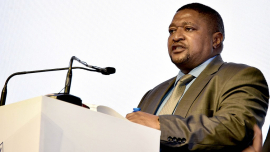
Electoral Commission chairperson Glen Mashinini says the Commission has lodged an application at the Constitutional Court for a deferral of the scheduled Local Government Elections.
“This court application is an extraordinary one and presumably unprecedented,” Mashinini said at a media briefing on Wednesday.
Addressing media in Tshwane, Mashinini said the issues at the core of the application have a bearing on the political rights of citizens, as well as the right to life, bodily and psychological integrity, and access to health.
“The application will undoubtedly offer the Constitutional Court another opportunity to contribute to the evolving jurisprudence of our constitutional order. The application is also launched on an urgent basis because there is need for certainty on the preparations for the municipal elections,” Mashinini said.
Mashinini said the Commission and electoral stakeholders are currently in an untenable position, where preparations are proceeding for 27 October 2021 — the scheduled Local Government Elections date — whilst at the same time, they are anticipating the outcome of the Constitutional Court application for a possible deferral of elections to February 2022.
Background
Cooperative Governance and Traditional Affairs (CoGTA) Minister, Dr Nkosazana Dlamini-Zuma, has gazetted the date of 27 October 2021 for the scheduled fifth edition of the Local Government Elections.
Making the announcement on Tuesday, Dlamini-Zuma said this was to comply with Constitutional requirements.
Section 159 of the Constitution, read with the Municipal Structures Act, prescribes that the end of a five-year term of local government elections be held within a period of 90 days.
President Cyril Ramaphosa in April announced that the Local Government Elections will take place on 27 October this year.
Amid the COVID-19 pandemic, the Commission appointed retired Deputy Chief Justice Moseneke to consider whether the country could undertake free and fair elections in October.
The inquiry received over 4 000 submissions from political parties, health experts and the general public, concluding its work and handing the report to the Commission in July.
The report concluded that it was not reasonably possible to or likely that the October local government elections would be held in a free and fair manner.
In balancing the need to secure livelihoods and democratic obligations, the Commission agreed with the Moseneke Inquiry, which also recommended that the Commission approach a court of competent jurisdiction to seek a just and equitable order to defer elections to not later than February 2022.
“The nature of the relief sought by the Commission is largely predicated on the impossibility to perform a constitutional obligation, which is the conduct of constitutionally compliant elections of municipal councils by 1 November 2021, due to the COVID-19 pandemic and the measures that government has instituted to curb the spread of the virus,” Mashinini said.
Nature of legal relief sought
Mashinini said in order to avoid uncertainty about the legal status of current municipal councils, the Commission seeks an order that the municipal councils remain competent until newly elected councils are declared elected.
“This court application affects the rights of all citizens of the country and thus everybody, has an interest in the proceedings that will evolve in the Constitutional Court,” Mashinini said.
In order to facilitate access to the court process, the Commission will immediately place the founding papers on its website as it transmits by electronic means the application to all registered parties, Mashinini said.
He assured South Africans that the Commission is committed to conducting an election in terms of the constitutional standards and it “wishes to do so in the shortest reasonably possible period, whilst preserving the rights to life, bodily and psychological integrity and access to health of citizens of the country”.
Mashinini said the election timetable will be published today.
He said the Commission will undertake the activities that must be performed in terms of the timetable until a competent court orders differently.
The election timetable spans 85 days and lays down key dates and deadlines for various electoral milestones until voting day on 27 October 2021.
According to Mashinini, the current voters’ roll stands at 25.7 million registered voters.
Former Nelson Mandela Bay officers granted bail

Four former Nelson Mandela Bay municipal officers, three company directors and three juristic persons have been granted bail by the Gqeberha New Law Court after appearing on allegations of fraud, corruption and money laundering.
The group was arrested by the Directorate for Priority Crime Investigation (Hawks) for their alleged role in the irregular awarding of a public health tender in the municipality.
“In 2014, the Nelson Mandela Bay metro’s Public Health Directorate awarded a tender to Milongani Eco Consulting CC to do environmental impact assessment. The contract is reported to have been for a duration of three years expiring in July 2017,” said Hawks spokesperson Captain Yolisa Mgolodela on Tuesday.
She said the tariff rate was R350 per hour.
“Further allegations are that, within 24 hours of signing the contract, an invoice of R1 million was immediately submitted and paid by the municipality.
“It is also reported that other numerous payments were made for services that were never rendered thus prejudicing the municipality cash of R26 million. It is further alleged that even interns within the municipality with expired contracts were also paid out of this contract,” she said.
Mgolodela said the suspects were released on bail on Thursday. Bail ranged fromR1000 to R20 000 depending on varying circumstances. The matter was remanded to 28 January 2022.
R50 000 reward for information on police station robbery

The Directorate for Priority Crime Investigation is offering a reward of R50 000 to anyone who can provide information that could lead to the arrest and prosecution of three suspects involved in the Tsineng police station armed robbery.
On Saturday, the armed suspects entered the Tsineng police station in the Northern Cape pretending to file a complaint.
While the police official was busy addressing them, one of the suspects jumped over the counter and pointed a firearm at the official.
The police official was then ordered to open a safe and the suspects managed to flee with eight pistols, three rifles and two shotguns with live ammunition. No shots were fired and no injuries sustained.
Anyone with information is requested to contact the Hawks’ Investigating Officers, Colonel Mgcineni Sityodana on 071 481 2802 or Warrant Officer Modise Bogacwi on 082 495 0819, or alternatively contact the police’s Crime Stop number 0860010111 or use My SAPS App. All information provided will be treated in the strictest confidence.