
Eskom Medupi’s last unit achieves commercial operation
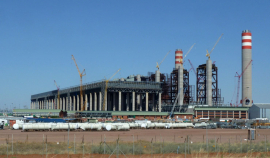
The last of Eskom’s six-generation units of the Medupi Power Station project have attained commercial operation status and have been handed over to the generation division.
In a statement on Monday, the power utility said the milestone marks the completion of all building activities on the 4 764 MW project, which commenced in May 2007.
The unit attained commercial operation status and was handed over to the generation division on Saturday.
Eskom said the commercial operation status means technical compliance to statutory, safety, and legal requirements have all been met.
The utility has since applauded all the teams involved and its execution partners for working tirelessly to ensure the unit is handed over for commercial operation as planned by the end of July.
“Unit 1 commercial operation is a historic milestone as it signifies the completion of construction for Medupi power station. This is an investment that will serve generations of the people of South Africa and power the economy for at least the next half-century.” Eskom’s Group Capital Division, Bheki Nxumalo, said.
The unit was officially declared commercial after the completion of the unit optimisation, control demonstration, as well as the 72-hour and 30-day reliability run, which have put all performance guarantees into effect.
“Unit 1 was first synchronised to the national grid on 27 August 2019 and reached the full load of 794 MW on 5 December 2019. During this testing and optimisation phase, unit 1 contributed intermittent power to the country’s electricity supply.”
The entity said the first unit, unit 6, attained commercial operation status on 23 August 2015.
“Over the following six years four other units were built and brought to commercial status, providing electricity to the national grid.”
Medupi uses direct dry-cooling systems due to the water scarcity in the Lephalale area and is the fourth-largest coal-fired plant and the largest dry-cooled power station in the world.
The power plant incorporates “supercritical” technology, which can operate at higher temperatures than Eskom’s earlier generation of boilers and turbines.
“Importantly, the technology enables the power plant to operate with greater efficiency, resulting in better use of natural resources such as water and coal, and will have improved environmental performance.”
At its peak during construction, the Medupi project directly employed more than 18 000 people on building activities while another 2 000 supporting employees were hired on site.
The capital cost of the project is R122 billion so far, and Eskom expects to spend in total under R135 billion on completion of the balance of the plant.
Working with communities
Since the construction of the project, Eskom has been working with the nearby communities in the Limpopo province.
These include more than 4 600 artisans, technicians, engineers, and managers who were formally trained by Eskom’s contractors, exceeding the entity’s local skills development target of 3 071.
“More significantly, over 60% of the beneficiaries were residents and from Limpopo province.”
In addition, Eskom invested more than R2.9 billion on socio-economic development initiatives to address some of the immediate social needs of local communities.
Since its inception, over R145 million was spent on corporate social investment benefitting over 80 000 people with a special focus on rural development, education, and health infrastructure.
“What remains for the Medupi project is the last part of implementing the agreed technical solutions related to the boiler design defects on the balance of plant. Once these repairs are completed during the next 24 months, Medupi will reliably deliver power to the national grid at full capacity, helping increase energy security for the country,” said Nxumalo.
Concern over Western Cape school vandalism
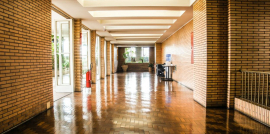
The Western Cape Education Department has reiterated its call to communities to take ownership of schools by protecting them following incidents of vandalism.
The call comes after 38 schools in the province reported incidents of vandalism, burglary, or attempted burglary over the July school holidays.
“I am extremely disappointed that our schools have once again been targeted by ruthless criminals while closed for the holidays. Our schools are already operating in difficult circumstances, and the last thing they need is to be further disrupted by damages and theft,” MEC Debbie Schäfer said.
Among the items stolen over the holidays included sports equipment, gardening and maintenance equipment, fencing, building fixtures, lighting and electrical cables, IT equipment, stationery, kitchen equipment, and food for school meals.
Even where nothing was stolen, the MEC said attempts by the criminals to gain access to a school property, caused damage to infrastructure.
She noted that in some cases, wanton vandalism appears to be the motive, and instead of stealing anything, the perpetrators simply destroyed anything from furniture to bathroom fixtures.
“These are pointless and malicious acts, with our children on the losing end as a result. To damage your local school is self-sabotage. Someone somewhere is going to be offered the goods stolen from our schools for sale. If this happens, please report it immediately.
“We had an incident last year when a member of the public reported seeing cans meant for use in the National School Nutrition Programme (NSNP) at a shop, which led to a speedy arrest,” Schäfer said.
R10m spent on repairs
Schäfer added that while the total cost of repairs and replacing stolen goods is still being assessed, the department has spent an estimated R10 million repairing damages in the 2020/21 financial year “money that could have been spent on supporting our schools”.
“Unfortunately, one of the incidents this holiday period resulted in the death of a security guard who confronted perpetrators. We offer our deepest condolences to his family and friends, and the school community. The district office has also offered counselling support to the school,” the MEC said.
The public is urged to report any suspicious activity in the vicinity of schools to the police, or the Safe Schools hotline on 0800 45 46 47.
US donates Pfizer vaccine doses to SA
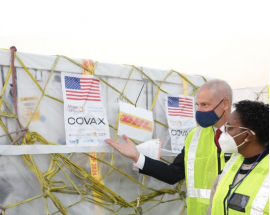
South Africa has received 2.8 million Pfizer vaccine doses from the United States as part of a donation that is set to boost the country’s vaccination rollout campaign.
Acting Health Minister Mmamoloko Kubayi was joined by Deputy Minister, Dr Joe Phaahla and the Chief of Mission at the US Embassy in South Africa, Todd Haskell, in accepting the consignment at OR Tambo International Airport on Saturday.
According to the Department of Health, the arrival of this first batch is part of a donation from the US government.
The initiative is part of the collaboration between the African Vaccine Acquisition Trust (AVAT), COVAX, and the US government, with the African Union Member States set to receive about 25 million COVID-19 vaccine doses to enhance coverage across the continent, and vaccinate at least 60% of the African population.
“The next batch will arrive on Tuesday to conclude the 5.6 million doses. The donation will contribute to the country’s expanded vaccination programme, which is fast gaining momentum to reach more people,” the Health Department said on Twitter.
The department said these life-saving vaccines arrive at a time when the country gears to vaccinate those aged between 18 and 34 from September.
“By the time we open for people between the ages of 18 and 34 to be vaccinated from the 1st of September 2021, we will be able to respond to the demand that this cohort will generate,” Kubayi said last week during a media briefing.
The department believes the donation contributes to the security of supply to meet the demands to reach government’s milestones to inoculate the majority of the population soon.
In addition, about 1 454 900 Johnson & Johnson vaccines are expected to be transported to various sites on Tuesday.
SARS seizes illicit cigarettes worth R6m
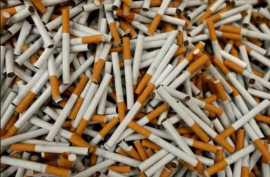
The South African Revenue Service (SARS) has seized illicit cigarettes from a number of Cape Town traders valued at R6 million.
The SARS Customs National Rapid Response Team, together with the South African Police Service (SAPS), seized the consignment on Thursday.
In a statement, the revenue collector said the raid saw 443 master cases, each containing 50 cartons of various brands of cigarettes, seized in the intelligence-driven operation.
SARS said the operation was part of its heightened focus on illicit trade in cigarettes and tobacco products to protect the local industry and broader economy.
The revenue service said the involvement of other enforcement agencies reflects government’s approach in which various departments co-operate for a more effective use of resources, greater impact and visibility.
SARS Commissioner Edward Kieswetter said the import of illicit cigarettes and other goods such as clothing and textiles, counterfeit medicines or remedies, as well as second hand motor vehicles, amongst others, destroys local industry and contributes to the shedding of jobs.
“These activities also rob the country of much needed revenue that enables government to deliver basic services to the poor and vulnerable, such as old age pensions, and offer relief to struggling businesses and their employees following the recent riots,” he said in a statement.
Kieswetter said there were also health risks for consumers, as illegally imported cigarettes do not comply with South African health regulations and pose a serious health risk to smokers.
“There is also a strong connection between these activities and international crime syndicates involved in human trafficking, gun-running, drug-smuggling and terrorism.
“SARS has a mandate to facilitate legitimate trade and will not tolerate illicit trade that harms our economy and our people, which is aligned with our strategic objective to make it hard and costly for those who do not comply with our tax and customs and excise legislation,” the Commissioner said.
SA detects 8 791 new COVID-19 cases, with 178 deaths
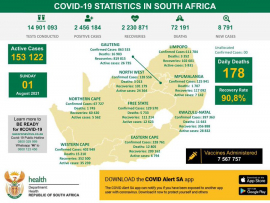
South Africa recorded 8 791 new COVID-19 cases on Sunday, as the number of deaths climbed by 178.
This means that the country now has 2 456 184 laboratory-confirmed cases and a death toll of 72 191.
According to the National Institute for Communicable Diseases (NICD), the majority of new cases were logged in the Western Cape after 2 333 people were confirmed to have contracted the virus.
The province is followed by 2 040 cases in Gauteng and 1 796 in KwaZulu-Natal.
“This increase represents a 23% positivity rate,” the NICD said.
In addition, the institution reported an increase of 204 hospital admissions in the past 24 hours, a decrease from those that were reported on Saturday, pushing the total to 15 641. The country has 153 122 active cases.
The information is based on the 14 901 093 tests conducted, 38 234 of which were performed since the last reporting cycle.
Meanwhile, South Africa administered 17 390 COVID-19 vaccines in the last 24 hours, bringing the cumulative number to 7 567 757.
KZN declares provincial state of disaster
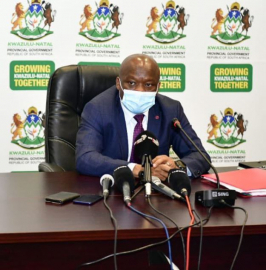
KwaZulu-Natal has declared a provincial state of disaster, the provincial government announced.
The move is due to the magnitude of the damage caused by the recent civil unrest.
The resolution was taken during a Provincial Executive Council meeting held and chaired by Premier on Sihle Zikalala on Thursday, following deliberations on the state of the province after the unrest.
The Provincial Executive Council received a detailed progress report as most of the organs of state have conducted their preliminary assessments to determine the magnitude of damages and cost implications.
Zikalala noted that the current estimated costs of damages and relief required for the sector departments is R1 534 026 832 96 whereas the municipal damages require R47 733 460 37.
“The interim financial implications is R1 581 760 293 33,” Zikalala said.
The Executive Council also noted that the financial implications for the damages and recovery costs were still not final. It was resolved that with the work done so far, the situation is beyond the provincial and municipal capacity to deal with the cost of public riots and unrest as reported.
The Premier said the declaration of a provincial state of disaster will support the reprioritisation of budgets to implement the repairs and recovery programmes.
The Executive Council also conveyed sincerest appreciation to President Cyril Ramaphosa, the South African National Defence Force, and the South African Police Service for their role in securing peace in KwaZulu-Natal and the country.
Rabies reported in West Rand, Gauteng
Two cases of rabies have been confirmed in jackals from the Cradle of Humankind area in the Mogale City Municipality, Gauteng, the National Institute for Communicable Diseases (NICD) said.
These two cases were detected in June, while three jackals in the same area were suspected of rabies, but not confirmed.
“In response, rabies vaccination campaigns in dogs have been underway in the affected and surrounding areas,” said the NICD.
In addition, rabies has been confirmed in a honey badger in the same area during the week of 25 July 2021.
“Three human exposures to the honey badger were reported. It is reported that all three cases have received rabies post-exposure prophylaxis and wound care to prevent rabies infection.”
The public health institute said rabies is controllable and preventable and that the disease is effectively controlled in domestic dogs through rabies vaccination.
The institute has urged people to ensure that their dogs are fully vaccinated against rabies.
In addition, dogs that are not fully vaccinated for rabies are susceptible to infection, the NICD warned.
Campaigns in response to these rabies cases are ongoing in the affected area of Mogale City.
According to the NICD, if any animal is showing signs of unusual behaviour, hyper-salivation, and signs of paralysis, anima-owners must contact their local or state veterinarian at Vet.help@gauteng.gov.za so that the animal can be investigated.
“Do not approach or attempt to handle animals that are not known to you. The public should refrain from engaging in direct interactions with wildlife. Often, rabid wildlife may appear tame and it may be tempting to feed or pet such animals.”
When possible exposures in humans do occur, through bites or scratches inflicted by a suspected rabid animal, all wounds must be washed thoroughly with soap and water.
“It is then crucial that rabies post-exposure prophylaxis is sought immediately at a healthcare facility.”
The rabies post-exposure prophylaxis is considered a life-saving emergency intervention following possible rabies virus exposures.
Rabies post-exposure prophylaxis entails thorough cleaning of the wound site followed by rabies vaccination and rabies immunoglobulin therapy.
Rabies is a fatal infection, which has been an endemic disease in South Africa for many years. It is reported in various parts of the country involving different animal species.
Meanwhile, ongoing cycles of rabies exist in domestic dogs, black-backed jackals, mongoose species, and bat-eared foxes in certain locations of the country.
“Spill-over to other wildlife and domestic species do occur, sometimes in locations where the disease is not often reported.”
In Gauteng, the NICD said rabies is reported infrequently in mongoose and jackal, and more often on the rural outskirts of the province.
KZN Finance approves salary payments for Umkhanyakude District workers
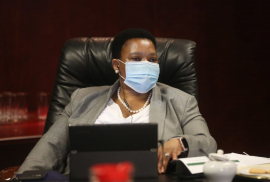
KwaZulu-Natal Finance MEC Nomusa Dube-Ncube has conditionally approved and authorised the payment of salaries for workers and other allied municipal needs of Umkhanyakude District Municipality.
The municipality last week wrote to the MEC requesting her to approve the payment of salaries, as they could not use their funds without authorisation since they had not convened to pass their budget.
After due diligence, the MEC approved the payment of salaries, subject to the municipality convening to pass their budget.
Umkhanyakude and eMadlangeni Local Municipalities have both been confronted with serious governance, financial and service delivery challenges.
Among these include the failure to convene to pass and approve annual budgets, despite protracted efforts by the Provincial Treasury and Cooperative Governance and Traditional Affairs (COGTA), which had been working with both municipalities to resolve their financial and administrative challenges.
“We noted that the payments were urgent and were necessary for the stability of Umkhanyakude, hence our conditional approval. I have also approved the intervention in terms of section 139(4) of the Constitution, 1996, at the uMkhanyakude District and eMadlangeni Local Municipalities, to ensure the continued functioning of the municipalities,” said Dube-Ncube.
Dube-Ncube has also approved the extension of the temporary budgets and associated revenue-raising measures for the municipalities, and to conclude all formalities related to this intervention.
The department is further working with COGTA to stabilise a compromised governance system in both municipalities which have been contributed to current state of affairs.
Government, private sector called to give 40% of procurement to women-owned businesses
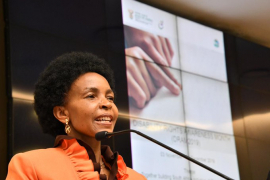
Minister in the Presidency for Women, Youth and Persons with Disabilities, Maite Nkoana-Mashabane, has called on all government departments and the private sector to give 40% of procurement to women owned businesses.
“Women economic inclusion and access to the mainstream of the economy should be a priority,” Nkoana-Mashabane said.
Addressing the media during the official launch of Women’s Month 2021 on Friday, Nkoana-Mashabane said access to information on how to register a business, and how to do business with the State in all languages, remains a challenge for tens of thousands of women.
The Minister said from next year, the department will begin a series of radio shows on 11 ofouth Africa’s largest stations.
“The focus is to answer the questions women business owners have, but cannot get answers to, especially in all African languages,” the Minister said.
The department will also late this month host the Women’s Economic Assembly in response to Pillar 5 of the National Strategic Plan (NSP) on Gender-Based Violence and Femicide (GBVF), which is economic empowerment.
The Minister said the assembly will put major sectors under the spotlight to evaluate the level of participation of women-owned businesses.
She said the department is also beginning to look more into manufacturing, mining and mineral exploration, and women in the green economy.
This year’s Women’s Month will be commemorated under the theme, ‘The year of Charlotte Maxeke: Realising Women’s Rights’. This is in recognition and celebration of the 150th birthday anniversary of Mme Charlotte Makgomo Mannya Maxeke.
Government to pump R3.9 billion to help businesses affected by unrest

Government is working around the clock to get businesses affected by looting and damage to property in parts of the country back on their feet and set South Africa on a path of economic growth.
Trade, Industry, and Competition (DTIC) Minister Ebrahim Patel said key interventions have been identified to boost investor confidence and assist businesses that were casualties of the recent unrest in Gauteng and KwaZulu-Natal.
The Minister, who was also speaking on behalf of the Department of Small Business Development on Thursday, said a R3.9 billion response fund has been reprioritised from various departments.
However, Patel believes that the capital is expected to grow to over R4 billion with the support of other entities.
The funding will immediately support businesses to get back into full operations, while they await either longer-term funding possibilities or insurance money.
In addition, where necessary, it may supplement what the State-owned insurer, South African Special Risk Insurance Association (SASRIA), is currently doing.
“They may include grants where warranted, source of working capital for raw material replacement, stock replenishment and can be used in some cases, for equipment purchases, and small scale repairs.”
In addition, he said, teams have been meeting with SASRIA to discuss how they can fast track insurance claims.
“We want the economic benefit of that insurance cover to manifest itself as quickly as possible. They will also be looking at what support we can provide … to uninsured businesses. And all of those discussions are well underway.”
Damage
He told the media that a survey conducted by government with companies shows the extent of economic damage and disruption.
Of the 1 070 companies that responded, about 900 indicated they were directly or indirectly affected.
The Minister said these businesses had damage to property, stock was looted or they experienced disruptions in their supply chain.
“The preliminary estimates of the damages indicate that it’s significantly more than R5 billion of these surveyed companies in loss of assets and a significant loss of business.”
In addition, Patel announced that 10 200 jobs are potentially affected.
Meanwhile, of these businesses, 255 are in manufacturing, 265 in retail, and close to 300 provide services, while 68% were from KwaZulu-Natal.
“All the businesses that we surveyed 60% had insurance, and 40% of them were uninsured for an event of this nature.”
Forty-three percent of these companies said it would take them anything from a week to a month to re-establish their normal business activity, while 7% believed it would take more than a year.
Interventions
Patel said government is working to re-establish the supply lines in the economy as quickly as possible while looking at immediate repairs of buildings that will lead to the resumption of business.
Government is also speeding up the construction and structural repairs, which were vital to South Africa’s economic recovery. However, he said it might take some time.
“Some of those will take some months to do. But the work has to start immediately and we’ve been working on how to fast track them.”
Patel told the media government was looking into addressing the loss of wages of workers during the period of reconstruction and rebuilding, which Minister of Employment and Labour, Thulas Nxesi will lead.
This comes after President Cyril Ramaphosa also announced the extension of the COVID-19 Temporary Employer-Employee Relief Scheme (TERS).
“Many of these businesses have indicated the need for bridging funding; funding that can be made available in the short-term until insurance pay outs.”
Engaging with businesses
Government has interacted with more than 200 businesses and investors, business organisations, and top 100 CEOs and individual companies.
“I must say that we were struck by the support and view many businesses, particularly global businesses took about the rebuilding period, and their commitment to work with government and South Africans in rebuilding the economy,” he told the media.
The DTIC and national government also met with Toyota after the company raised security concerns.
Because of those engagements, Patel said Toyota was convinced that their grievances have been addressed and that the company is ready to resume business.
“The purpose of all those engagements was to ensure that we can send a message around the security of businesses and the infrastructure that we can coordinate the actions we need to take to get the economy back on track.”