
SA ramps up COVID-19 inoculation
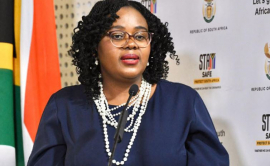
With the expected arrival of COVID-19 vaccine batches in the coming days, South Africa will soon be able to vaccinate one million people in three days.
Addressing the media on government’s response to the COVID-19 pandemic, acting Minister of Health, Mmamoloko Kubayi, said vaccination is expected to pick up momentum such that 400 000 vaccinations will be administered per day by the end of the week.
“By the time we open for people between the ages of 18 and 34 to be vaccinated from the 1st of September 2021, we will be able to respond to the demand that this cohort will generate,” the Minister said on Friday.
This week South Africa expected the number of vaccinated people per day to reach the target of 300 000.
“However, due to the constrained vaccine supply this week, the number of vaccinated people per day was around 220 000 which is likely to be the average this week.
“At the present rate of vaccination, we are currently vaccinating one million people in four days. The number of vaccinated people has just surpassed another milestone of seven million,” the Minister said.
This week the vaccine supply was constrained, which has negatively affected the rate of vaccination. This as some of the sites ran out of vaccines and people had to be turned away.
“The good news is that we received more vaccines from Johnson & Johnson and more Pfizer vaccines are expected in the coming days.”
The Minister has received a Ministerial Advisory Committee (MAC) on vaccine advisory. “This relates to questions being asked about opening up for more vaccine to meet our demand. The advisory focused on Sinovac and AstraZeneca. We will communicate government’s decision in a week’s time.”
South Africa is expecting a delivery of about 10 million Johnson & Johnson doses and about 16 million Pfizer doses this quarter.
According to Department of Health Deputy Director-General, Dr Nicholas Crisp, 1 556 100 Pfizer does will arrive on Sunday 1 August for distribution next week.
“[A total of] 5 660 460 Pfizer doses are arriving between 31 July and 3 August and 1 454 900 Johnson & Johnson (J&J) doses are expected to be distributed in the week of 2 August,” Crisp said.
This week South Africa administered 7 297 912 doses of vaccines.
“We have been have been reaching our vaccination targets as we have been building up the capacity on the ground on the vaccinations but we are not reaching the most vulnerable sufficiently and that is something that we will focus o [in] the weeks ahead.
“Our target for August is to reach seven million people over the age of 35 but we must ensure that at least a million of those people are people over the age of 60,” he said.
Call for men to vaccinate
Crisp has encouraged men to be inoculated, as they have not been showing up in their numbers to vaccination sites.
“We are not managing to reach that many men, specifically in the older age group, above 50 men are not turning up for vaccination and we encourage men to come for vaccination,” Crisp said.
The department will focus on increasing vaccinations in 10 districts that are lagging behind the rest of the country.
The J&J vaccine, which originally targeted the public sector essential worker programme, has been placed in the population programme.
“Part of the focus will be ensuring that we get people in the pension pay queues vaccinated, a large number of those are people are over the age of 60,” said Crisp.
Job seekers warned of scam

The Directorate for Priority Crime Investigation has warned the public about job scammers following the arrest of a 35-year-old suspected job scammer in Polokwane on Thursday.
The victim allegedly saw a job advertisement for general workers on Facebook and promptly applied online.
Within a few days, he was invited to attend interviews at a hotel in Polokwane. He was requested to bring R210 for police clearance.
The victim became suspicious as more money for uniform was demanded from him and alerted the authorities.
When the Hawks’ Commercial Crime Investigation members pounced on the suspect, she was about to conduct more job interviews, as other unsuspecting job seekers were flocking into the hotel.
The Hawks’ preliminary investigations revealed that the company the accused claimed to be working for does not exist in Polokwane.
It was further established that the suspect provided fraudulent proof of payment to the hotel for the venue fromwhere she was conducting the interviews.
The suspect is expected to appear in the Polokwane Magistrate’s Court today to face charges related to fraud.
Members of the public are urged to be cautious when searching for jobs as there are scammers who target desperate job seekers.
UIF targets queues in North West
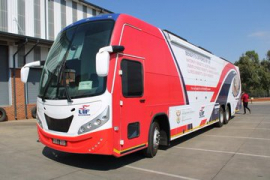
The Department of Employment and Labour’s Unemployment Insurance Fund (UIF) in the North West will from Monday embark on a service delivery drive aimed at reducing long queues at Labour Centres, and to reach out to areas that are far from the centres.
The service delivery drive is made possible by the procurement of eight UIF buses that were launched in June by the Minister of Employment and Labour, and have since been distributed to the different provinces.
These buses will be used for the provision of the department’s essential services.
They are equipped with a server that will allow the rendering of all departmental services possible from anywhere in the province.
According to the Deputy Director: Unemployment Insurance Fund in the North West, Selete Qhamakoane, they will start using the bus from the month of August and they will target the visiting points that the department has been utilising to meet clients in different areas around the province.
“Our visiting points are not formal offices and normally when we go to these points, we only collect documents and list enquiries for further processing at the office. In most instances, we are not able to revert to clients with responses due to time constraints and other challenges.
“This results in clients having to go to the office. With the bus, we will provide the clients with on-the-spot service, a service similar to the one offered at the office, therefore they will no longer need to go back to the offices,” Qhamakoane said.
It is also anticipated that the use of the bus will fast-track the provision of services in areas that are highly congested such as Rustenburg, Brits and Klerksdorp.
The bus will travel throughout the province monthly from Monday to all the visiting points as per the regular schedule that will be communicated with clients.
Nzimande dismisses claims of abuse of power
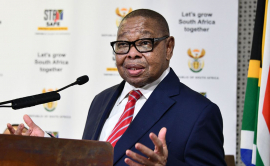
Higher Education and Training Minister, Dr Blade Nzimande, has dismissed claims that he has wanted the department’s Director-General (DG) Gwebinkundla Qonde to leave the department since 2019.
The claims follows the precautionary suspension of Qonde, pending a forensic investigation into the National Skills Fund (NSF).
“The decision to place DG Qonde under precautionary suspension emanates from an adverse audit report by the Auditor-General of South Africa (AGSA). The AGSA found that much of a total amount of just under R5 billion could not be properly accounted for over two financial years by the National Skills Fund.
“These are indeed huge sums of money that the AGSA found they could not have been properly accounted for. The DG of the DHET, by virtue of this position, is also the accounting authority of the NSF. He therefore has the responsibility for all the funds and their expenditure,” Nzimande said in statement.
While Qonde has not as yet been found guilty, the Minister said that a precautionary suspension is necessary so that a comprehensive forensic investigation into the NSF can be done.
He added that the need for such an investigation has also been called for by the Standing Committee on Public Accounts (SCOPA).
“It is therefore a smokescreen that the suspension of DG Qonde is for any other reason than for conducting an investigation into this serious matter.”
Nzimande also noted with concern the continued reporting by some sections of the media on the matter in a manner that “completely ignores these very serious audit findings”.
“It seems the media thus far has been reporting without even bothering to engage with the AG findings and their implications. Media reportage thus far has also not even bothered to study the SCOPA hearings, findings and recommendations on the same matter,” Nzimande said.
The Auditor-General said: “I do not express an opinion on the financial statements of the public entity because of the significance of the matters described in the basis for disclaimer of opinion section of this auditor’s report. I was unable to obtain sufficient appropriate audit evidence to provide a basis for an audit opinion on these financial statements”.
During the National Skills Fund 2019/20 audit disclaimer hearing, held on the 18 May 2021, SCOPA chairperson Mkhuleko Hlengwa also said that the committee was wholly unsatisfied with the responses provided.
“The committee proposes a full-scale forensic investigation into NSF for the past three years. Further the Minister must provide a roadmap within 30 days on the process and structure of a forensic investigation, including its potential collaboration with the Special Investigating Unit (SIU),” Hlengwa said at the time.
Department of Science and Innovation, Director-General, Dr Phil Mjwara, is currently acting as the Director-General of Higher Education and Training, until the conclusion of the investigations and any process that may ensue thereafter.
SA administers 215 066 COVID-19 doses, as cases rise by 13 751

There were 215 066 people who received their COVID-19 vaccine, while the country detected 13 751 new cases on Thursday.
According to the Department of Health, this means the country has now administered 7 297 913 jabs since the start of the rollout programme in South Africa.
In addition, the number of adults that have been fully vaccinated stands at 2 835 930.
Meanwhile, the National Institute for Communicable Diseases (NICD), said the country’s cumulative infections have risen to 2 422 151 since the beginning of the pandemic.
Of the latest infections, the majority of new cases were recorded in the Western Cape after 3 968 people were confirmed to have contracted the virus. The province is followed by 3 655 in Gauteng and 1 900 in KwaZulu-Natal.
According to the NICD, the increase represents a 24.6% positivity rate.
In addition, a further 523 COVID-19 related deaths have been reported, bringing the tally to 71 431.
“There has been an increase of 598 hospital admissions in the past 24 hours, a decrease from yesterday’s new hospital admissions, the NICD said on Thursday. A total 15 964 patients are currently receiving treatment in hospitals.
The information is based on the 14 750 901 tests of which 55 923 were performed since the last reporting cycle.
According to the World Health Organisation, as of 29 July 2021, there have been 195 886 929 confirmed cases of COVID-19, 4 189 148 deaths, and 3 830 124 730 administered vaccine doses.
SA administers over 7 million COVID-19 vaccines
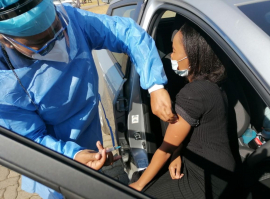
South Africa’s vaccination rollout programme is accelerating, with over seven million vaccine doses administered to date.
According to the Department of Health, the country has now distributed 7 065 432 COVID-19 jabs, of which 194 891 people received their shot on Wednesday.
The recent statistics show that the total cumulative number of the administered Johnson & Johnson shots now stands at 1 386 580 and 5 678 852 for the Pfizer jab.
Meanwhile, South Africa detected 17 351 new COVID-19 cases from the 71 061 tests that were performed on Wednesday.
According to the National Institute for Communicable Diseases (NICD), this means the country now has a total of 2 408 525 laboratory-confirmed cases, representing a 24.4% positivity rate.
The hardest-hit provinces include Gauteng which recorded 5 204 new infections, followed by 4 667 in the Western Cape and 1 975 in the KwaZulu-Natal.
In addition, a further 520 COVID-19 related deaths have been reported, pushing the tally to 70 908 to date.
“There has been an increase of 726 hospital admissions in the past 24 hours,” the NICD said.
According to the latest data, the country now has 150 629 active cases, while the recovery rate is standing at 90.8% after 2 186 988 people beat the virus.
According to the World Health Organisation, as of 28 July, there were 195 266 156 confirmed cases of COVID-19, 4 180 161 deaths, and 3 829 935 772 administered vaccine doses.
SA should reform fragmanted financial services ombuds, World Bank recommends

A World Bank diagnostic study has recommended that South Africa restructure its fragmented financial services ombudsman structure.
The diagnostic study, titled: “South Africa – Financial Ombud System Diagnostic”, was commissioned by National Treasury and prepared by the World Bank Group (WBG).
It aims to provide an independent review of South Africa’s financial ombud system. It also seeks to recommend reforms to enhance customer protection and good-quality outcomes in the financial services sector.
Recommendations to address the findings include establishing a National Financial Ombud, a new non-statutory body to replace the current seven schemes except for retirement funds; the proposed reformed Pension Funds Adjudicator would become the Retirement Funds Ombud.
The report also suggests that the country introduces enhancements to the current ombud council framework; as well as implementing an update of complaint-handling requirements to improve consistency among financial services providers.
The technical assistance for this diagnostic study has been provided as part of the South Africa Financial Sector Development and Reform Program (FSDRP) undertaken by the WBG and funded by the Swiss State Secretariat for Economic Affairs.
In this regard, the National Treasury and the Financial Sector Conduct Authority (FSCA) have invited the public to provide written comments on the diagnostic report.
The FSCA, as the regulator responsible for ensuring that customers are treated fairly in the financial sector, also participated in the process.
The Treasury and the regulator in a statement said the study followed the publication in 2017 of the discussion document: “A Known and Trusted Ombud System for All”, as part of the Twin Peaks financial sector regulatory reform programme in South Africa.
“That document sets out initial reforms to the ombud system included in the Financial Sector Regulation (FSR) Act (Act 9 of 2017) as well as the need to undertake further research to inform any future reforms,” reads the statement.
The study covered the country’s seven financial ombud schemes. These are the Credit Ombud, Ombudsman for Short Term Insurance, Ombudsman for Banking Services, Ombudsman for Long Term Insurance, Pension Funds Adjudicator, Ombud for Financial Services Providers (FAIS Ombud), and the Johannesburg Stock Exchange Ombud. The WBG extensively consulted the ombuds during the assessment.
The Treasury and the FSCA said the diagnostic study identified potential overlaps, gaps and inconsistencies both in the overall financial ombud system and individual ombud schemes, and recommends further reforms.
The study’s analysis and recommendations as well as the public comments received will help shape and inform National Treasury’s policy approach to reforming the financial ombud system.
Some high-level findings include:
a) The current highly complex and fragmented ombud system with overlapping jurisdictions increases costs for providers and is difficult for consumers to navigate.
b) There is a wide variation in complainant eligibility, processes, powers, and status of decisions among the Ombud schemes.
c) There is insufficient customer accessibility due to language barriers and regional distribution.
d) The lack of socio-economic data on complainants makes it difficult to identify and address systemic issues.
“The report acknowledges the many strengths and benefits of the current ombud schemes but findings point to the need for a centralised and comprehensive ombud system that supports greater accessibility and efficiency across the financial sector,” reads the statement.
The technical assistance for this diagnostic study has been provided as part of the South Africa Financial Sector Development and Reform Program (FSDRP) undertaken by the WBG and funded by the Swiss State Secretariat for Economic Affairs.
Comments can be sent to ombuddiagnostic@treasury.gov.za. Closing date for comments is 3 September 2021.
President authorizes SANDF members to support Mozambique

President Cyril Ramaphosa has authorised the employment of over 1 000 members of the South African National Defence Force (SANDF) to support Mozambique.
The Presiding Officers, National Assembly Speaker Thandi Modise and National Council of Provinces (NCOP) Chairperson Amos Masondo, received a correspondence from the President informing them that he has authorised the employment of 1 495 members of the SANDF for a service in support of an international obligation of the Republic of South Africa towards the Southern African Development Community (SADC).
The employment is authorised in accordance with provisions of section 201(2) (c) of the Constitution of the Republic of South Africa, 1996 read with section 93 of the Defence Act, 2002 (Act No 42 of 2002).
Parliamentary spokesperson Moloto Mothapo said the President’s correspondence, dated 23 July 2021 also states that the employment of the SANDF members will be from 15 July 2021 to 15 October 2021.
“The expenditure expected to be incurred amounts to R984 368 057. The President also said that he would communicate this report to the co-chairpersons of Parliament’s Joint Standing Committee on Defence, and asked the Speaker and the Chairperson to bring the contents of his report to the attention of their respective Houses,” Mothapo.
The President’s correspondence has been published in Parliament’s Announcements, Tablings and Committee Reports (ATC), dated 27 July 2021.
DBE sets record straight on teachers who are not vaccinated
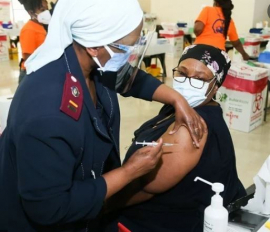
The Department of Basic Education (DBE) has disputed misleading reports and misinformation regarding the circular it distributed last week on educators who are not vaccinated.
“The ‘no jab, no job’ narrative emanating from an article carried in a Johannesburg-based newspaper earlier this week, has created confusion and fear among educators,” department spokesperson Elijah Mhlanga said in a statement.
Mhlanga said the department is also aware that an extract from the seven-page circular has been shared on social media platforms resulting in unnecessary anxiety and panic among teachers who did not go for their vaccination.
He said that at the close of the vaccination programme in the sector more than 517 000 education personnel, out of 582 000 had received their vaccines.
“Others could not get vaccinated because of various reasons including illness, COVID-19 positive cases, flu vaccines and hesitancy. When schools reopened last week for principals and management teams, the department issued a circular to assist in managing cases where some teachers did not vaccinate.
“The purpose of Circular 4 of 2021, dated 23 July 2021 and signed by the Director-General, Mathanzima Mweli, was to provide guidance regarding the operational requirements for educators employed in terms of the Employment of Educators Act of 1998 following the implementation of the Basic Education Sector COVID-19 Vaccination Programme. The circular also serves as a guide to managing vulnerable employees in the context of the current pandemic,” Mhlanga explained.
He said the department has strongly recommended that education sector personnel should get vaccinated, but “at no stage did DBE seek to compel employees to be vaccinated”.
“In fact in the circular the department says that it respects the rights of educators who opt not to be vaccinated on constitutional, religious, cultural, comorbidity or medical grounds,” Mhlanga said.
He noted that educators who have taken the vaccine or opted not to and are concerned about their comorbidity or medical condition/illness, should apply to the relevant Provincial Education Department for leave.
“These educators will be dealt with in terms of the relevant leave and sick leave provisions in terms of the Employment of Educators Act. Where educators who are not in a position to satisfactorily perform their duties required of them or because of a medical condition, such matters will be handled in terms of the Labour Relations Act read, in conjunction with the Employment of Educators Act viz operational requirements and incapacity procedures.
“The latter provides that an employer is obligated to take an employee through the ordinary incapacity procedures which provide for a set of steps that an employer needs to follow to try and accommodate the educator in the work environment. Dismissal for operational requirements or incapacity is regarded as the last resort,” Mhlanga said.
Where an educator simply refuses to report for duty without a valid reason and based on a reasonable instruction by the employer, Mhlanga said such matters will be handled in terms of the disciplinary procedures of the Employment of Educators Act.
“The circular seeks to provide steps that must be taken to accommodate teachers who are not able to vaccinate for a variety of reasons. The department urges everybody in the sector to apply the contents of the circular appropriately in order to meet the intended objective of assisting in creating stability in the schooling system under the COVID-19 conditions,” Mhlanga said.
Public comment sought on 2021 Draft Tax Bills

The National Treasury and the South African Revenue Service (SARS) are inviting the public to comment on the 2021 Draft Tax Bills.
Treasury on Wednesday published for public comment the 2021 draft Rates and Monetary Amounts and Amendment of Revenue Laws Bill (2021 draft Rates Bill), the 2021 draft Taxation Laws Amendment Bill (2021 draft TLAB) and the 2021 draft Tax Administration Laws Amendment Bill (2021 draft TALAB).
These draft tax bills contain tax proposals made in the 2021 Budget on 24 February 2021. The 2021 tax bills will be introduced in Parliament later this year.
“For legal reasons, the draft tax amendments continue to be split into two bills, namely a money bill (section 77 of the Constitution) dealing with money bill issues and an ordinary bill (section 75 of the Constitution) dealing with issues relating to tax administration,” said Treasury in a statement.
The National Treasury and SARS solicit written comments on tax proposals contained in the 2021 draft tax bills.
“After receipt of the written comments, National Treasury and SARS normally engage with stakeholders through public workshops to discuss the written comments on the draft tax bills.
“However, due to the national lockdown regulations as a result of the COVID-19 pandemic, further information will be provided on the manner and platform of public engagement for purposes of discussing the written comments.
“The Standing Committee on Finance and the Select Committee on Finance in Parliament are expected to make a similar call for public comment, and convene public hearings on these draft tax bills before their formal introduction in Parliament.”
Thereafter, a response document on the comments received will be presented at the parliamentary committee hearings, after which the bills will then be revised, taking into account public comments and recommendations made during committee hearings, before they are tabled formally in Parliament for its consideration.
“The 2021 draft Rates Bill, which was first published on Budget Day (24 February 2021), contains tax announcements made in Chapter 4 and Annexure C of the 2021 Budget Review that deal with changes to the rates and monetary thresholds and increases of the excise duties.”
The 2021 draft TLAB and the 2021 draft TALAB provide the necessary legislative amendments required to implement the more complex tax announcements made in Chapter 4 and Annexure C of the 2021 Budget Review that will require greater consultation with the public.
Key tax proposals contained in the 2021 draft Rates Bill include changes in rates and monetary thresholds to the personal income tax tables, and increases of the excise duties on alcohol and tobacco.
Key tax proposals contained in the 2021 draft TLAB include the following:
- Strengthening the rules dealing with limitation of interest deductions in respect of debt owed to persons not subject to tax
- Restricting the set-off of the balance of assessed losses in determining taxable income
- Refining the timeframes of compliance requirements of the industrial policy projects tax incentive
- Curbing the abuse of the Employment Tax Incentive
- Applying tax on retirement fund interest when an individual ceases to be a tax resident
- Strengthening anti-avoidance rules in respect of loans between trusts
- Refinements to the corporate reorganisation rules
- Clarifying the scope and definition of carbon sequestration
Key tax proposals contained in the 2021 draft TALAB include the following:
- Administrative non-compliance penalties based on estimates for non-submission of six-monthly employees’ tax returns
- Removal of double-penalty for the same incidence of non-compliance relating to employees’ tax
- Expanding the purposes for which air cargo may be removed to degrouping depots
- Amendments related to changes in the accreditation system
- Increasing the caps for refunds and underpayments of duties
The 2021 draft tax bills and the accompanying draft explanatory memoranda containing a comprehensive description of the proposed tax amendments contained in the 2021 draft TLAB and the draft TALAB, can be found on the National Treasury (www.treasury.gov.za) and SARS (www.sars.gov.za) websites.
General information underlying the changes in rates, thresholds or any other tax amendments can be found in the 2021 Budget Review, available on the treasury website.
Comments in writing can be emailed to 2020AnnexCProp@treasury.gov.za and SARS at acollins@sars.gov.za by close of business on 28 August 2021.