
Cold temperatures predicted for this week

The South African Weather Services (SAWS) has predicted a week of very cold temperatures across the majority of South Africa from Tuesday and lasting well into the weekend.
The cold temperatures are due to a succession of cold fronts that are expected to sweep across the southern half of the country.
The first cold front arrived over the south-western parts of the country on Monday afternoon, followed by another, more intense, cold front on Wednesday.
The latter system will be supported by a well-defined upper-air trough, thus enhancing the overall intensity of the weather system.
A cold front made landfall over the south-western parts of the country on Monday.
“Consequently, strong north-westerly winds can be expected over the southern interior as well as along the southern and south-eastern coastal regions,” SAWS said in a statement.
Rainfall intensity is expected to increase on Tuesday along the western part of the Cape south coast, including the Overberg District, with the distinct possibility of localised flooding in these areas.
“Light snowfalls are expected over the south-western mountain peaks on Tuesday morning, while bitterly cold conditions are likely to set in over much of the interior of the Western Cape.
“Showers are expected to reach the Western parts of the Eastern Cape later, spreading to the Sneeuberg and Winterberg.
“Light snowfall is expected in high-lying areas and mountain ranges of the Western parts of the Eastern Cape including the Tsitsikamma, Kouga, Sneeuberg and Winterberg mountains,” SAWS said.
A second, more intense cold front supported by an upper-air trough will affect the Cape provinces on Wednesday through to Thursday, consolidating very cold, wet and windy conditions over the majority of the Western and Eastern Cape interior regions.
Small stock farmers and the public are advised to take the necessary precautions ahead of the expected cold snap and to ensure that livestock and pets have sufficient shelter and water.
The South African Weather Service will continue to monitor any further developments relating to this weather system and will issue updates as required.
The public is urged to regularly follow weather forecasts on television and radio.
Updated information in this regard will be available at www.weathersa.co.za as well as via the SA Weather Service Twitter account @SAWeatherService.
Parliament committees conduct oversight in KZN, Gauteng

The Joint Standing Committee on Defence and the Portfolio Committee on Police will today undertake an oversight visit to KwaZulu-Natal and Gauteng to assess the impact of police and soldiers deployed in the provinces.
The two-day visit follows the outbreak of violence, looting and destruction of infrastructure, especially in the two provinces.
On Sunday, the Joint Standing Committee on Defence received a briefing on the deployment plans, capabilities required and projected resources to be spent as part of Operation Prosper.
Members of the Portfolio Committee on Police will also join the Joint Standing Committee on Defence for a confidential briefing, as the police and army have joint operations.
Chairperson of the Portfolio Committee on Police, Tina Joemat-Pettersson, said the decision to undertake the oversight visit was primarily to ensure operational effectiveness of the South African Police Service (SAPS) in quelling violence and maintaining calm and respect for the rule of law.
“Also, we wanted to ensure a seamless cooperation between the SAPS and South African National Defence Force (SANDF),” Joemat-Pettersson said.
Joint Standing Committee on Defence Co-Chairperson, Cyril Xaba, said the visit is necessary to ascertain the effective implementation of the operation, and also to assess the impact of the deployment of 25 000 members of the South African Defence Force (SANDF) to the two provinces.
Co-Chairperson of the Joint Standing Committee on Defence, Mamagase Nchabeleng, said the committees have scheduled their oversights in such a way that there is adherence to the Disaster Management Act regulations, as well as to reach as many areas as possible within the provinces.
“We will thus in the morning have joint briefings with senior management of the SAPS and SANDF, and later on, separate the two committees for in-loco visits to sites and areas that fall under the respective portfolios of the two committees,” Nchabeleng said.
The committees have reiterated their strong condemnation of violence, looting and destruction of infrastructure in the two provinces.
“The impact of the disturbances on the economy is concerning, especially in the context of the already ailing economy as a result of the devastation caused by COVID-19,” the committees said.
Both committees have also reiterated their call for effective investigation and arrest of instigators of violence, as “their actions are contrary to the spirit of the Constitution, that guarantees the right to protest”.
Post office warns of parcel scam

The South African Post Office has warned the public of email and text messages meant to convince the receiver to pay money into a fraudulent account.
The Post Office said the latest text message includes the name of person who is receiving the message and either states that the address of the receiver is illegible, or that the parcel can only be released once a clearance fee has been paid.
“The emails and messages differ in format, but they all contain a link. Should the receiver click on the link, a page requesting payment opens where the receiver can make a payment to ‘release’ a fictitious parcel,” Post Office spokesperson Nobuhle Njapha said.
Njapha said the Post Office sends customers a text message or a collection slip when they have a parcel waiting for collection at a post office branch.
“This parcel should be collected as soon as possible to make sure it is not returned to the sender. Post Office branches have separate queues, so if you collect a parcel you will not have to queue with customers collecting a social grant,” Njapha said.
The Post Office will never ask for import duties or clearance fees in advance. If there are customs fees payable on a parcel from abroad, the client pays the fees when they collect the parcel from the Post Office counter. It will also never requests a bank account number.
Also, it is likely a scam if the tracking number on the message is invalid when entered into the postal tracking website.
The Post Office has urged members of the public who receive the notice to delete it immediately.
Members of the public with any information about postal crimes are also encouraged to contact Post Office toll-free crime buster hotline on 0800 020 070.
223 969 jabs administered on Monday

South Africa has administered a total of 5 328 110 vaccine doses, of which 223 969 were administered yesterday.
This comes as South Africa logged 7 209 new COVID-19 cases on Monday, as the moving seven-day average daily infections continue to drop.
According to the National Institute for Communicable Diseases (NICD), the majority of new cases are from Gauteng (36%), followed by the Western Cape (17%).
In addition, Mpumalanga accounted for 10%, 9% in KwaZulu-Natal, 7% in the Eastern Cape, Limpopo and North West, 4% in the Free State, and 2% in the Northern Cape.
This means the country now has 2 302 304 laboratory-confirmed cases since the outbreak, representing a 27.3% positivity rate.
As per the National Department of Health, a further 221 COVID-19 related fatalities were reported, bringing the death toll to 67 080.
Meanwhile, there were 533 hospital admissions in the past 24 hours, pushing the total to 16 742.
South Africa’s recovery rate now stands at 89.9%, while the country has 178 072 active cases.
The information is based on the 14 269 993 tests of which 26 407 were performed since the last reporting cycle.
Globally, as of 19 July, there have been 190 597 409 confirmed cases of COVID-19, including 4 093 145 deaths, reported to the World Health Organisation (WHO).
Meanwhile, a total of 3 436 534 998 vaccine doses have been administered.
Damage to retail facilities detrimental to economy

The Department of Trade, Industry and Competition has warned that the damage to factories and retail facilities in KwaZulu-Natal will have a significant impact on the economy, jobs and access to goods and services.
“This impact will be felt both in KZN and across the rest of the country,” the department said.
This comes as South Africa’s three largest retail groups, which supply food and other products to South African stores and neighbouring States, reported to have resumed operations.
The retail groups, which own stores throughout the region, were affected following the disruptions in supply chains in Kwa-Zulu Natal last week.
The disruptions were mainly the result of the pressures on the N3 corridor from the Durban port and interruptions in supply from factories in KZN.
In a statement on Monday, the department said the vital N3 national road is back to normal functioning.
“By Sunday morning, the authorities reported that more than 100 trucks per hour were passing key check-points to Durban, with strong traffic from Durban to other South African destinations and neighbouring markets,” the department said.
Four Cabinet Ministers, including Trade, Industry and Competition Ebrahim Patel; Tourism Mmamoloko Kubayi-Ngubane; Small Business Development Khumbudzo Ntshavheni and Public Enterprises Pravin Gordhan, visited the N3 highway near Heidelberg over the weekend to meet truck drivers and logistics companies to determine the extent of goods being moved and challenges being encountered.
During their visit to the highway, representatives of large food companies and retailers shared the details of steps being taken within their supply chains to ensure that food products reach retail stores.
Patel has issued an exemption from certain provisions of the Competition Act to enable firms to collaborate and ensure availability of basic food and consumer items, emergency products, medical and hygiene supplies, including pharmaceutical products, refined petroleum products and emergency clean-up products.
The department said government is now working to minimise the disruptions to production and output. The immediate focus is to get the supply of food, medicine and basic goods to KZN cities and towns speeded up.
“Key raw materials and components are being prioritised. The response of manufacturers and retailers has been very positive to efforts to rebuild the productive sectors,” the department said.
Government is currently doing an assessment of the extent of loss of production and distribution facilities, and what can be done to secure alternative local supplies of raw materials and other critical goods.
“The priority is to strengthen further the security of supply to KZN, other South African provinces and to neighbouring countries,” the department said.
Urgency needed in transforming the economy
Following the unrest in some parts of the country last week, President Cyril Ramaphosa has emphasised the importance of transforming the economy, creating jobs and sharing in the country’s wealth to lift millions of South Africans out of poverty.
In his newsletter on Monday, the President said South Africa is not only rebuilding after the destruction of the past week; but it is also rebuilding after the devastation of decades of dispossession and exploitation.
“We need to fundamentally transform our economy and our society, deepening our efforts to create employment, lift millions out of poverty and ensure that the country’s wealth is shared among all its people,” the President said.
The unrest resulted in the deaths of civilians and looting of public and private property, destruction of infrastructure and the suspension of essential services in Kwazulu-Natal and Gauteng.
“As we work to stabilise the country and secure essential supplies and infrastructure, we must work together to mitigate the effects of this unrest on society’s most vulnerable.
“We are called upon to help with food relief and support businesses in distress. We are called upon to join small volunteer teams to help clean up affected communities if we are able to do so, all the while mindful of the pandemic and what we must do to keep safe,” the President said.
President Ramaphosa has encouraged businesses to provide employee wellness and other support to staff who have been affected by the violence.
“The events of the last week are a stark reminder of how deep the problems are and how far we still have to go. These events must propel us to act with greater purpose and speed.
“We should continuously strive to give true meaning to the promise of equality and freedom for all by making every day Nelson Mandela Day, more now than ever,” the President said.
On Sunday, South Africa joined people across the world in marking Nelson Mandela Day through acts of service and generosity.
The President said this Nelson Mandela Day was different to previous years as it took place in the aftermath of a week in which parts of the country were gripped by violence and mayhem.
“It was a week in which we were confronted by deeply unsettling images of desolate owners standing outside the shells of what was once a thriving business; of looted shops and warehouses; of burning trucks and buildings and streets strewn with debris; of anxious citizens barricading their communities; and of snaking queues of people lining up to buy food.
“Despite this, we observed Nelson Mandela Day not as a country on its knees, but as a people who collectively embody the spirit of Nelson Mandela, perhaps as never before.
“What I have seen in the last few days is a people united, resolute and determined to protect this country from anyone and anything that wants to destroy it,” the President said.
He said those who lit the tinderbox of this unrest hoped to mobilise people by exploiting their conditions of hardship.
“They were counting on citizens falling for crude propaganda designed to turn them not just against the state, but against each other. What they were not counting on was the enduring ability of South Africans to unite in the face of a common threat. This has always been our greatest strength as a nation, and it came to the fore,” the President said.
In Tembisa, residents stood at night outside shops to protect them from looters while in Mthatha, taxi drivers formed a protective cordon around shopping malls.
In Mahikeng, community members organised themselves to guard businesses and in eThekwini, students from Mangosuthu University of Technology as well as other campuses embarked on clean-up campaigns in the inner city and other affected areas.
In Soweto, a young activist who leads the Soweto Youth Parliament has mobilised scores of young women and men to defend the Maponya Mall on a 24-hour basis in defence of “their township economy”.
“On this Nelson Mandela Day, the South African people are the heroes of which Madiba once spoke; the people who make peace and build where it is easy to break down and destroy,” the President said.
He said the true cost of this campaign of destruction will be keenly felt, especially by the poor.
“Businesses have been destroyed and livelihoods lost at a time when we are already feeling the strain one and a half years into a global pandemic. The economic damage has sapped many of the budding shoots of recovery we were witnessing just a few weeks ago,” the President said.
Government engages Western Cape taxi industry
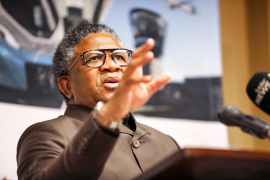
Transport Minister Fikile Mbalula has been engaging representatives of the South African National Taxi Council (SANTACO), Cape Amalgamated Taxi Association (CATA) as well as the Congress of Democratic Taxi Associations (CODETA).
The engagements, which started on Friday, are part of government’s ongoing efforts towards strengthening unity and cohesion in the taxi industry in general, as well as to restore peace and stability in the Western Cape.
Taxi related violence has flared up in the province in recent months, resulting in the deaths of several taxi operators, drivers and commuters.
The Minister has condemned the killings and has called for calm.
“We have not come here to recreate the wheel or duplicate the intervention of the Western Cape leadership. As national government, we have come to put politics aside for the sake of commuters and taxi industry players.
“We are here to reinforce the efforts of the province and ensure an intergovernmental, multidisciplinary and targeted approach to safety, which is the only way to restore law and order in the taxi industry,” Mbalula said on Monday.
The Minister is monitoring negotiations between the leaders of CATA and CODETA.
“This is not the first time national government has intervened in the affairs of the taxi industry in the Western Cape. We were here last year and were encouraged by signs that the industry had turned a new leaf.
“A peace pledge was signed, the mediation process was initiated and it was well underway. The leadership of CATA and CODETA even sat side by side at the National Taxi Lekgotla, which took place in August 2020.
“All these were signs that the industry was headed in the right direction. We are disappointed by the recent turn of events,” Mbalula said.
The Minister has cautioned taxi industry players to desist from violence, adding that lawlessness is unacceptable.
“While we remain concerned about the state of the taxi industry and are attentive to the grievances of operators and drivers, we are resolute: acts of criminality in the industry will not be tolerated. Those who choose to resolve industry disagreements through the barrel of a gun will not be shown leniency. They will face the full might of the law,” Mbalula said.
Committee calls for coherence in characterization of violence, looting
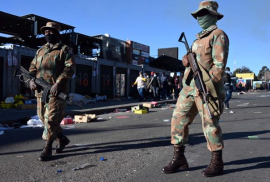
The Joint Standing Committee on Defence has called for coherence in characterising what led to the violence, wanton looting and destruction of property over the past week, especially in KwaZulu-Natal and Gauteng.
During a briefing with Defence Minister Nosiviwe Mapisa-Nqakula and top leadership of the South African National Defence Force (SANDF) on the roll out of Operation Prosper, the committee said it believes that the intelligence community must play a critical role in understanding and characterising the unrest.
Co-Chairpersons of the Joint Standing Committee on Defence, Cyril Xaba and Mamagase Nchabeleng, said the characterisation of the violence will assist in planning and counteracting similar future disturbances.
“The reality is that the SANDF is projecting spending about R615 million on this project and it is critical that there is clarity and coherence on what this budget is spent on now and what resources are necessary to prevent any future flare-up,” Xaba said.
Operation Prosper
Despite this, the committee welcomed the information that as of Sunday, 21 525 SANDF members had been deployed as part of Operation Prosper, and the assurances that more units are on standby in other provinces that have not yet experienced protest action. These deployments are proactively positioned for when the need arises.
Operation Prosper is the joint operation between the South African Police Service (SAPS) and SANDF. The deployment period is from 12 July to 12 October 2021.
The troop deployment aims for service in cooperation with the SAPS for the prevention and combating of crime and maintenance, and preservation of law and order in the Republic of South Africa.
Nchabeleng said since the deployment of the SANDF, the committee has seen laudable calm and stability, which gives them assurances that “our security is in good hands”.
“We appreciate the augmentation of the deployed soldiers and are reassured that there will be no similar flare-up,” Nchabeleng said.
Regarding the impact to the economy, the committee said there is a need to consider designating the N3 highway and other major arteries as critical infrastructure, to enable better and efficient protection of these roads.
The committee said it is cognisant of the recurring nature of disruptions, especially on the N3, and the impact it has on the economy, especially for the movement of goods from the Durban harbour to inland provinces and the rest of Africa.
“We appreciate the information that there is increased deployment and patrol on the N3 to counter any disturbance. This is critical to the functioning of the economy, especially as the country rebuilds from the devastation caused by COVID-19,” Xaba said.
The committee will on Tuesday and Wednesday visit both KwaZulu-Natal and Gauteng to assess the rollout of Operation Prosper and the impact it is having on the ground.
SASSA revives disrupted food relief programme

The South African Social Security Agency (SASSA) says the agency will continue to provide social relief of distress in the form of food vouchers to needy families.
The agency said instead of food parcels, SASSA currently provides vouchers for social relief of distress that are redeemable at selected service providers.
SASSA said, however, that the service has been halted in KwaZulu-Natal, as service providers had their food stock looted and infrastructure vandalised during the past week’s unrest in the province.
“This has worsened the situation of vulnerable and needy families who don’t have a means of income and rely on government interventions,” said SASSA CEO Busisiwe Memela-Khambula.
The relief is provided as part of the standard of social relief of distress programme administered by SASSA, in terms of the Social Assistance Act.
The criteria states that if one is already a grant beneficiary, they do not qualify for social relief of distress. An application supported by documentary evidence is also required for each person requiring support.
“SASSA is calling for calm as it works around the clock to restore this food relief programme countrywide in this hour of need. We also appeal to communities to spare a thought for the vulnerable at all times because they bear the brunt of this unrest,” Memela-Khambula said.
Memela-Khambula warned against a fake poster circulating on social media, claiming that people can apply for social relief of distress electronically.
“This is not true because in order to apply, you have to visit a SASSA office.”
Cash delivery to pay points resumes
Meanwhile, previously suspended cash-in-transit (CIT) services will resume for 19 July 2021 at SASSA cash pay points, except in KwaZulu-Natal.
This after CIT companies suspended cash delivery to pay points last week due to the unrest.
“The situation is now relatively under control and new payment dates have been circulated to affected beneficiaries, especially in rural areas. Gauteng and the Western Cape have already received this service at their pay points,” Memela-Khambula said.
SABRIC cautions against accepting dye-stained notes

The South African Banking Risk Information Centre (SABRIC) has cautioned people against accepting dye-stained notes as legal tender, as the onward use and value of these notes will not be honoured.
The warning comes after violence and looting engulfed parts of Gauteng and KwaZulu-Natal, where hundreds of ATMs were destroyed, hampering the ability of bank customers to access cash and other financial services.
SABRIC says ATMs are an essential part of the country’s economic infrastructure, providing vital services to communities.
ATMs hold cash in special containers that protect cash with dye-stain technology that is activated when someone tries to break open the container.
Once activated, the cash is stained with a green dye, thus defacing the notes, rendering them unusable as currency. The stained notes are recognised as having no monetary value once they are stained.
SABRIC says people who are in possession of these notes make themselves suspects of a criminal investigation, which will seek to determine if they were involved in the stealing and unauthorised access of these ATM containers.
SABRIC has noticed an increase in the attempted circulation of dye-stained notes in KwaZulu-Natal and Gauteng, following the destruction of multiple ATMs.
“You may also find yourself out of pocket after releasing goods or performing services because you will not be able to utilise the currency you were paid with. In addition, you also run the risk of being investigated, arrested and prosecuted for the destruction of these ATMs,” SABRIC CEO Nischal Mewalall said.
SABRIC urged people not to transact using dye-stained notes and to report any person in possession of these notes to the South African Police Service on 0860 010 111.