
DPSA Minister welcomes signing of agreement on wage increase

Public Service and Administration Minister Senzo Mchunu has, on behalf of government, welcomed the conclusion of the collective agreement on wage increases in the public service.
The collective agreement was signed by the majority of labour unions, which include the South African Democratic Teacher’s Union (SADTU), the National Professional Teachers’ Organisation of South Africa (NAPTOSA), the Health & Other Services Personnel Trade Union of South Africa (HOSPERSA), the Public Servants Association of South Africa (PSA) and the Democratic Nursing Organisation of South Africa (DENOSA).
Having occurred in the context of a global recession, the country’s dire fiscal constraints as well as COVID-19, the Minister has on numerous occasions said these were the most difficult negotiations between government and Labour.
“Your sacrifices during these negotiations did not go unnoticed, late hours, minimal sleep and increased workloads are but some of the things you have had to endure.
“Thank you for your leadership, thank you for negotiating with the interests of public servants and the citizens at heart. As we prepare to engage on the way forward, let us meet as patriotic citizens and not as adversaries,” Minister Mchunu said, thanking all those who played a critical role in the negotiations on behalf of government as well as labour.
In April this year, talks between the government and the unions resumed at the Public Service Coordinating Bargaining Council for the State’s negotiators to respond to workers’ demands.
At that time, Mchunu announced that government had appointed an independent facilitator to ensure that negotiations succeed.
During the negotiations, government was offering 1.5 percent increase and the unions were demanding a consumer price index (CPI) increase, which is projected at 3.1%, plus a 4% across the board increase on the cost-of-living adjustment.
At the negotiations, there were eight unions representing 1.2 million State employees in national and provincial government departments.
These were Nehawu, Denosa, Hospersa, Naptosa, Popcru, PSA, Sadtu and Sapu.
Fund established to assist youth-owned businesses affected by looting
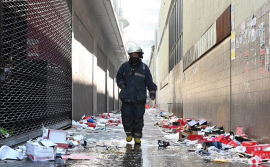
Youth-owned enterprises affected by the recent looting and violence have until Friday to submit applications for a fund to assist them during these challenging times.
The National Youth Development Agency (NYDA) has established the Youth Enterprise Rebuilding Fund to assist youth-owned enterprises affected by the recent looting and violence, and have no form of insurance cover.
In a statement, the NYDA said the fund, which is reserved for youth owned businesses in Gauteng and KwaZulu-Natal, is specifically established to ensure that youth owned enterprises who are affected can return to their business operations, as soon as is practically possible.
“The fund will exist alongside other forms of government support to business and jobs in these challenging times. Details of the fund are available on the NYDA website www.nyda.gov.za.
“The NYDA encourages all young people who may have been displaced from employment because of the recent violence to apply for support from the Unemployment Insurance Fund. Details can be found on https://ufiling.co.za/uif/ or through a Department of Employment and Labour Centre,” the agency said.
The applications for the fund close on 30 July 2021.
The NYDA has also welcomed the reimplementation of the monthly Social Relief of Distress Grant and its extension to caregivers, as well as the extension of the UIF Temporary Employer/Employee Relief Scheme (TERS) for sectors affected during Alert Level 4.
The agency noted that these are important mechanisms in supporting young people and the economy during the pandemic.
“The NYDA remains committed to supporting the Economic Recovery and Reconstruction Plan, which encompasses the Presidential Youth Employment Intervention, which was announced in SONA (State of the Nation Address) 2020 and reaffirmed on Youth Day 2021. Addressing the youth unemployment crisis remains front and centre of the economic recovery plan,” the agency said.
Company, director sentenced for R5.7m SARS fraud

The South African Revenue Service’s (SARS) efforts to clampdown on swindlers, received a shot in the arm when a company and its director received suspended sentences for defrauding the revenue collector of R5.7 million.
This came after YB Mashalaba and Associates (Pty) Ltd and it’s director, Yandisa Bavulele Mashalaba, pleaded guilty in the Bloemfontein Regional Court of PAYE fraud for claiming a false PAYE credit of the R5.7 million.
In a statement, SARS said an investigation by its auditors found that a false Pay-As-You-Earn (PAYE) credit was submitted to nullify a tax debt to the value of R5.6 million.
The PAYE credit was disallowed by the SARS auditors, said the revenue collector.
The company was fined R 100 000 suspended wholly for five years, while the director was fined R 500 000 or five years imprisonment suspended wholly for five years.
SARS Commissioner Edward Kieswetter in the statement said companies and their directors would face criminal prosecution if they transgressed the law and tried to defraud the fiscus of any revenue that was due to the state.
“SARS will make it hard and costly for any taxpayer who wilfully and intentionally seeks to break the law as we expect every taxpayer to meet their obligations and pay their fair share of tax,” he said on Tuesday.
Higher Education and Training DG placed on precautionary suspension
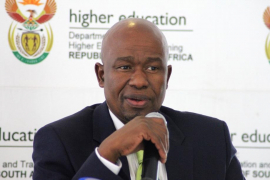
Higher Education and Training Director-General, Gwebinkundla Qonde, has been placed on precautionary suspension, pending a forensic investigation into the National Skills Fund (NSF).
“The suspension of the DG is in terms of the Public Service Act and the Senior Management Service handbook [for the public service], in the wake of a disclaimer audit opinion by the Auditor-General (AG) of South Africa,” Higher Education and Training Minister, Dr Blade Nzimande, said in a statement.
During a virtual briefing in May, the Standing Committee on Public Accounts (Scopa) told Nzimande that the NSF has been consistently receiving qualified audit outcomes from the AG since the 2015-2019 financial years, and a disclaimer for the 2019/20 financial year.
The committee noted that NSF has a bad history of audit outcomes and the fact that the outcome was worse for 2019/20. The committee told the Minister that the 2019/20 outcome has indicated that the situation is deteriorating at the NSF.
Nzimande told the committee that there is a process of reviewing he has initiated, which includes, among other things, governance and other critical structures of the NSF.
The Minister said he has appointed a three-person committee to perform the task which is underway, and that all the contracts that are above R1 million are going to be authorised by him, as the fund is being reviewed.
Following the precautionary suspension of Qonde, Nzimande has appointed Department of Science and Innovation, Director General Dr Phil Mjwara, to act as the Director-General of Higher Education and Training, until the conclusion of the investigations and any process that may ensue thereafter.
Mjwara is appointed with immediate effect from 23 July 2021.
Nzimande has wished Mjwara well in his new responsibility, and urged all employees and stakeholders of the department to fully cooperate with the acting DG.
SA administers 215 349 COVID-19 vaccine doses
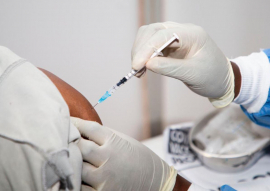
There were 215 349 people who received their COVID-19 vaccine on Monday, which brings the total number of administered jabs to 6 613 704.
According to the Department of Health, of the latest distributed shots, 44 470 people received the Johnson & Johnson, while 170 879 received the Pfizer vaccine.
Meanwhile, the COVID-19 death toll has now surpassed the 70 000 mark after 243 more people lost their lives to the respiratory disease.
This means that South Africa has now recorded 70 018 fatalities to date.
In addition, the country detected 5 683 new COVID-19 cases, said the National Institute for Communicable Diseases (NICD).
This brings the total number of laboratory-confirmed cases to 2 383 490, translating to a 24.3% positivity rate.
Gauteng accounted for 1 559 new infections, followed by 1 192 in the Western Cape and 832 in KwaZulu-Natal.
The NICD has also noted an increase of 479 hospital admissions in the past 24 hours.
The information is based on the 14 587 196 tests of which 23 349 were performed since the last reporting cycle.
According to the World Health Organisation, as of 26 July, there have been 194 080 019 confirmed global cases of COVID-19, 4 162 304 deaths, and 3 696 135 440 administered vaccine doses.
New magistrates appointed for SA courts
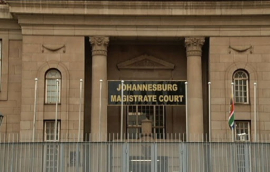
Justice and Correctional Services Minister Ronald Lamola has appointed 158 new magistrates for courts around the country.
The date of assumption of duty for the new magistrates will be 1 October 2021. This is to enable them to give the necessary resignation notices at their current positions and make arrangements to relocate.
Of the 158 new appointments, 104 are African, 23 are Coloured, eight are Indian and 23 are White. In terms of gender, 88 are female and 70 male.
“We have made significant progress in terms of transformation over the last two decades. At the dawn of democracy in 1994, magistrates were part of the public service and were employed by the then Departments of Justice in the various homelands, the TBVC States and the rest of South Africa,” the Department of Justice and Correctional Services said in a statement.
An amalgamation process to bring them all under one department was led by the then Minister of Justice, the late Minister Dullah Omar. In 1998, there were a total of 284 female magistrates (18%) and 567 Black magistrates (37%) countrywide out of a total of 1 515 magistrates (including the regional, chief, senior magistrates and Regional Court Presidents).
The department says the new appointments show how far it has come in terms of gender and racial transformation, as there are now 695 African, 143 Indian, 176 Coloured and 388 White persons on the level of magistrate.
If one includes the regional, senior and chief magistrates, as well as the Regional Court Presidents, to get a view of the magistracy as a whole, 957 are African (50%), 204 are Indian (10.6%), 224 are Coloured (11.7%) and 528 are White (27.6%) out of a total of 1 913.
A total of 947 are women. This means that 72.3% of magistrates are Black and 49,5% are female.
In terms of the Regulations for Judicial Officers in the Lower Courts, 1993, all newly appointed magistrates must, before commencing with the functions of a judicial officer, attend a course by the South African Judicial Education Institute (SAJEI).
It is envisaged that the course will take place during October 2021.
10 suspects remanded for alleged role in Durban unrest
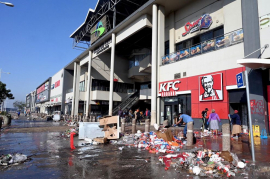
Ten suspects were on Monday remanded in custody for their alleged role in the recent unrest in greater Durban.
The suspects, who appeared before the Verulam Magistrate’s Court, face charges ranging from murder, attempted murder, malicious damage to property, possession of stolen goods, as well as the unlawful possession of firearms and ammunition.
Spokesperson for the National Prosecuting Authority in KwaZulu-Natal, Natasha Kara, said the matters were held in camera to protect the identity of the accused persons as identity parades were yet to be conducted.
“The matters were reminded to the 30th of July 2021 for bail consideration,” she said.
Two weeks ago, violent scenes swept across parts of KwaZulu-Natal and Gauteng when crowds looted and gutted businesses.
The unrest claimed over 330 lives in the two provinces, with the most deaths recorded in KZN. Of these deaths, 22 were in Phoenix, north of Durban, were suspected vigilantism trumped communities protecting their communities.
Last week government revealed that the unrest cost the KZN economy R20 billion and over 150 000 jobs.
Social Cohesion Programme to promote unity in KZN
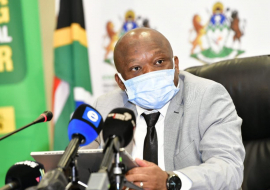
KwaZulu-Natal Premier Sihle Zikalala says the provincial government has started a process towards engaging communities and has developed an intense social cohesion programme that will promote unity among Africans and Indians to ensure peace and harmony.
Zikalala said the Communities-in-Dialogue Programme will be activated on an urgent basis and will employ the services of conflict resolution facilitators. Instability and conflict management monitoring, and evaluation will also be conducted in order to determine the impact of interventions.
“We have tasked the Justice, Crime Prevention and Security Cluster to conduct workshops on the legal framework that regulates the operation of neighbourhood watch forums. Everyone must stick to this legal framework under the leadership of the SAPS and other law enforcement agencies,” Zikalala said.
Giving an update on the situation on the ground following the recent unrest, Zikalala said the provincial government has consulted with its social partners, including political parties, business, traditional leaders, religious leaders and transport operators, in order to respond collectively to the crisis.
The “build back better” response is based on the following:
- Security: ensuring the security of persons, property, essential services and business.
- Coordination: establishing a coordinated effort in recovering the economy with all organs of State.
- Township and Rural Economy: focusing on the re-ignition of township and rural economies. This is with clear and concise actions to ensure not only food security, but also employment creation. Flagship projects like bulk buying will be accelerated to ensure access of products to spaza shops in the townships; and
- Addressing generalised anxiety induced by the unrest by rolling out social cohesion and moral regeneration programmes.
Zikalala said the province has focused its attention on the security of corridors like the N3 and the N2, to facilitate the smooth and secure transit of fuel and food supplies.
In the coming days, the focus will be on stabilising the situation and easing supply chain logistics and production.
The focus is also on ensuring the commercial viability of ports, road and rail networks and the continued functioning of the Dube Trade Port.
“Working with law enforcement agencies, we are ensuring the safety of businesses. Besides restoring law and order, we are focusing our energies on putting in place strategies and mechanisms to detect and deter future unrests.
“In this regard, the provincial joint operations committee (JOC) has been activated to monitor, coordinate and fast track an integrated response and recovery in the province.
“The quantification of damages (in terms of the infrastructure) continues, and is being coordinated at municipality level by all organs of State and stakeholders, as coordinated and facilitated by the relevant clusters,” Zikalala said.
He acknowledged companies like Toyota and Massmart, which have publicly committed to continue operating in the province.
Concerns over vigilante-linked murders
While stability and order has returned to most parts of the province, Zikalala raised concerned about vigilante-linked murders reported in some areas in the north of Durban.
According to reports, at least 38 people have been killed by vigilante groups.
“These murders are not only from Phoenix but also in Inanda and Verulam areas. Since then, the Minister of Police, General Bheki Cele, has assigned a team of top detectives from eThekwini to lead the investigations.
“Those who died in the unrest include Africans and Indians, although the proportion of Africans who died is much higher. So far, at least five people have been arrested and more arrests are still expected,” Zikalala said.
The Premier reported that at least 251 people are reported to have died and the police are investigating 163 cases of murder; 87 inquest dockets have been opened and 20 arrests effected in relation to cases of murder related to the unrest.
As of Saturday morning, a total of 2 763 suspects were arrested in the province over the recent looting, with the majority arrested for possession of stolen goods.
W Cape law enforcement on high alert over taxi violence threat
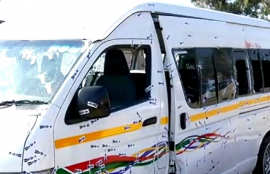
Western Cape law enforcement agencies are bracing for a coordinated response to potential violent attacks that may arise as a result of the closure of a taxi route and ranks in Bellville and Mbekweni.
This comes after the closure of route B97 between Mbekweni and Bellville, as well as that of identified taxi ranks, was announced by Western MEC for Transport and Public Works, Daylin Mitchell, on Friday. This was after shooting incidents which saw taxi operators and commuters injured and killed.
The shootings in Cape Town left commuters stranded in the past week, as the attacks and threats resulted in the suspension of major public transport services.
In anticipation of planned attacks and threats, the Western Cape Provincial Joint Operational and Intelligence Structures (ProvJoints) said it has embarked on a series of operational planning meetings to counter any illicit activity.
ProvJoints spokesperson Brigadier Novela Potelwa said: “The City of Cape Town’s security and security metro police, law enforcement and traffic services are on standby to be deployed strategically as force multipliers at identified hotspots.”
She said the SAPS visible policing contingent will also be on the ground at taxi hubs, highways and major routes, while detectives are on hand to investigate cases.
“Meanwhile, intelligence operatives have been hard at work for some time to deal with the threat at hand. In addition, the recently-deployed SANDF members will be placed in high risk areas to augment police deployments. Where necessary, air support will be summoned.
“Road users are urged to demonstrate patience and understanding in the event of road closures, diversions and detours, as a result of law enforcement actions. All of the operational activities to be embarked upon will be in the interest of safety for all.”
The ProvJoints urged commuters, road users and members of the public who witness criminal acts or become victims themselves to report all illicit activity to the number 021 466 0011. The number is located at the SAPS Command Centre for a swift and coordinated response.
ProvJoints also issued a stern warning to those intent on causing disruptions to transport services in and around Cape Town to reconsider their plans, as the integrated forces will not hesitate to take decisive action.
“Those found on the wrong side of the law will be dealt with harshly.”
Call for public to comment on 2023 school calendar
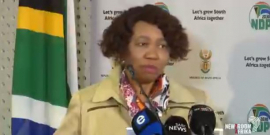
Basic Education Minister Angie Motshekga has encouraged the public to comment on the proposed school calendar for the 2023 academic year.
The school calendar for the 2023 academic year has been gazetted for public comment and has been published on all the Department of Basic Education (DBE) platforms.
“A staggered calendar is proposed – one for coastal provinces, and another for inland provinces… Your inputs are important. We urge you to go through the proposed 2023 school calendar, and submit your comments in writing. The details are available on the draft calendar itself,” the Minister said on Saturday during a media briefing.
Motshekga said the COVID-19 pandemic has caused serious disruptions in the sector.
Meanwhile, the Basic Education sector has vaccinated 517 000 people for COVID-19, an 89% vaccination success rate.
“Reports on the reasons for outstanding numbers include distance to vaccination sites, vaccination hesitancy, preference of one type of vaccine to another, recent positive COVID-19 results, as well as medical and religious reasons, all account for some of the people who are still not vaccinated.
“Encouraging is the fact that we continue to receive requests for assistance from some of our personnel, who were initially hesitant but are now coming forward to ask for help to get the vaccines. We still hope that educators, who are not yet vaccinated, will join the general population vaccination programmes that are underway,” the Minister said.
May/June National Senior Certificate exams
The writing of exams for the matric May/June examination period commenced on Wednesday, 26 May 2021, and concluded on Wednesday, 7 July 2021.
The 2021 May/June examination is the second examination opportunity that is offered to candidates who wrote the November 2020 examinations; and is an examination for adult candidates sitting for matric examinations.
“A total 249 851 candidates enrolled to write this examination. This included both the National Senior Certificate and Senior Certificate candidates; 106 711 of these candidates were National Senior Certificate candidates; and 143 140 of these candidates, were Senior Certificate candidates,” the Minister said.
The DBE and the Provincial Education Departments (PEDs) monitored the writing of the May/June 2021 Grade 12 examination.
“The writing of the examination was successfully concluded without any major disruptions. With the early closure of schools on 30 June 2021, due to the move to adjusted Alert Level 4, school principals were requested to administer the examination until its conclusion.
“The marking of the May/June 2021 Grade 12 examination, commenced on 8 July 2021, and concluded on Monday, 19 July 2021. A total of 772 404 scripts had to be marked and a total of nine 9 323 markers were utilised for the marking across the 54 marking centres.
“Despite the protest actions and the looting in KwaZulu-Natal and Gauteng, the marking was successfully completed and the capturing of marks is currently in progress,” the Minister said.
The DBE will complete the processing of all candidate data for the Umalusi standardisation meeting of 6 August 2021. The results will be released to candidates on 24 August 2021.
The National Senior Certificate (NSC) candidates, who were not successful in this May/June examination, can register to write the November 2021 NSC examination.