
Health regulatory bodies condemn looting

South Africa’s statutory health regulatory bodies, together with the National Health Department, have denounced the ongoing looting and violence, especially acts targeting healthcare facilities and the medicines supply chain.
“We appeal to citizens looting and destroying the healthcare infrastructure and disrupting the provision of health care to consider the long-term consequences of their actions on the health of communities.
“In a time of a pandemic of huge proportions, such acts of violence, looting and the disruption of service will simply fuel the fire,” a joint statement issued on Monday said.
The regulatory bodies are concerned about the acts of violence that are taking place at a time when medicines, including vaccines and access to healthcare services, are a necessity.
“Without health care services, the requisite medicines and vaccines, we will have unnecessary deaths and cause further pandemonium, including severe damage to the economy.”
In the statement – issued by the South African Health Products Regulatory Authority, Health Professions Council of South Africa, Office of Health Standards Compliance, South African Nursing Council and South African Pharmacy Council – the authorities said they are working closely with the National Health Department to restore the provision of healthcare and essential medicines, including chronic medicines and vaccines.
“We appeal to community, religious and political leaders to spread the word that these acts of criminality are not only harming the economy but are senseless and counterproductive.
“Targeting pharmacies, doctors’ practices, clinics and other healthcare institutions in the midst of a pandemic is detrimental, especially to the old, frail and vulnerable people.”
These bodies said the impact of the destruction on public health is already being felt in societies, with members of the community deprived of healthcare and chronic patients unable to access medicines.
Meanwhile, COVID-19 vaccine sites and vaccines themselves are lost to destruction and looting.
“We further fear that the availability of controlled substances and medicines, which have been looted or stolen in the affected communities, may endanger the health of community members, who may consume these without the supervision and guidance of healthcare professionals.”
The statutory health regulatory bodies called on people to not use any medicines that are not accessed through authorised healthcare institutions.
Such illegal activity may be reported to SAHPRA via mokgadi.fafudi@sahpra.org.za or to law enforcement agencies.
“We wish to reiterate that the health and prosperity of our nation, as well as the defeat of the triple challenge of poverty, unemployment and inequality, can never be achieved through the destruction of livelihoods, the economy and the much-needed infrastructure.
“Therefore, let us preserve what is left of the gains in health and economic growth and immediately adopt non-violent means to conflict resolution.”
COVID-19 TERS applications re-open

Workers affected by the COVID-19 lockdown regulations since March 2021 will once again be able to claim from the COVID-19 Temporary Employee/Employer Relief Scheme (TERS).
This comes after Employment and Labour Minister Thulas Nxesi on Friday signed the direction which makes it possible for the Unemployment Insurance Fund (UIF) to implement the third extension of the TERS benefit.
“This means that the UIF will open the system for applications from 19 July 2021 and commence payments from 26 July 2021.
“However, there is one major condition that payments will in the main be made directly to the bank accounts of workers and not, as has happened before, through their employers but employers would still be expected to claim on their behalf,” the Employment and Labour Ministry said in a statement.
This third phase will bring relief for the following categories of workers:
- Workers who have not been able to work from 16 March 2021, due to Level 1, 2 and 3 restrictions preventing gatherings of a certain number of people – such as in the entertainment industry;
- Workers who were and or are still impacted upon by the Level 4 restrictions which commenced on 28 June 2021; and
- Workers who have not been able to work due to the fact that they are over 60 or have co-morbidities and have not been able to work in the period as well as those who have had to isolate or go into quarantine.
The period the direction covers ends on 25 July 2021.
The direction follows the announcement by Minister Nxesi three weeks ago that the department intended on extending benefits to sectors affected by Adjusted Alert Level 4 restrictions.
President Cyril Ramaphosa had also announced on 11 July 2021 that the UIF had embarked on negotiations with NEDLAC social partners to address the difficulties faced by employees who lost income under level 4 restrictions.
The Ministry said after intense deliberations with social partners at Nedlac, the UIF had agreed to open the window for phase 3 of COVID-19 TERS to cover the period between 16 March 2021 and 25 July 2021.
The application process and the information or documents required are the same as with the previous extensions, except in respect of the processing of payments directly into the employees’ accounts.
“It is therefore crucial for employers to provide valid and accurate details of their employees including identity document numbers and valid bank accounts,” said Advocate Mzie Yawa, acting UIF Commissioner.
While paying directly into employees bank account remains the most preferred payment mode, the UIF said it was mindful of instances where this may be difficult.
“In such instances and upon provision of sufficient proof by the employer, funds may be paid into the employer’s account at the UIF’s discretion.
“We have learnt the lesson from the previous phases that some unscrupulous employers did not advance the funds to their employees and it is for that reason that we have opted for this mode of payment.
“As a result of the non-payment of workers, the UIF and the entire department were inundated with a lot of complaints as workers could see in the system that funds had been released but had not been paid by their employers who kept the COVID TERS funds for themselves,” said Yawa.
Qualifying sectors for Phase 3 of the COVID TERS are identified in Annexure A of the direction which includes venues hosting auctions, professional sports, where social events are held and venues hosting concerts and live performance.
Annexure B contains all sectors affected by Level 4 lockdown restrictions including restaurants, the liquor industry, hospitality and tourism as well as any industries and business establishments that form part of these value chains.
Other operational details will be contained in a letter to be sent directly to employers and the letter together with directives will be available on both the TERS portal (www.uifecc.labour.gov.za) and the Employment and Labour website (www.labour.gov.za ).
SA detects 11 215 new COVID-19 cases

South Africa recorded 11 215 new COVID-19 cases as well as 183 deaths on Sunday.
According to the National Institute for Communicable Diseases (NICD), the latest infections translate to a 29.3% positivity rate.
This means the country now has 2 295 095 laboratory-confirmed cases since the outbreak, while the death toll stands at 66 859.
Gauteng remains the epicentre after recording 39% of the new cases, followed by Western Cape 19%.
In addition, Limpopo and Mpumalanga each accounted for 9%, 7% in KwaZulu-Natal and North West, 5% in the Eastern Cape, 3% in Free State, and 2% in the Northern Cape.
The public health institution noted that the number of cases is less than the 14 701 recorded on Saturday and lower than the average number of new cases per day over the seven days.
“The seven-day moving average daily number of cases has decreased.”
While the number of infections is dropping, hospital admissions have increased by 400 in the past 24 hours, which pushes the number of patients who are currently admitted to 16 819.
According to the Health Department, there are now 5 095 013 vaccines administered of which 16 351 were distributed in the last 24 hours.
Globally, as of 16 July, there have been 188 655 968 confirmed cases of COVID-19, including 4 067 517 deaths, reported to the World Health Organisation (WHO).
Three arrest for inciting looting and public violence
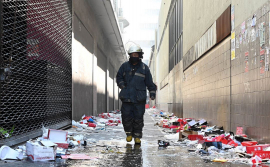
Three suspected instigators of last week’s violent business lootings that claimed the lives of over 200 people are expected to appear in West Rand courts on Monday and Tuesday.
The development was on Sunday confirmed by the National Joint Operational and Intelligence Structure (NatJOINTS) in a statement.
Two of the suspects were arrested on Thursday and Friday by police in the West Rand District in Roodepoort and Westonaria on allegations of creating and circulating inflammatory messages with the potential of inciting violence.
The two are on Monday expected to appear before the Randfontein and Westonaria Magistrate’s Courts, respectively.
“A third suspect, a 21-year old woman, was arrested in Duduza in the Ekurhuleni District on Saturday 17 July 2021 on similar allegations. She is expected to appear before the Nigel Magistrate’s Court on Tuesday,” said the NatJOINTS.
The structure reiterated its call for people to refrain from inciting violence by creating and circulating inflammatory messages that seek to do nothing but elevate the levels of tension, confusion and fear among communities.
“These messages instil fear in our communities and undermine the authority of the State,” NatJOINTS said.
The structure, through its Intelligence Coordinating Community (ICC), said it was also aware of more messages cropping up and circulating on various social media platforms, threatening to attack police stations and disarm law enforcement officers; attack courts of law and key infrastructure such as fuel pipelines and refineries; and more looting.
“The JOINTS has subsequently mobilised maximum resources to address these threats and heighten visibility. Measures have also been put in place to ensure stability, and the protection and safety of those who are not involved in the unrest and wish to go on with their daily routine,” the structure said.
To avoid arrest, looters of businesses during last week’s violent unrest in Gauteng and KwaZulu-Natal have been urged to surrender the goods.
NatJOINTS welcomed the many calls and tip-offs received via the MySAPS app from various communities in the two provinces.
These have resulted in the integrated security forces recovering volumes of suspected stolen property whose value is yet to be determined.
“By this morning a total of 3 407 suspects had been arrested on various charges since the violence erupted over a week ago, with only one suspect granted bail, 1 122 expected to appear in different courts in the two most affected provinces, and the remaining dockets under investigation,” reads the statement.
“In the concerted response by the NatJOINTS to the recent acts of unrest and opportunistic criminality, where tensions now appear to be simmering down, security forces embarked on recovery operations with the collaboration of citizens who have gone out of their way giving tip-offs to the police, and some cleaning up their streets and business premises that were affected by the looting in the past week.”
The NatJOINTS warned that those who were not part of the looting spree but were buying stolen property would also be arrested for being in possession of stolen property.
In Gauteng, during integrated operations at a number of hostels in mostly Tembisa, Johannesburg, Alexandra and Moroka over the weekend, 14 suspects were arrested for being in possession of suspected looted property.
Among the goods recovered were bed mattresses, television sets, couches, fridges, sound systems, computer screens and laptops, steel frames, groceries and clothing items.
In KwaZulu-Natal, 92 suspects were arrested over the weekend for the same crime.
Members of the public are urged to continue to report criminality to the police, which may be done anonymously by calling the crime stop number 08600 10111 or via the MySAPS app that can be downloaded onto any smartphone.
Defence Minister: State of Emergency only to be declared when need arises
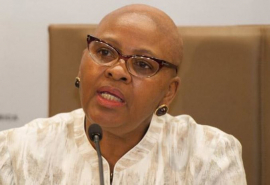
Defence and Military Veterans Minister, Nosiviwe Mapisa-Nqakula, says the President will only declare a State of Emergency when the need arises.
While the Minister strongly condemned the current looting and damage to infrastructure, she did not believe the situation warrants a State of Emergency.
“For now, I don’t think there is an indication that there should be a State of Emergency,” she said on Tuesday.
Mapisa-Nqakula was speaking during a briefing by Ministers in the Justice, Crime Prevention and Security (JCPS) cluster amid public violence flare-ups in KwaZulu-Natal and Gauteng.
“If the time comes, informed by intelligence gathered and coordinated by the three entities [SAPS, Defence and State Security], the President will be advised and [only] then would he declare a State of Emergency, if the need arises, based on that assessment report.”
The Minister acknowledged that the situation is grave, and the nation is duly panicked.
“… We’re all concerned about what is happening… A… State of Emergency [however means that]… you take all the liberties from the citizens and the military takes over the country. For now, we don’t think we’ve reached that point,” she explained.
As the Commander-in-Chief of the South African Defence Force (SANDF), the President has deployed the army in KwaZulu-Natal and Gauteng in support of the operations of the South African Police Service (SAPS).
Mapisa-Nqakula said the number of soldiers mobilised is far less than those who were deployed during the COVID-19 hard lockdown.
She said an ongoing assessment is taking place behind closed doors to make decisions about the number of soldiers who will be deployed on the ground.
“When we talk numbers, we also have to talk possible expenditure incurred for the deployment of those people… We’re informed by intelligence, and then [we will] decide about what kind of strength we need for deployment, and then we will make an announcement.”
The deployment of soldiers
Major General Siphiwe Lucky Sangweni said the SANDF conducts deployment operations inside the country in support of the SAPS and to assist other State departments.
“SAPS and other law enforcement agencies will conduct their work and when there is a situation that requires or warrants that the military assists and supports as the security cluster, then the call will be made then,” he explained.
According to Sangweni, this involves conducting assessments and then the decision is sanctioned by the President.
“It’s the President that will authorise the deployment of military internal operations.
“It will not be correct that the military is at the forefront in terms of law enforcement and dealing with criminality in the country,” he said.
Gauteng Premier calls on community leaders to help quell looting
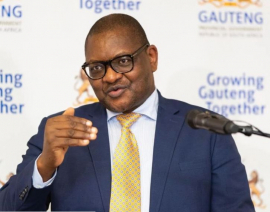
Gauteng Premier David Makhura has called on the community and political leaders in the province to join hands with law enforcement agencies to stop the looting and destruction to property in the province.
“We must make sure that this looting stoops,” Makhura said during his visit to the Meadowlands Police Station in Soweto, where a nearby mall- Ndofaya Mall – was looted.
Looting at the mall continued during the Premier’s visit.
Makhura said looting has also happened in schools, where technology equipment has been stolen.
A total of 10 people died during the looting incidences and a total of 279 people were arrested for looting in Gauteng.
Among those who died is a Gauteng Metro Police officer, who was shot by looters in Kathorus. The officer was shot while responding to a call of looting at a mall.
Makhura said the looting has severely affected businesses in Soweto.
“Businesses have been severely affected and the business community here have closed their businesses because they are afraid of the looters,” Makhura said.
Makhura, accompanied by the Gauteng MEC for Community Safety, Faith Mazibuko and senior police officials conducted a walkabout at the mall.
The Premier’s visit was to assess the extent of damage caused to property.
Countrywide, over 757 people have over the past five days been arrested for the wanton destruction and looting of businesses and properties in KwaZulu-Natal and in Gauteng.
KZN tables plan to counter violent protests
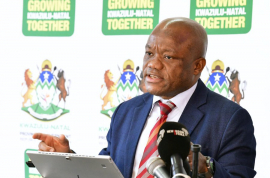
Outlining KwaZulu-Natal’s plans to deal with the spate of violent protests, Premier Sihle Zikalala has assured citizens that government is working hard to stop these riots.
During a media briefing on Tuesday, the Premier said a multi-pronged response plan to deal with the protests has been developed and will be implemented by law enforcement agencies.
“The deployment of the South African National Defence Force (SANDF) came as a result of engagements within the security cluster, having [seen… the] events in various wards,” the Premier said.
The SANDF will work in support of the South African Police Service (SAPS).
“Their deployment will be supported by the intelligence coordinating committee, which will include intelligence, defence intelligence and State security. These forces will be part of our multi-disciplinary law enforcement strategy to quell the unrest and attempts to render the province ungovernable.
“This will enable our law enforcement authorities to counter these sporadic yet well-orchestrated violent protests,” Zikalala said.
In this regard, the National Joint Operational and Intelligence Structure (NATJOINTS) and the Provincial Joint Operational and Intelligence Structures (PROVJOINTS) have intensified deployment in all areas affected by violent protests.
This has been done to arrest protests and damage to property, as well as to stop the looting that has taken place recently.
The SAPS, together with law-enforcement authorities, will be manning all key economic centres, highways and strategic areas that lead to hospitals, the port of Durban and other national key points.
“As the provincial government, we have directed that all municipalities must operationalise Operation Sukuma Sakhe to identify risks and threats in their area and report these before they even happen.
“We have also activated coordination at district level, where our mayors and councillors will work with all stakeholders and assist law enforcement to attend to threats and protests that are engulfing our areas.
“We are also ensuring that all MECs are on the ground, working with their respective mayors, stakeholders and districts to identify areas that might have threats and ensure that they are addressed,” the Premier said.
Zikalala said according to the latest fatalities statistics, 26 people died during a stamped as protestors ran riot. Law enforcement agencies have arrested 187 suspects.
Cost to the economy
The destruction to private and public infrastructure in the province has been estimated at about R1 billion.
“The violent protests have had a negative impact on the economy of our province. This is largely because the protests have targeted key economic centres and infrastructure, including shopping malls, trucks and major arteries such as routes on the N2 and N3.
“More significantly, this violence has crippled our small and emerging businesses. Hawkers cannot sell because cities are shut down,” Zikalala said.
With the taxi industry not operating, it is losing money and risks losing vehicles due to being unable to meet their commitment to the banks.
“The sectors that have been severely impacted include freight and retail. However, other sectors were not spared, as many companies had to suspend their operations due to the inability to transport materials and stock.
“These incidents have the potential to dampen investor confidence and derail our economic recovery efforts. The social cost of the damage might come in the form of increased unemployment and increased poverty in years to come,” the Premier said.
Protest hinder service delivery
The blockading of key infrastructure routes has made mobility difficult and this has been worsened by the unavailability of public transport.
“As a result of this, some community health centres and clinics have been operating on skeletal staff, with many nurses, doctors, allied workers and general staff unable to report for work.
“Some clinics have had to be closed because of the unrest. Many hospitals with trauma cases are unable to undergo important [procedures] such as x-rays and others.
“It is extremely concerning that in some cases, the protestors stop vehicles from delivering much needed oxygen intended for the use of patients battling COVID-19 and other ailments,” the Premier said.
The protests have also put a stop to the COVID-19 vaccination rollout programme.
“The current situation has a huge potential to undermine our advances in battling the Delta variant of COVID-19, which is increasing at an uncontrollable rate across the province,” the Premier said.
Most municipalities within the province have also been adversely affected.
“The delivery of services has been halted due to the continuing unrest. Maintenance and infrastructure repair teams are unable to get to areas that require such service.
“The sporadic outbreak of violence has also hindered the delivery of basic services such as waste removal, and provision of water through water tankers in water scarce communities,” the Premier said.
Zikalala has called for the return of peace, calm and stability in the province and the country.
“We are appealing to the collective conscious of all those who are trying to render our province ungovernable to desist from what they are doing in order to avert the unnecessary loss of life,” he said.
State vows tough action in prison officials’ attack
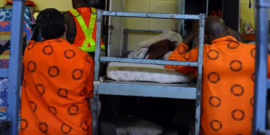
The Department of Correctional Services says an attack on two officials at Durban Correctional Centre was thwarted this morning.
The two officials were stabbed by remand detainees during unlock.
The department says the incident is opportunistic and warns that it will not be tolerated.
“The remandees behind this barbaric act have been identified and they will face disciplinary processes and be criminally charged.
“We shall never be apologetic about our resolve to restore order within the means available to us whenever the State is attacked,” the department said.
The department says it will unleash the necessary force against those who attack its officials.
State Security intelligence averted greater damage
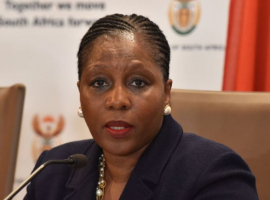
Swift State Security intelligence intervention spared the Gauteng and KwaZulu-Natal provinces from further destruction of businesses and public infrastructure.
This was on Tuesday revealed by State Security Minister Ayanda Dlodlo during a briefing by the Justice, Crime Prevention and Security (JCPS) Cluster amid violent flare ups in the two provinces.
She said even before the violence flared up, information was shared between the State Security Agency (SSA) and the South African Police Service (SAPS).
“We do this all the time, not only in this period that we are facing. From day one, when everything started, we did share information with the police,” she said.
Dlodlo said South Africans needed to understand that “only so much” can be done with the information that is at hand.
“Some of the information tends to be false, some of the information is accurate and true. We use various sources of collecting information and we’ll also use our own systems for analysing the information to package it for our client, which in this regard would have been the police.”
The police, she said, would have done their best to follow up on the information given to them.
Police also have their own crime intelligence capability, all agencies work together under the auspices of the JCPS Counter Intelligence Coordinating Forum, including the National Intelligence Coordinating Committee.
The task of the latter was only to put a strategic product on the table, emanating from information that would have been collected from the intelligence services of the defence force crime intelligence and SSA.
“That information that we received, the information that we analysed and packaged was handed over to the police.”
However, the target was very fast moving, the Minister said.
“We tried our best wherever we could and we affected a lot more than what you see on national television,” she said.
Proactive stances taken by both intelligence services of the three ministries and the police averted greater crime. “We want South Africans to rest assured that we avert a lot. What you see is only a part of what could have happened.”
She reiterated that the SSA and the police were not missing in action in the violence.
“We tried our level best in a very difficult situation,” she said, commending staff from the departments for putting their shoulders to the wheel to ensure that information is available.
Social media violence instigators warned
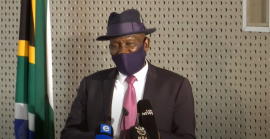
Government has issued a stern warning to those inciting violence and disregard of the law with inflammatory messages on social media.
This warning was on Tuesday relayed by Ministers in the Justice, Crime Prevention, and Security (JCPS) cluster during a media briefing amid a flurry of public violence flare-ups in KwaZulu-Natal and Gauteng.
Chaotic scenes have been playing out in parts of KwaZulu-Natal and Gauteng, leaving many businesses gutted and looted by protesters, who are reportedly calling for the release of former President Jacob Zuma from jail.
The Cybersecurity Act states that any person who “unlawfully makes available, broadcasts or distributes, by means of a computer system, a data message to a specific person, group of persons or the general public with the intention to incite violence, or call people to be involved in the destruction of any property belonging to people, is guilty of an offence”.
In a statement, the Ministers said those who engage in such acts will be liable for a criminal offence and could receive a fine or be sentenced to imprisonment for a period not exceeding three years.
“As the cluster, we are monitoring all social media platforms and we are tracking those who are sharing false information and calling for civil disobedience,” they said in the statement read by Police Minister Bheki Cele.
Meanwhile, Cele said they are engaging different platforms to track and trace the origins of “inflammatory” posts and messages inciting violence. Cele requested that these be taken down immediately.
“While the intervention of some communities to actively stop the mass lootings has been commended, we encourage communities not to take the law into their own hands and continue to work with the police,” he said.
The Minister said the involvement of other stakeholders was also critical in the fight against lawlessness.
In this regard, the cluster had already engaged the leadership of private security companies to increase working relations with the police.
“As Ministers in the cluster, we have the responsibility to assert the authority of the State and to safeguard our territorial integrity and sovereignty of the Republic,” the Ministers said.
They reiterated President Cyril Ramaphosa’s message on Monday night in which he said: “We are building up, not shutting down. We will not be deterred, as South Africans, from the task ahead.”
The Ministers said if the acts of violence continued unabated, the country ran the risk of running out of basic food, a development that would be disastrous for the country.