
WHO calls for 10% of global population to be vaccinated by September
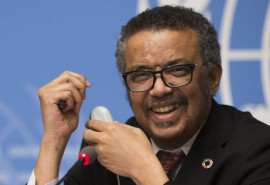
Director-General of the World Health Organisation, Dr Tedros Ghebreyesus, this week reiterated his call for 10 percent of people in all countries to be vaccinated by September and for that figure to rise to 40 percent by the end of the year.
This would position the world on the path to vaccinating 70 percent of the people in all countries by the middle of 2022.
“I call on the G20 Finance Ministers and other leaders to get behind these targets collectively because it is the fastest way to end the acute stage of the pandemic, save lives and livelihoods and drive a truly global economic recovery,” said the Director-General at a media briefing on the COVID-19 pandemic.
This comes as G20 Finance Ministers and Central Bank Governors will gather for the third time under the Italian G20 Presidency on Friday.
Ghebreyesus said some countries with high vaccination coverage are now planning to rollout booster shots in the coming months and are dropping public health social measures and relaxing as though the pandemic is already over.
“However, compounded by fast moving variants and shocking inequity in vaccination, far too many countries in every region of the world are seeing sharp spikes in cases and hospitalisation.
“This is leading to an acute shortage of oxygen, treatments and driving a wave of death in parts of Africa, Asia and Latin America,” he said.
Variants are currently winning the race against vaccines because of inequitable vaccine production and distribution, which also threatens the global economic recovery.
“From a moral, epidemiological or economic point view, now is the time for the world to come together to tackle this pandemic collectively.
“Later this week, G20 Finance Ministers and Central Bank Governors will meet. This is another crucial opportunity for leaders to take urgent steps to end the acute stage of this pandemic, providing the necessary funding to scale up the equitable manufacturing and distribution of health tools.”
IL-6 receptor blockers
Meanwhile, the organisation has recommended the use of IL-6 receptor blockers, a type of monoclonal antibody, in patients with severe or critical COVID-19.
This treatment, along with corticosteroids, is strongly recommended for patients with severe or critical disease.
This recommendation follows a comprehensive new analysis of 27 randomised trials involving nearly 11 000 patients, which found that treating hospitalised COVID-19 patients with IL-6 receptor blockers reduces the risk of death and the need for mechanical ventilation.
“The study was coordinated by WHO, and is an outstanding example of collaboration amongst trialists and methodologists that allowed us to transparently bring high quality evidence from around the world together, analyse it and develop timely recommendations.
“The trial demonstrated that for the critically ill, the use of IL-6 receptor blockers led to approximately 28 fewer deaths for every 1000 patients. The medicines also meant the chance of severe and critically ill patients being put on a ventilator was reduced by 28 percent, compared with standard care,” said Ghebreyesus.
The Director-General thanked the global collaboration between international researchers and the patients who agreed to be part of the trials.
However, he warned that like vaccines and other health tools, this breakthrough will only be effective if manufacturing can be scaled up and there is equitable distribution.
SA records 21 427 new COVID-19 cases, 411 deaths
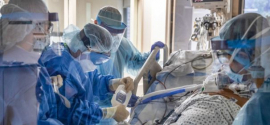
South Africa on Wednesday recorded 21 427 new COVID-19 cases, bringing the number of infections in the country to 2 112 336 since the outbreak of the virus.
The new infections represented a 30.3% positivity rate, said the National Institute for Communicable Diseases (NICD), a division of the National Health Laboratory Service. It continues the monitoring and surveillance of COVID-19 in order to inform the public health response.
In the same reporting period, a further 411 COVID-19 related deaths were reported, bringing total fatalities to 63 039 to date.
The majority of new cases today are from Gauteng (49%), followed by Western Cape (13%). Limpopo accounted for 9%; KwaZulu-Natal and North West each accounted for 8% respectively; Mpumalanga accounted for 6%; while Eastern Cape and Free State each accounted for 3% respectively. The Northern Cape accounted for 1% of Wednesday new cases.
The country has conducted 13 619 638 tests in both public and private sectors.
NCCC gives update on COVID-19 pandemic
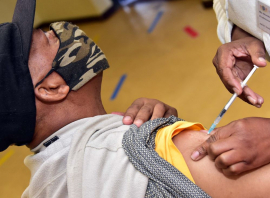
As part of its weekly programme, the National Coronavirus Command Council (NCCC) met on Wednesday to receive updates on the management of the current third wave of COVID-19 in South Africa.
The updates included progress on the vaccination roll-out and the decision to accelerate the number of vaccinated citizens by expeditiously commencing with vaccinations for citizens of the ages of 50 plus, which commenced earlier than planned.
Furthermore, the NCCC has deliberated on the consideration of expanding to another age cohort.
The NCCC further noted that workplace vaccinations are also opened for all eligible employees in the relevant sectors as recently announced by the President.
Vaccination is rolling out well in the education and police sectors but also in workplace settings such as mines, agriculture and other productive settings.
Plans are advanced for the launch of registration of the army and military veterans and other essential service workers.
The experts also provided clarity that the Lambda variant is not yet detected in South Africa and that currently all precautions must be taken into consideration to ensure readiness for any eventuality of the variant being prevalent.
The NCCC further noted that more provinces are officially in the third wave of COVID-19.
“From discussions in the NCCC, every effort to scale up vaccination of the population will be crucial. But the biggest weapon in our arsenal to fight this pandemic remains strict adherence to washing and sanitising of hands, wearing a face mask, maintaining social distance and ensuring proper ventilation remain essential,” said acting Minister in the Presidency, Khumbudzo Ntshavheni.
South Africans are further urged to persevere and not allow fatigue to get them to drop their guard in adhering to COVID-19 protocols.
IEC postpones voter registration weekend by two weeks
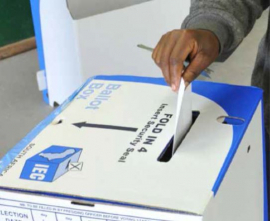
The Electoral Commission on Wednesday announced it has postponed the voter registration weekend by two weeks in light of the third wave of the COVID-19 pandemic currently sweeping the country.
At a special meeting, the commission resolved to reschedule the voter registration weekend from 17-18 July to the weekend of 31 July – 1 August.
The decision was made following a review of the current conditions, including the rate of infections and hospitalisations over the past seven days and its impact on preparations for the registration weekend.
The commission also considered concerns raised by political parties through the National Party Liaison Committee of proceeding with voter registration as well as warnings from health officials and other experts during last week’s oral submissions before the Moseneke Inquiry regarding the risks of proceeding with a voter registration weekend under the current conditions.
Health experts told the inquiry last week that the current third wave of infections was likely to persist until at least the end of the month.
Taking into consideration the various factors including the constitutional time-frame which requires the elections to be held before 1 November 2021 and the minimum period required for the election timetable, the commission resolved to postpone the voter registration weekend to the latest possible date – which is 31 July – 1 August.
“The two-week postponement will have a knock-on effect on certain dates and activities associated with the proclamation and election including delaying proclamation by four days until 6 August.
“However, the commission remains confident that successful elections can be held within a reduced election timetable of 82 days rather than the original 86 days,” the Electoral Commission said.
The Electoral Commission has briefed the National Party Liaison Committee on the decision and the revised timelines and plans.
“The commission has taken this very difficult decision in the interests of saving lives of voters, election staff, party representatives and all citizens while still preserving the Constitutional requirement to hold elections.”
While the commission accepts that two weeks’ delay may not be ideal to allow the third wave to begin to decline in all provinces, the Commission has very limited scope to move the registration weekend without postponing the elections themselves.
Most party representatives at the meeting welcomed the decision to postpone for two weeks although parties in favour of a postponement of the elections urged for a longer postponement.
The commission is still awaiting the final report of the Moseneke Inquiry into whether the elections can be free and fair if they proceed as scheduled on 27 October.
The inquiry is being led by Former Deputy Chief Justice Dikgang Moseneke who is scheduled to present his report and its recommendations to the commission by 21 July 2021.
The commission said it will continue to monitor developments regarding the COVID-19 pandemic, the outcome of the Moseneke Inquiry and all other relevant factors over the coming weeks.
Any further changes to the election plans will be made in consultation with political parties, government authorities and other key stakeholders and will be communicated with all stakeholders.
Former President at Estcourt Correctional Centre

The Department of Correctional Services (DCS) has this morning confirmed that former President Jacob Zuma has been admitted to start serving a 15-month sentence at Estcourt Correctional Centre in KwaZulu-Natal.
The former statesman, 79, was sentenced to 15 months in jail on 29 June for defying an instruction to give evidence at an inquiry into corruption during his nine years in power.
“Zuma will be taken through all the admission processes as per DCS regulations. Other relevant prescripts pertaining to admitting and orientating newly incarcerated persons will also be followed and executed,” the department said in a statement.
Details about the appropriate classification, prerogatives and incarceration conditions can only be determined at the completion of the assessment process to be undertaken by relevant authorities within the employ of DCS.
“Keeping inmates in a safe and secure custody remains cardinal to Correctional Services and we remain committed to this cause,” the department said.
SA records 15 501 new COVID-19 cases, 457 deaths
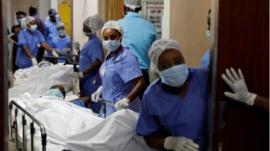
South Africa has recorded 15 501 new COVID-19 cases, bringing the total number of laboratory-confirmed cases to 2 090 909.
“This increase represents a 26.2% positivity rate, which is lower than yesterday (31.6%),” the National Institute for Communicable Diseases (NICD) said on Tuesday.
As per the National Department of Health, a further 457 COVID-19 related deaths have been reported, bringing total fatalities to 62 628 to date.
The majority of new cases are from Gauteng (59%), followed by Western Cape (10%).
KwaZulu-Natal accounted for 8%; North West accounted for 6%; Mpumalanga accounted for 5%; Eastern Cape and Limpopo each accounted for 4%; Free State accounted for 3%; and Northern Cape accounted for 1% of the new cases.
A total of 13 548 841 tests have been conducted in both public and private sectors.
Meanwhile, an increase of 790 hospital admissions have been reported in the past 24 hours.
SAPS vaccination programme gains momentum
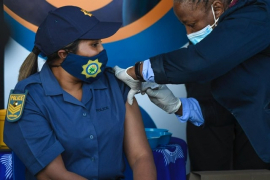
Two days after launching COVID-19 vaccinations for its members, the South African Police Service (SAPS) Vaccination Programme is gaining momentum.
This comes after just over 1000 more SAPS personnel received their jabs on Tuesday.
“On day two of the programme, a total of 2055 vaccines had been administered to police officers and support personnel at both the Orlando Stadium in Soweto and the SAPS Tshwane Academy vaccination sites,” the SAPS said in a statement.
At Orlando Stadium, 760 members were vaccinated, bringing the total number of members who have been vaccinated over the first two days at the site to 1 285.
At SAPS Tshwane Academy, the second vaccination site, a total of 770 members had been vaccinated over two days.
Constance Makhaye, a cleaner at the SAPS Tshwane Academy, was among those who got vaccinated on day two. The 58 year-old with 25 years of service said she was elated to have finally received the vaccine.
“I feel very happy about today, I was initially scared to vaccinate, now that I have recieved my vaccine, I am going to encourage my other colleagues to come and be the next in line to get vaccinated,” she said.
Captain Daniel Dhanarajan, a 48 year-old trainer attached to the SAPS Atteridgeville Academy, expressed equal delight.
“I feel very strong and relieved to know that my colleagues, family and I will be safe and guarded against the severe effects of this virus,” he said.
As of Tuesday evening, the number of members that have tested positive for the virus remains at 32 565. The number of recoveries stood at 30 955.
However, the number of those who succumbed to their COVID-19 illnesses rose to 673.
The SAPS reiterated that while vaccination is voluntary, it will continue to encourage all members to get vaccinated in a bid to operate optimally in serving and protecting the people of South Africa.
“Vaccinating our members does not mean we should stop adhering to the non-pharmaceutical health and safety protocols. The service will continue to ensure that all health and safety protocols at all service points remain in place and are adhered to by members,” it said.
The SAPS said there is an exclusion criteria for vaccination, this means that there are those who will not qualify to be vaccinated.
Among the excluded were those who had contracted COVID-19 in the last 30 days, any person who had received a flu vaccine within 14 days, and any member who had been vaccinated prior to the SAPS vaccination rollout programme commencing.
The police will continues to monitor preparations in place for the nationwide rollout at all 108 registered sites. The provincial rollouts will commence on Thursday in eight provinces. Gauteng will begin administering jabs on Friday.
Cape Town set to open mass vaccination centre

The City of Cape Town and Discovery Health on Tuesday conducted an oversight visit at the Cape Town International Convention Centre mass Vaccination Centre of Hope to check on its preparation ahead of its activation today.
Between July and December this year, this mass vaccination centre is expected to administer over 750 000 vaccinations in Cape Town, playing a critical role in the Western Cape and South Africa’s vaccination programme.
The oversight visit was attended by the Premier of the Western Cape Alan Winde; Provincial Minister of Health, Dr Nomafrench Mbombo; Mayor of Cape Town, Dan Plato; Community Services & Health MMC in the City of Cape Town, Zahid Badroodien; Discovery Group Executive, Adrian Gore and Discovery Health CEO, Dr Ryan Noach.
A virtual tour was also conducted with the public and the media, who joined online, to help create awareness.
Winde said the Vaccination Centre of Hope is a pioneering collaboration that shows what is possible when the private and public sector work together.
“I am so proud to see this collaboration take shape, demonstrating what is possible when we work together with the private sector to deliver quality services to our residents. I hope this is the beginning of many more joint projects in this space.
“All eligible residents, whether they have a medical aid or not, will be assisted at this site. No person will be left behind because every life matters,” Winde said.
The City of Cape Town worked to make the site fully operational before handing it over to the Western Cape Government and Discovery Health.
The Western Cape government will be primarily responsible for overall coordination, supply of vaccines, clinical and facilities management, while Discovery Health will be responsible for client experience, various aspects of the technology solution and administrative functions.
Plato said he is looking forward to the site becoming operational, helping vaccinate hundreds of thousands of Capetonians across the city.
“The city, province and Discovery Health are ready to provide a significant boost to the vaccination campaign and we have urged national government to increase its procurement and rollout of vaccines so that more age groups can access the vaccine.
“I am proud of all the city officials who made this site a reality through intensive and time-pressured project management. The success of the COVID-19 vaccination drive relies on a joint effort between all stakeholders, including government, the private sector and our residents.
“An expanded and ramped up national vaccination rollout would bring an end to the need for further national lockdowns that harm livelihoods and impact the recovery of the economy. As a fully vaccinated resident myself, I encourage residents to come forward to receive the vaccine as soon as possible,” Plato said.
The Cape Town International Convention Centre (CTICC) Vaccination Centre of Hope will be one of the largest and most sophisticated vaccination sites in the country, leveraging the combined resources and capacity of both the public and private sector, and thereby accelerating access to vaccination for greater numbers of residents.
“This is a welcomed boost for South Africa’s vaccination programme. When it comes to the national mass vaccination rollout, there is strong alignment between saving lives and saving livelihoods – two inseparable priorities.
“This site will contribute significantly to the national target to provide access to COVID-19 vaccination for 41.7 million adults in South Africa, to reach population immunity and prevent further waves of infection,” Noach said.
He said they are encouraged by early vaccine efficacy data analysis on Discovery members who have been vaccinated, which provides strong evidence of the protective effect of the COVID-19 vaccination.
“Preliminary data analysis shows 47% reduction in COVID-19 infection rates among vaccinated populations 21 days after receiving the first Pfizer-BioNtech vaccine dose, and an estimated 50% reduction in hospitalisation post first dose.
“These findings are congruent with international experience and highly encouraging from a South African perspective,” Noach said.
How the CTICC vaccination centre will work
The CTICC Vaccination Centre of Hope will be one of the biggest vaccination sites in the country.
Fifty vaccination stations will be operational at the site, with the related administrative and support staff in place to support operations.
This will mean that more than 4 000 people can be vaccinated per day when it reaches its full operational capacity.
Onsite registration will be possible at the site to help those who need assistance.
Vaccinations will be free of charge for everyone visiting the site, enabled by payment agreements between medical aids and the Western Cape Department of Health to provide a hassle-free experience to all residents.
The site will have sophisticated cold-chain refrigeration, waste management processes and IT infrastructure, and the capability to administer both the Pfizer-BioNTech double dose and Johnson & Johnson single dose vaccines.
“The COVID-19 vaccines used in South Africa are approved by the South African Health Products Regulatory Authority (SAHPRA) and are safe. They are also proven, through rigorous tests, to provide excellent protection against severe COVID-19 related illness. That is why it is important that every single person gets vaccinated as soon as possible.
“I urge you to register when it is your turn, so that we can fight back against COVID-19 and continue to save lives and livelihoods,” said Winde.
Everyone over the age of 50 is currently eligible to register for their COVID-19 vaccine on the Electronic Vaccination Data System, and is urged to do so by using any of the following steps:
• Visit http://vaccine.enroll.health.gov.za/ (which can also be accessed on www.westerncape.gov.za)
• WhatsApp the word REGISTER to 0600 123456
• Dial *134*832*ID number# if you don’t have internet access.
SA joins forces with US to tackle economic crimes

The United States’ (US) Internal Revenue Service Criminal Investigation Division (IRS-CI) and the South African Revenue Service (SARS) enforcement division are joining forces to fight tax and economic crimes affecting the two countries.
The two agencies on Tuesday said they are working together to identify, investigate and bring to justice criminals with a nexus to both countries.
“Some of the crimes under investigation include international public corruption, cyber fraud, and money laundering. The newly formed partnership has already uncovered emerging schemes perpetrated by promoters, professional enablers, and financial institutions.
“The global fight against financial crimes is not one that can be fought alone by any one country. Our partnership with the South African Revenue Service will soon reveal operational results made possible by our strong alliance and collaborative efforts.
“Taxpayers and tax professionals using offshore and other sophisticated schemes to evade US and South African laws will be uncovered and prosecuted to the full extent of the law,” said Guy Ficco, IRS-CI Director of Global Operations.
SARS Commissioner, Edward Kieswetter, welcomed the collaboration, saying it would assist in the renewed focus on non-compliant high wealth individuals and offshore holdings.
“One of our strategic objectives is to make it easy for taxpayers to comply with their tax obligations and hard and costly for those who wilfully do not comply.
“We trust that this partnership will yield results and also in terms of augmenting our internal skill sets, as we clamp down on illegal activities affecting both our countries.”
A major component of the collaborative effort between the two countries includes an ongoing training initiative led by the IRS-CI.
The US tax agency continuously shares financial investigative techniques, trains South African law enforcement officers and government officials, and highlights adjudicated international case studies relevant to both countries.
Earlier this month, IRS-CI delivered an offshore tax evasion training webinar to approximately 40 SARS enforcement officers.
“The training illustrated a complex pyramid scheme highlighting egregious levels of greed, deceit and nefarious coordination efforts orchestrated by businesses.
“The training incorporated multiple areas of transnational financial crimes specific to offshore banking schemes, tax evasion and conspiracy,” said SARS.
SAICA to train SARS staff
In an effort to build capacity in the South African Revenue Services (SARS), the revenue collector has entered into a partnership with the South African Institute of Chartered Accountants (SAICA) to meet its skills demand.
This comes after SARS Commissioner Edward Kieswetter and SAICA chief executive Freeman Nomvalo agreed to establish a mutually beneficial partnership to build capability in the revenue collector.
The agreement was part of a process of ensuring that SARS has the requisite skills to fulfil its mandate.
“SARS has reached out to SAICA to assist with recruiting specialists with tax and forensic experience to help capacitate the organisation by mobilising resources from within SAICA’s Chartered Accountancy membership base,” the two said in a joint statement.
They said the collaboration will assist SARS in meeting the demand for skills in areas such as Specialist Auditing, Transfer Pricing, Base Erosion and Profit Shifting, Illicit Economy and High Wealth Individual Unit.
According to the Memorandum of Understanding (MOU), SAICA will assist SARS in identifying and recruiting talent based on experience, qualifications and career trajectory. This would be in the areas of trainees, recently qualified candidates and experienced candidates.
Trainees relate to students who have completed their under- and post-graduate university studies who would train towards qualifying as CAs(SA) at SARS. Recently qualified candidates deal with young professionals who have recently qualified as CAs(SA) and who have a keen interest in tax and related disciplines will have the opportunity to start their careers with the revenue collector. Experienced candidates entails working CAs(SA) with specialist expertise in tax and related disciplines will have the opportunity to lead/assist teams and investigations at SARS.
SAICA will work with SARS to promote the various SARS employment opportunities to its members to assist with SARS’ capacitation exercise as it looks towards building a capable state through a more robust and effective revenue collector. In addition, SAICA is committed to its members’ continued development through its ongoing professional development opportunities.