
Commission for Gender Equality condemns murder of new-born baby

The Commission for Gender Equality (CGE) has condemned the murder of a new-born baby allegedly at the hands of the mother.
The incident happened at Malamulele in Vhembe District, Limpopo, where a 30-year-old mother allegedly beat her new-born baby to death.
According to the reports, the mother of the baby was either not aware of, or did not acknowledge that she was pregnant, shortly before she gave birth in the toilet at a local Kunjani Clinic.
Having given birth, it is alleged that the mother proceeded to assault the newly born baby who subsequently succumbed to the injuries at a later stage. It is reported that the woman has since been placed under arrest.
CGE spokesperson Javu Baloyi said while the Commission is yet to be fully informed to understand the circumstances that could have led to such a gruesome occurrence, it is aware that a variety of tragic personal circumstances often play a critical role in events of this nature, including possible lack of adequate social and emotional support services for the perpetrators of such violence.
“Nonetheless, the brutal assault and killing of a newly born and defenceless baby by a mother is not only shocking but also reprehensive and unjustifiable. It is unfortunate that this case is just one among many more in a huge number of cases of violence directed at children in South Africa,” Baloyi said.
In the wake of such incidents, Baloyi said it is only appropriate to encourage South Africans in their families, local communities and within the country as a whole to take stock of the violent nature of the country, and therefore seek ways to deal with its underlying social, economic, emotional and psychological causes.
“More importantly though, greater education and knowledge around sexual and reproduction health including family support and other relevant services could have played an important role to obviate the infanticide that occurred in this instance,” Baloyi said.
He added that while the Commission expects that the law will take its course in what has so tragically happened in Malamulele, they also encourage that local social support and welfare services, including appropriate information relating to sexual health and reproductive care services are made available and within reach by all those who need them, “to avoid incidents of this nature recurring in local communities across the country, as is so often the case”.
Most provinces reaching red alert as third wave takes grip
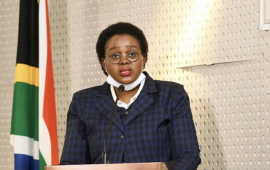
While Gauteng remains the epicentre of the COVID-19 pandemic, acting Health Minister Mmamoloko Kubayi-Ngubane has warned that many provinces in the country are almost at red alert as infections continue to increase.
“The trends are clearly showing that other provinces which are currently lagging are going to experience the trend we are seeing in Gauteng, most notably in the Western and the Eastern Cape. What worries us as well, is the positivity rate. If you look at Limpopo, it has almost 42% of positivity rate, which is leading in terms of positivity rates,” Kubayi-Ngubane said.
Briefing the media on government’s efforts in the fight against COVID-19 and the rollout of vaccines on Friday, Kubayi-Ngubane said the COVID-19 situation in the country remains of great concern, as the numbers continue to increase at a very rapid rate.
“In the last 24 hours, there are 21 584 new cases, which is higher than the average number of new cases per day over the seven preceding days measured at 16 916 cases. The positivity testing rate has also increased from 27.6% the previous day to 28.4%.”
Gauteng continues to be the epicentre of new infections with the number of new cases having risen to 12 806 which represents 60% of the total new infections.
“We remain very worried about the rise in hospitalisations, which is putting a lot of strain on the health facilities in Gauteng. The private health hospitals are currently operating at more than 100% capacity and public health hospitals are edging closer to full capacity,” Kubayi-Ngubane said.
She said nationally the third wave numbers have surpassed the first wave peak and are likely to surpass the second wave peak.
The new variant, called the Delta variant, is quickly becoming the dominant variant in the country, replacing both the Alpha variant experienced in the first wave and Beta variant experienced in the second wave.
However, the Minister reminded the public that the Beta variant is still prevalent and spreading.
“An important characteristic of the Delta variant is … those who were previously infected by Beta were immune from reinfection by both the Alpha and Beta variant – it is not the case with the Delta variant.
“This means that those who have had COVID-19 are at a risk of reinfection by the Delta variant,” Kubayi-Ngubane said.
Over 120 000 people vaccinated in last 24 hours
Over 120 000 people were vaccinated in the last 24 hours, with KwaZulu-Natal leading the pack, followed by Gauteng, then the Eastern Cape and Western Cape.
“The vaccination of educators is progressing well and we have so far vaccinated just over 300 000 educators. We had more educators registering in KwaZulu-Natal and followed by Gauteng,” Kubayi-Ngubane said.
A total of 354 504 people aged between 50 and 59 registered for their vaccination when the system opened on Thursday. The group will start receiving their jabs on 15 July 2021.
“In parallel to this process, we are also finalising the details for the commencement of vaccinations of other frontline sectors such as the police, defence, the security cluster and we will provide more details soon,” she said.
Two million Pfizer doses expected in July
The Minister said almost 2.1 million doses of the Pfizer vaccine are expected to arrive in July.
She said Pfizer has delivered nearly 4.5 million doses in quarter two and they have committed just over 15.5 million doses in quarter three, of which “we are expecting nearly 2.1 million doses in July”.
“Johnson and Johnson have so far delivered 500 000 early access doses used for Sisonke, 300 000 market doses two weeks ago and 1.2 million doses landed last week. These doses all need to be used by 11 August.
“We are awaiting confirmation for delivery of 500 000 doses (these expire later than the previous doses mentioned), and this makes up the two million to replace those that were lost to the contamination incident.
“We make a clarion call to all those who qualify, to register and vaccinate,” Kubayi-Ngubane said.
The Minister used the opportunity to thank scientists who continue to make world class scientific findings that are helping to fight the pandemic.
She also thanked the healthcare workers, including doctors, nurses and all supporting stuff in health care centres for continuing to be in the forefront of the fight against the COVID-19 pandemic.
COVID-19 cases soar by 21 584
South Africa recorded 21 584 COVID-19 cases on Thursday, according to the National Institute for Communicable Diseases (NICD).
The Gauteng province accounts for the majority of new cases (59%), followed by the Western Cape (11%) and North West (7%) provinces.
Gauteng reported 12 806 cases while the Western Cape reported 2 447.
This as South Africa battles a third wave of COVID-19 infections.
“Today the institute reports 21 584 new COVID-19 cases that have been identified in South Africa, which brings the total number of laboratory-confirmed cases to 1 995 556. This increase represents a 28.4% positivity rate,” said the NICD.
A further 382 COVID-19 related deaths have been reported, bringing total fatalities to 61 029 to date.
Also, 13 209 499 tests have been conducted in both public and private sectors.
The institute said it has seen an increase of 769 hospital admissions that have been reported in the past 24 hours.
Acting Minister of Health, Mmamoloko Kubayi, and a panel of experts are this morning briefing media on the progress of government’s efforts in the fight against COVID-19, including an update on the national vaccination rollout programme.
The NICD, a division of the National Health Laboratory Service, said it will continue monitoring COVID-19 in order to inform the public health response.
SASSA remains open under Adjusted Alert Level 4
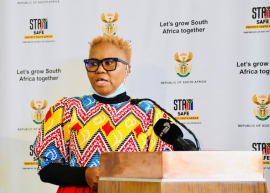
Under Adjusted Alert level 4, the South African Social Security Agency (SASSA) will remain open and operate with a reduced staff complement as per the Department of Public Service and Administration circular.
“Applications for social grants at all local offices will be staggered according to grant type, for instance Mondays will be for older persons, Tuesdays for disability grants, Wednesdays and Thursdays for child grant applications, and Fridays for appointments and spill over from the week,” Minister of Social Development, Lindiwe Zulu, said on Friday.
She was addressing members of the media in Pretoria on her department’s response to COVID-19 and on the Level 4 Risk Adjusted Strategy as announced by the President.
Some of the changes that were made by the Department of Social Development during its response to COVID-19 has enabled the department to fast-track digitisation of its services.
These include the online booking system for disability grants, which has significantly cut down on the amount of time and costs for both SASSA and grants applicants.
“We take great pride with the significant progress we have registered since the launch of the online booking system in April this year. We therefore would like to encourage disability grant applicants to make use of the SASSA online booking system, which can be accessed through the agency’s website on www.sassa.gov.za.
“This will allow applicants to book assessment dates for the disability assessments. Our staff at SASSA offices can also assist clients with this system to ensure that they avoid repeated visits to local offices,” the Minister said.
SASSA will continue with the staggered payments of grants, with the first payment date reserved for older persons, followed by disability grants and the payment of all child grants.
“This month, payments of social grants will start on Tuesday 6 July. Once again, we appeal to all grant recipients that they do not need to collect their grants on the day it becomes available, but can collect their grants on any day as their monies will remain in their accounts and will not be taken away from them,” Zulu said.
Community Nutrition and Development Centres
The department’s 250 Community Nutrition and Development Centres (CNDCs) across the country will remain open to provide the much-needed relief, but this will be under strict COVID-19 regulations compliance and will be limited to take-away meals only.
“We have also adapted our operations to new and innovative ways that include knock-and-drop approach of cooked meals to minimise the health risks of those aged 60+.
“Our CNDCs assist with food storage and distribution to poor households, and are also part of community driven Food and Nutrition Security Programmes, which increase access to food security to vulnerable and disadvantaged communities, especially at this time of need,” the Minister said.
All CNDCs have amended their operations to ensure precautions that prioritise the health and safety of recipients and staff who are at the frontline.
“It is important to stress that these measures are no substitute to other COVID-19 protocols as beneficiaries have equal responsibility by continuing to follow the guidelines which, include; the – regular sanitising and washing of hands, wearing of a mask that covers both mouth and face, and maintaining a distance from others at all times. On a related matter, we will continue utilising a hybrid model of providing food parcels, such as cash, food parcels and vouchers throughout the nine provinces and through SASSA’s Social Relief of Distress (SRD) programme for eligible households in distress,” Zulu said.
Registration of NPOs
All in-person Non-profit Organisations (NPOs) services have been suspended.
For NPO registrations and submission of annual reports, citizens are encouraged to use the department’s online platform: www.npo.gov.za
“We reiterate our call for NPOs to ensure that they remain compliant with the NPO Act to avoid being de-registered. We further would like to assure all NPO applicants that their temporary certificates will be issued to them via email whilst the original certificates will be provided at a later stage,” Zulu said.
Provincial departments are making progress with the transfer of funds to NPOs whose efforts are more important than ever during this pandemic.
“However, we are mindful that some provinces are experiencing delays attributed to system changes, delays in finalisation of Service Level Agreements and human resource shortages, amongst others.
“I have directed all provincial departments to ensure that they move with greater speed in processing these subsidies. We take this opportunity to call upon the NPO sector to comply with all accountability requirements, including timely submission of progress reports as required by law,” the Minister said.
Early Childhood Development Centres (ECDs)
All ECDs remain open and in full operation in compliance with all COVID-19 protocols and guidelines as previously provided to the sector.
“Our Provincial Departments will also continue to pay full subsidy to ECD programmes. We are aware that we did not complete payment through the stimulus package to all qualifying applicants at the end of March 2021.
“To this end, all Provincial Departments have applied for the rollover of funds as per the budget process. Let me take this opportunity to assure all qualifying ECD services that they will definitely receive their payments,” the Minister said.
Motshekga appointed as acting President
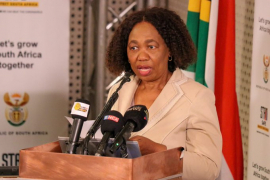
President Cyril Ramaphosa has appointed Basic Education Minister Angie Motshekga to serve as Acting President on Friday, 2 July 2021.
In a statement, the Presidency said the appointment has been made in view of the President’s visit today to Lusaka, Zambia, to attend the State Funeral Service for the late President Kenneth Kaunda.
Deputy President David Mabuza is currently receiving medical treatment in the Russian Federation.
SAPS appoints provincial commissioners

The South African Police Service (SAPS) management has appointed two provincial commissioners, one for the Western Cape and the other one for Mpumalanga province with effect from 1 July 2021.
The appointment of these senior managers into these positions is part of the organization’s plans to enhance accountability and bring about stability within the respective provinces.
Thembisile Patekile has been appointed as the Western Cape Provincial Commissioner at the rank of Lieutenant General.
General Patekile has a Bachelors Degree in Policing as well as a LLB (Law) Degree which he attained at Technikon Pretoria in 2002 and University of Fort Hare in 2012, respectively.
He also brings with him a wealth of experience having served in the South African Police Service at various levels and in various areas for nearly 36 years.
General Patekile began his career in 1985 as a Constable in Uitenhage and steadily grew in the ranks to serving as a Deputy Provincial Commissioner in the Western Cape and Eastern Cape and lately as the Acting Provincial Commissioner of the Western Cape up to his latest appointment.
Semakaleng Daphney Manamela has been appointed as Mpumalanga Provincial Commissioner at the level of Lieutenant General.
General Manamela holds an Honours degree in Public Administration and she is currently finalising her Masters degree in the same field.
She also holds a degree in Human and Social Studies specialising in Policy Studies as well as a degree in Public Administration which she attained between 2010 and 2016 at the University of South Africa (UNISA).
She too brings with her a wealth of experience having served in the SAPS for over 26 years at various levels in Gauteng and Mpumalanga.
General Manamela began her career in the SAPS as a Constable in Kempton Park in Gauteng in 1995 and steadily grew in the ranks to Major General as Deputy Provincial Commissioner (DPC) Operations from 2012 to 2016, thereafter DPC Management Intervention followed by Acting DPC Corporate Support until her appointment as the Provincial Commissioner of Mpumalanga.
The National Commissioner has wished both provincial Commissioners well in their new roles.
“Both Provincial Commissioners are aware that the road they are to travel is a long and hard one,” General Sitole said.
“I am confident that they have what it takes to decisively address crime in their respective provinces,” he said.
Creating a conducive business environment in metropolitan municipalities
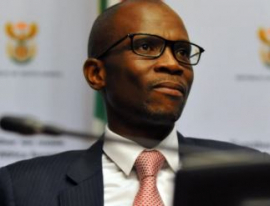
As the country focuses on economic recovery and reconstruction, Deputy Minister of Finance, Dr David Masondo, has called on the metropolitan municipalities to create a conducive business environment to enable investments.
“There are economic opportunities, which can be explored by private sector institutions within the area of your jurisdiction. However, these opportunities heavily rely on your capacity to provide bulk and connector infrastructure to enable such investments,” Masondo said on Thursday.
Addressing the Metropolitan Municipalities Roadshow on the Economic Reconstruction and Recovery Plan in Pretoria, Masondo said there are also a number of approval processes that are taking place at the metro level to enable private sector institutions to invest.
“Thus, the metros need to create a conducive business environment through streamlining and ensuring more efficient internal business processes that interface with the private sector. Such business processes relate to supply chain management, issuing of business permits, responding to customer complaints, issuing of rates and services accounts, development approval processes, issuing of construction permits and rates clearance certificates and ensuring electricity connections,” the Deputy Minister said.
Together with the World Bank, government has introduced the Ease of Doing Business project, which drives the reforms at national and subnational level to make the country more competitive and business friendly.
“The Sub-National Doing Business reforms that we are rolling out in partnership with the metros are a core component of this broader programme. A major component of this reform process is the optimisation and automation of metro business processes in order to reduce time, cost and numbers of procedures that businesses have to experience,” the Deputy Minister said.
He expressed concern on the failure of many metros to spend on their capital budgets, placing some of the local government conditional grants in jeopardy.
“From our engagements with yourselves, we have identified two major constraints on metro performance in this regard. First, is the metro internal Supply Chain Management (SCM) processes, which are lengthy and tedious. Secondly, it is owing to the criminal elements which have mushroomed under the disguise of 30% requirements of the Preferential Procurement Policy Framework Act (PPPFA),” the Deputy Minister said.
He acknowledged that part of the problem regarding the slow pace of capital spend, is a lack of a project pipeline in some metros.
“To address this concern a project and programme preparation grant will be introduced effective from your new financial year. We urge you to maximize on the use of this grant on major infrastructure projects, which prepare them in a manner that will assist the city to accelerate the infrastructure built programme. Infrastructure investment that can unlock private investment in targeted spatial areas should be prioritised,” the Deputy Minister said.
Masondo emphasised the importance for metropolitan municipalities to strengthen governance in the city.
“A clear demonstration of this should be reflected in the capacity of the city to reduce the unauthorised, irregular, fruitless and wasteful expenditure (UIFW). It is discomforting that this has been increasing over the years and it does not look like there is an appetite to reduce it. We should be aware that the credit rating has started factoring this issue, which has resulted in a decrease in the credit rating,” the Deputy Minister said.
He expressed concern that the Municipal Public Accounts Committee (MPAC) does not look like there it has any form of consequence management.
“The capacity of the city to borrow will soon reflect this poor credit rating leading to expensive debt and in some instances reluctance of the financial institutions to borrow you money that is critical for growth enhancing investments.
“The institutional stability of the city is paramount for the successful implementation of the economic recovery. We are concerned about the high turnover at the executive level. This does not build confidence.
“As political principals, it is your duty to ensure that there is a stability to enable the institution to focus on service delivery. Such stability is possible – eThekwini, for example, has retained the same Chief Financial Officer (CFO) for around 20 years,” the Deputy Minister said.
Work from home claims need to be carefully considered, taxpayers warned

The South African Revenue Service (SARS) has urged taxpayers to carefully consider working from home expenses before submitting claims to the revenue collector.
SARS recently published an update on its website in relation to home office expenses.
In a statement on Thursday, the revenue collector provided additional clarity for individual taxpayers who may be considering submitting claims for home office expenses in their income tax returns that can now be filed for the 2021 tax year.
This comes as many taxpayers started working from home as the country navigated the effects of the COVID-19 pandemic.
Among others, SARS said taxpayers should note that there had been no changes to the legislation in relation to a “home office”.
“The legal requirements remain the same as before the COVID-19 pandemic. In brief this means an office, appropriately equipped, must have been set up at the place of primary residence; the office must have been used regularly and exclusively for work purposes.
“The office must have been used for more than 50% of the employee’s duties or, if the employee earns more than 50% of their remuneration from commission or other variable payments based on work performance, more than 50% of the employee’s duties must have been performed away from the employer’s office.”
Any home office expenses must be linked to employment use and must be verifiable. Additionally, home office expenses must be claimed against source code 4028 in the income tax return
The revenue collector said where the home office is in taxpayer owned property, taxpayers should note that formally defining part of a primary residence as a home office will most likely have an adverse impact on a future capital gains determination.
“The home office area will, on a pro-rated basis, be excluded from the primary residence exclusion of R2 million on disposal of the residence. Careful consideration should, therefore, be given before a claim for home office expenses is made.
“Taxpayers may also find that working from home led to savings on expenses they would otherwise have incurred, like transport, wear and tear on vehicles and so forth. Taken together with the loss of part of the capital gains exclusion, these savings may outweigh the benefit of a claim for home office expenses.
SARS said while all claims for home office expenses may be subject to further verification or audit by SARS, it is important to note that there is a high likelihood that a taxpayer who claims home office expenses for the first time will be selected for verification or audit.
SARS Commissioner Edward Kieswetter said: The need for many employees to work remotely has been necessitated by the COVID-19 pandemic in an unprecedented manner. We understand that many employers, and employees alike, are grappling with establishing a new normal.
“We would simply ask taxpayers to consider carefully the longer term implication of defining an area in their primary residence as a home office for tax purposes. It may be more prudent to wait and establish a more sustainable rhythm before making the decision”.
This statement does not replace the actual text of the provision in the Income Tax Act, 1962, nor the guidance on the SARS website. Taxpayers who require further assistance may visit www.sars.gov.za.
SA logs over 19 500 new COVID-19 cases
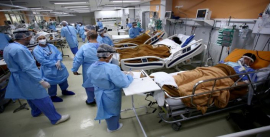
South Africa has recorded 19 506 new COVID-19 cases, bringing the total number of cases to 1 973 972.
According to the National Institute for Communicable Diseases (NICD), the increase represents a 27.6% positivity rate.
Gauteng remains the epicentre, accounting for the majority of new cases (57%), followed by the Western Cape (11%) and North West (7%) provinces.
Meanwhile, a further 383 COVID-19 related fatalities have been reported, pushing the death toll to 60 647.
“An increase of 698 hospital admissions have been reported in the past 24 hours,” the institution said, adding that there are now 12 893 people who are currently in hospital.
The information is based on the 13 133 428 tests conducted in both public and private sectors, of which 70 593 were performed on Wednesday.
In addition, South Africa managed to vaccinate 120 172 people the previous day.
This means there are now 3 026 636 people who have received either the Pfizer or Johnson & Johnson vaccine in the country.
According to the World Health Organisation (WHO), there are 181 521 067 confirmed global cases of COVID-19, 3 937 437 deaths, and 2 915 585 482 administered vaccine doses.
Mhlathuze Water warns public against jobs, tenders scam

Mhlathuze Water has urged members of the public to be cautious of unscrupulous people approaching them with offers of job placements and opportunities to secure tenders within the organisation in exchange for cash.
The warning comes after Mhlathuze Water received complaints from individuals and companies who have received calls from people claiming to be from the water utility’s Human Resources and Supply Chain Management Departments respectively.
Mhlathuze Water spokesperson, Siyabonga Maphumulo, said one victim, who has already parted with R2000 which was deposited into the scammers account, said an anonymous caller had promised them a position that had been advertised by Mhlathuze Water.
The victim alleges the scammer also coaxed her into referring him to other job seekers who were willing to pay in return for bogus placements within the organisation.
“In the second instance, Mhlathuze Water was alerted by companies and contractors who had received calls from people purporting to be from its Supply Chain Management Unit asking that the contractors verify their central supplier database registration numbers and pay a sum of money in exchange for guaranteed contracts at Mhlathuze Water,” Maphumulo said.
Maphumulo warned job seekers and contractors to refrain from entertaining people who request cash for jobs and services, this is not a prerequisite to get a job or contractor opportunities within Mhlathuze Water.
“Mhlathuze Water has strict recruitment and acquisition policies which forbid the acceptance of cash for jobs or contracts. All our vacancies and tenders are advertised on our website, social media platforms and mainstream media.”
Members of the public can make enquiries with Mhlathuze Water by calling 035 902 1000 or email communication@mhlathuze.co.za with regards to the status of any advertised job opening or tender.