
757 arrested, 10 dead in Gauteng, KZN violence
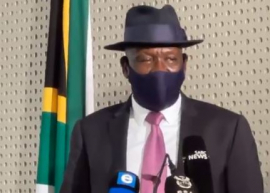
Over 757 people have over the past five days been arrested for the wanton destruction and looting of businesses and properties.
Of these, 304 were arrested in KwaZulu-Natal while 453 were nabbed in Gauteng.
This was on Tuesday revealed by Ministers in the Justice, Crime Prevention and Security (JCPS) Cluster during a press briefing amid violence in the two provinces.
Ministers in the cluster have over the past two days met to discuss the reports received from the Joint Operations Committee (JOCOM) of the South African Police Service (SAPS) and State Security.
These reports included critical intelligence information from the State Security Agency (SSA), South African Police Crime and Defence Intelligence. The intelligence information has provided timeous, critical and sometimes unique analysis information to give early warning signs of potential risks and dangers.
“The law enforcement officers have used this intelligence information in responding with speed to the issues on the ground and attending to areas which have been identified as potential hotpot areas,” said Police Minister Bheki Cele, speaking on behalf of the cluster.
He said Ministers were satisfied with the reports they had received and were confident that law enforcement agencies were able to do their job effectively.
He said of grave concern was the loss of lives that has accompanied the incidents of violence and destruction to property. Ten people have been killed in the two provinces.
“In all our operations, we still have the responsibility to save lives. The current situation on the ground is under strong surveillance and we will ensure that it does not deteriorate any further. We cannot allow anyone to make a mockery of our democratic state and we have instructed the law enforcement agencies to double their efforts the stop the violence and to increase deployment on the ground,” he said.
The cluster has called for an immediate end to this violence, looting and the disregard of the law and call for an immediate return to peace and stability.
The Ministers said they were encouraged and heartened by the outpouring of messages from South Africans saying their shops, malls, taxis, trucks and other transport infrastructure will not be destroyed in their name.
“These messages of support echo the attitude of our country that this infrastructure is the life-blood of our society and economy.
“Without these we cannot hope to grow our economy, ensure we all have food and fuel and can go about our daily lives toward the goal of prosperity for all.”
Cele said South Africa was a democratic state governed by the Constitution.
While South Africa’s Constitution guarantees the right of every person to protest, to organise, and to engage in free expression and free association, this should not infringe on the rights of others who may not want to protest.
“No amount of unhappiness or personal circumstances from our people, gives the right to anyone to loot, vandalise and do as they please and break the law.
“We call on the communities to exercise restraint in dealing with the situation and above all ensure that innocent civilians are not harmed,” he said.
The JCPS further urged all communities and groups to reject any call for violence and making this country ungovernable.
SA registers 11 182 new COVID-19 cases, with 220 deaths
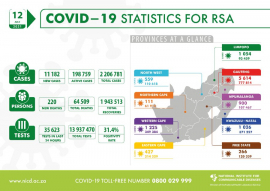
South Africa detected 11 182 new COVID-19 cases on Monday, while 220 more people succumbed to the illness.
The country now has 2 206 781 laboratory-confirmed infections and 64 509 deaths, the National Institute for Communicable Diseases (NICD) said.
Of the latest cases, 50% of were recorded in Gauteng (5 614), 11% in the Western Cape (1 225), 9% in KwaZulu-Natal (1 026), 9% in Limpopo (1 054), 8% in Mpumalanga (900), 5% in North West (559), 4% in the Eastern Cape (427), 2% in the Free State (266) and 1% in the Northern Cape (111).
While the cases continue to rise, the NICD observed that the seven-day moving average daily number of cases has decreased.
“The total number of cases today [Monday] is lower than yesterday [Sunday], and lower than the average number of new cases per day over the seven preceding days,” the public health institute said.
In addition, 571 more people were admitted to hospital in the past 24 hours, pushing the number of patients who are currently receiving treatment to 16 505.
The NICD said there are 13 937 470 tests, 35 623 of which were conducted since the last reporting cycle.
According to the World Health Organisation, since the start of the pandemic, there have 186 638 285 confirmed global cases, 4 035 037 deaths, and 3 114 766 865 administered vaccine doses.
489 arrested for violence, infrastructure damage as NATJOINTS intensifies operations
As violent looting and damage to businesses and infrastructure continue in parts of KwaZulu-Natal and Gauteng, police had by Monday evening arrested 489 people.
Of these, 166 were in KwaZulu-Natal and 323 in Gauteng.
The National Joint Operational and Intelligence Structure (NATJOINTS) on Tuesday welcomed the deployment of the South African National Defence Force (SANDF) in support of the operations of the South African Police Service (SAPS).
The NATJOINTS said it had intensified deployments in all the affected areas in the two provinces and this would be augmented by SAPS recalling operational members from leave and rest days.
This will increase the presence of law enforcement personnel on the ground.
“The continuation of the sporadic violent protests throughout the day and night has resulted in the increase in the number of fatalities, with three in KZN and six in GP,” said NATJOINTS.
The four police officers who were injured while responding to the violent protests over the weekend are recovering well.
Last night, President Cyril Ramaphosa in his address to the nation extended his best wishes to the four SAPS members.
Constable Sangweni was shot and injured in Alexandra, while his two colleagues, Sergeant Maraheni and Lieutenant Colonel Nefolovhodwe, were hit with bricks. Constable Seloane was shot and injured in Daveyton.
The President also named those who had lost their lives: Nkosikhona Chiza, Ndumiso Shezi, Khaya Mkhize, Zethembe Ndwandwe, Lindani Bhengu and Lindokuhle Gumede in Gauteng and Bhekani Ndlovu, Themba Mthembu, Aphiwe Gama and Cebo Dlamini in KwaZulu-Natal.
He said while there was a high cost to property, livelihoods and businesses, the loss of human life is the greatest cost of all.
“It is therefore a matter of vital importance that we restore calm and stability to all parts of the country without delay. It is vital that we prevent any further loss of life or injury. It is vital that we protect property and safeguard social and economic infrastructure.
“We are therefore mobilising all available resources and capabilities to restore order,” said the President.
He called on the country to come together and for everyone to play their part in restoring calm to those areas that have been affected by violence.
35 – 49 age group to be vaccinated from 1 August
South Africa’s COVID-19 vaccination programme is next month expected to gain further momentum, with those aged between 35 and 49 years, set to be vaccinated.
While registrations will begin on 15 July, government will begin inoculating this group on 1 August.
This was on Friday revealed by Acting Health Minister, Mmamoloko Kubayi-Ngubane, during a media briefing. The briefing was held amid a sustained rise in infections, hospitalisations and related deaths in the past seven days.
Healthcare workers were the first to be vaccinated in March under the Johnson & Johnson Sisonke programme. A month later, government began administering vaccines in the over 60 population.
Two weeks ago, over 500 000 basic education workers began receiving their doses. Last week, the programme began focusing on those aged 50 and above. Personnel in the security sector this week started being vaccinated.
In the last 24 hours, the country recorded 22 910 new cases, representing a 34.4% positivity rate. Of these, 11 747 were in Gauteng.
Overall, Kubayi-Ngubane said government’s vaccination programme has made significant strides.
“We have learned lessons from when we started, and we continue to improve our systems as we work and continue moving forward,” she said.
Last week, the programme received a shot in the arm when the South African Health Products Authority (SAHPRA) granted approval for the use of the Sinovac vaccine.
“The approval came at a time when the demand for vaccines was [increasing].
“More people are yearning to get vaccinated. [This] will boost the vaccine supply for the country’s vaccination rollout programme.”
Sinovac is in addition to the Pfizer and Johnson & Johnson vaccines already utilised in the country.
Kubayi-Ngubane said while indications are that the number of cases in Gauteng have peaked and are now declining, the province remains the country’s epicentre.
“We should never let our guards down and think that [it is over].”
She expressed concern over the rise in numbers in the Western Cape, Limpopo, North West, KwaZulu-Natal and Mpumalanga.
In this regard, she said government is ramping up its vaccination rollout programme to ensure that vaccines can reach the majority of the population and ensure that more people are protected from the impact of the virus.
As of Thursday, South Africa was surpassing 191 000 vaccinations a day.
“We’re expecting to surpass 250 000 vaccinations by next week,” the acting Minister said.
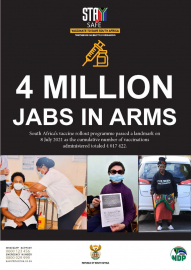
Overall, the country has to date vaccinated four million people – partially or fully.
“This is [a] milestone, although we know that many people are saying this is not yet enough because when we compare it with the percentage of the population, it’s still a bit of a challenge.
“We have to make sure that the vaccine reaches all South Africans as quickly as possible. We will now pay attention to vaccinations per district, and make the research intervention, working together with provinces, to ensure that in each district in every local municipality, there is access to the vaccine,” she said.
This week, the Department of Health held a bilateral meeting with National Treasury to discuss the funding of the vaccination programme.
In this regard, the department will begin availing of human capital to vaccinate over weekends from 1 August.
SA records 460 COVID-19 related deaths
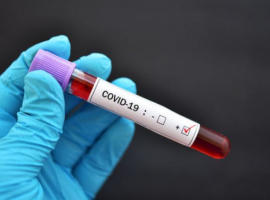
A total of 22 910 new COVID-19 cases have been identified in South Africa, which brings the total number of laboratory-confirmed cases to 2 135 246, according to the National Institute for Communicable Diseases (NICD).
This increase represents a 30.4% positivity rate.
Gauteng reported 11 721 new infections, the Western Cape reported 2557 and Limpopo reported 2124.
“As per the national Department of Health, a further 460 COVID-19 related deaths have been reported, bringing total fatalities to 63 499 to date,” said the institute.
There has been an increase of 711 hospital admissions in the past 24 hours.
Meanwhile, 13 694 914 COVID-19 tests have been conducted in both public and private sectors.
Also, 191 833 vaccinations have been administered in the last 24 hours – 13 948 Johnson and Johnson vaccines and 177 885 Pfizer vaccines.
In terms of vaccine registrations, 91 080 self and assisted registrations were recorded.
The NICD, a division of the National Health Laboratory Service, will continue the monitoring and surveillance of COVID-19 in order to inform the public health response.
Free State man nabbed on N3 for drugs worth R3 million
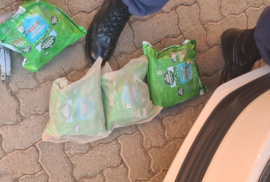
A man suspected to be dealing in drugs was arrested on the N3 freeway during a crime prevention roadblock on Thursday.
Members of the Welkom and Bethlehem K9 Unit stopped a White Polo Vivo near Harrismith, travelling from Johannesburg towards Durban.
According to police, upon searching the vehicle, two large bags containing 60 000 empty capsule containers were found. A further search led to the discovery of eight 1kg plastic bags containing heroine with an estimated street value of R3 000 000.
The 38-year-old suspect was arrested and is expected to appear before the Harrismith Magistrate’s court soon to face charges of drug dealing.
The case will be investigated further by the Hawks.
Free State Provincial Commissioner, Lieutenant General Baile, has commended the police officers on their meticulous work.
“These operations have been successful in curbing crimes such as peddling various types of drugs. My appreciation goes to members for their dedicated efforts,” Lieutenant General Baile Motswenyane said.
SAPS Deputy Commissioner succumbs to COVID-19
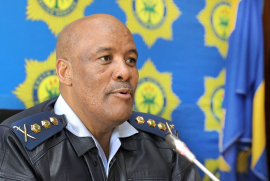
The COVID-19 third wave has claimed the life of the Deputy National Police Commissioner (DNC), Lieutenant General Sindile Mfazi.
The news was on Friday confirmed by National Police Commissioner, General Khehla Sitole, in a statement.
At the time of his passing, Mfazi, 59, was DNC for Crime Detection.
Mfazi was a highly decorated senior officer, who served the South African Police Service (SAPS) for 39 years.
During this period, he held various executive roles.
Between 2003 and 2008, he was Deputy Provincial Commissioner responsible for Corporate Services in the Western Cape. In 2008, he was transferred to the Eastern Cape, where he was the Provincial Head of Crime Intelligence.
When he left the post in 2018, he moved to the National Head Office in Pretoria, following his appointment by Sitole as DNC for Management Advisory Services.
From March 2020 up until his passing, Mfazi held the position of DNC for Crime Detection, a position to which he was appointed in line with the new structure.
Sitole described Mfazi as an exemplary leader, who was dedicated to the cause of serving and protecting the people of South Africa.
“The SAPS has lost one of its reliable, dedicated and greatly respected leaders in the organisation. Mfazi led by example and served this country with distinction until his death. On behalf of the SAPS family, we extend our deepest condolences to his family, friends and colleagues,” he said.
Memorial and funeral details will be communicated in due course.
SA builds 18-day COVID-19 vaccine stock

As South Africa continues to administer COVID-19 vaccines and receive doses from manufacturers, the Department of Health has confirmed that it currently has enough stock for 18 days.
“As of [Thursday] evening, the country had in total – both the Johnson & Johnson and Pfizer vaccines – 3.6 million doses. At the current rate of vaccination, that’s about 18 days of vaccine [stock] for the country.
“Some of it is still with the central distributor. There… are vaccines… in the central hospitals and tertiary hospitals being brought down into the clinics and community health centres every day,” said the department’s Deputy Director-General, Dr Nicholas Crisp, at a ministerial briefing on the country’s response to COVID-19 on Friday.
The private sector also has vaccines in their central wholesale, in private hospitals and community pharmacies, among others.
“We get a report at the end of every day, through our stock visibility system, of what vaccines have been used, and we track what is used against the reports of vaccine doses that are reported on the EVDS [Electronic Vaccination Data System] to check what’s happening.
The systems also determines losses suffered, if any.
“As we stand at the moment, that’s about 18 days of vaccine [stock], which is the strongest position we’ve ever been in.
“This morning, we have received some information about the coming period into August, so this at least gives us vaccine security,” he said.
The Pfizer vaccine, Crisp said, had stock abailability until 26 July. For the Johnson & Johnson vaccine, Crisp said figures were not in the general population stats due to the short expiry date on the 1.5 million doses.
These doses were currently being used in the dedicated cluster rollouts by the departments, Crisp said.
Turning attention to the vaccination of targeted population groups, Crisp said there were some hurdles in the rollout for the older segment of the population.
“We are hoping that, and we’re already starting to see the trend that when the 50 plus population comes in, and I suspect the younger population too, they will bring along a lot of the older people,” Crisp said.
To counter this, government is actively embarking on initiatives to encourage vaccination.
“There’s a pilot project that’s been running in the pension pay points this week. I am sure that we will get feedback on that list of lessons to be learned.”
He encouraged everyone to help the others in the community to get vaccinated.
On the question of prioritisation, Crisp said it was “extremely difficult” to prioritise any group.
“The reason we have proposed that we should open to all (to other age groups) faster is rather than spending effort on trying to selectively identify and define any particular group, it’s far better to go as quickly as possible through the general age groups and to not spend time on the administration of the programme, but to rather vaccinate the people,” said Crisp.
SAPS destroys 24 901 firearms
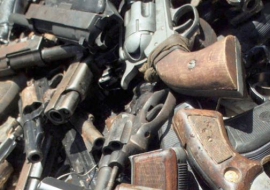
The South African Police Service (SAPS) on Thursday destroyed 24 901 firearms, which include firearms voluntarily handed over during the previous two firearm amnesty periods, as well as those that were either confiscated or surrendered to the State.
The destruction took place at the Cape Gate Steel in Vanderbijlpark, Gauteng.
According to the police, about half of the firearms that have been destroyed were handed in during the 2019/2020 and the 2020/2021 Firearm Amnesty periods.
These amnesty firearms were also subjected to IBIS testing and there were no positive hits nor firearm applications linked to them.
A notice was published in the Government Gazette on 9 June 2021 with 24 910 firearms intended to be destroyed.
As per section 136(2) of the above-mentioned Act, interested parties who had a valid claim to the relevant firearms or ammunition were invited to make representations within 21 days after the publication of the notice in the Gazette to the Registrar as to why the identified firearms or ammunition should not be destroyed.
The SAPS received nine representations and that led to the melting of the 24 901 firearms which included rifles (3610), shotguns (3083), handguns (17383) and other parts.
“The police have to continually detect and remove illegal firearms from circulation as they are being used to commit serious and violent crimes.
“Melting these firearms therefore ensures that the proliferation of firearms is dealt a blow. The SAPS will continue to detect and remove illegal firearms and ammunition from the streets of South Africa, as they pose a threat to the safety and security of the inhabitants of this country,” the South African Police Service said in a statement.
The police always encourages those that have to handle firearms of their deceased relatives to do so in line with the prescripts of the law.
“A firearm is issued to an individual and cannot be dealt with like any other asset when the owner dies.
“The Act provides that in case of death, the family/executor must dispose of the firearm by deactivating it through a gunsmith, sell it to an accredited firearm dealer or individual or voluntarily surrender it to SAPS for destruction,” the Police said.
Govt appalled by distribution of prison photos
A criminal case has been opened after a camera SD card containing images of the former President Jacob Zuma being admitted at the Estcourt Correctional Centre in KwaZulu-Natal was stolen.
The former statesman, 79, was sentenced to 15 months in jail on 29 June for defying an instruction to give evidence at an inquiry into corruption during his nine years in power. He began his incarceration this week.
On Thursday afternoon, photos of what appeared to be the former President being admitted, were circulated on social media.
“It has come to the attention of the Department of Correctional Services (DCS) that images were stolen from a camera of the official who had been assigned to take photos for institutional filing purposes.
“The SD card was removed from the camera and the matter is highly sensitive and is being investigated by both SAPS and DCS. The official involved has also been contemplated with a suspension notice,” said the department in a statement.
The first aspect of the internal investigation has revealed that this SD card may have been shared with a known broadcaster.
The department said it will be approaching the relevant institutions for further action.
“We are appalled by the distribution of these images on social media and we urge people to refrain from sharing them. DCS condemns in strongest possible terms such action and will leave no stone unturned in bringing to book those behind it.”